In rural areas, thousands of isolated villages account for 5 million people who do not have access to water. (source)
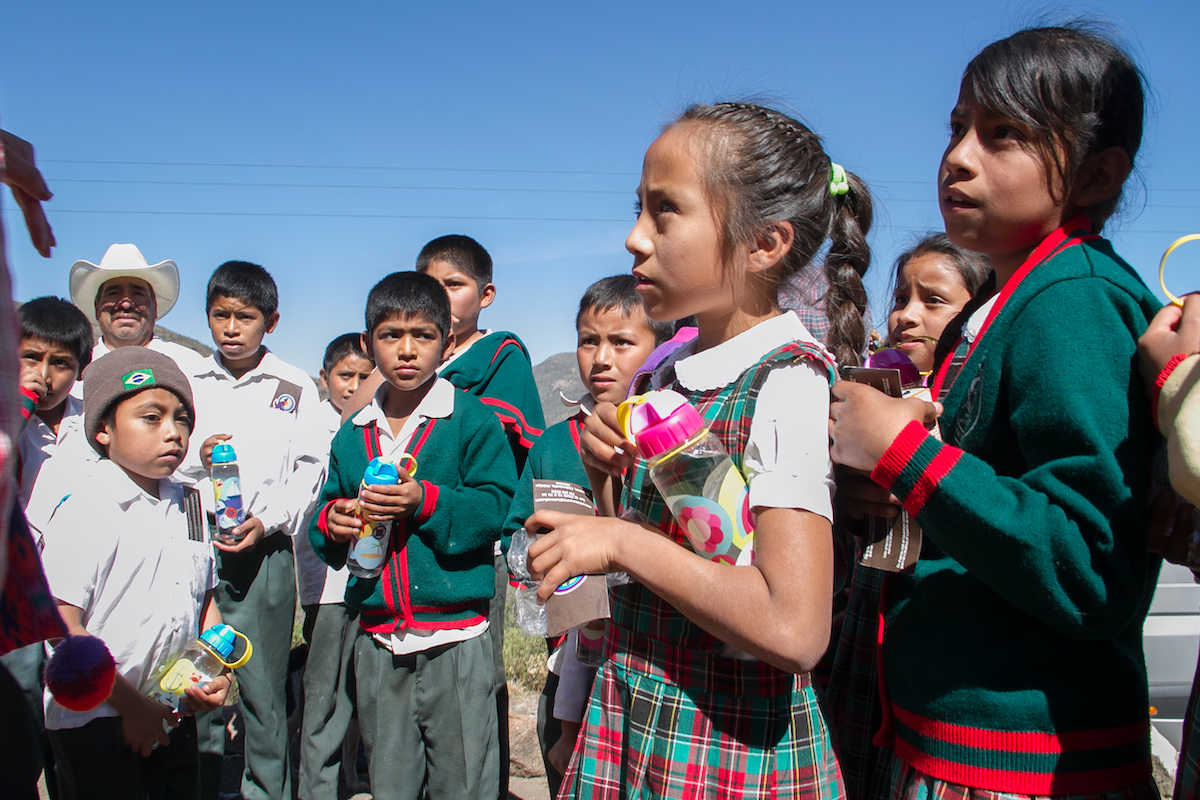
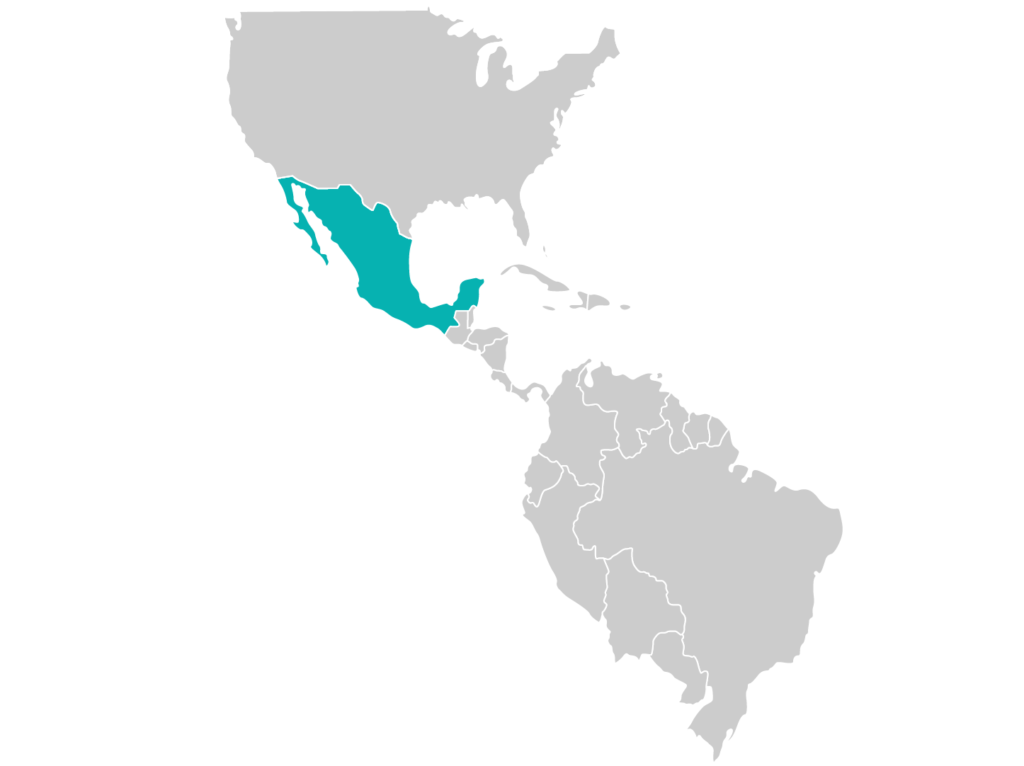
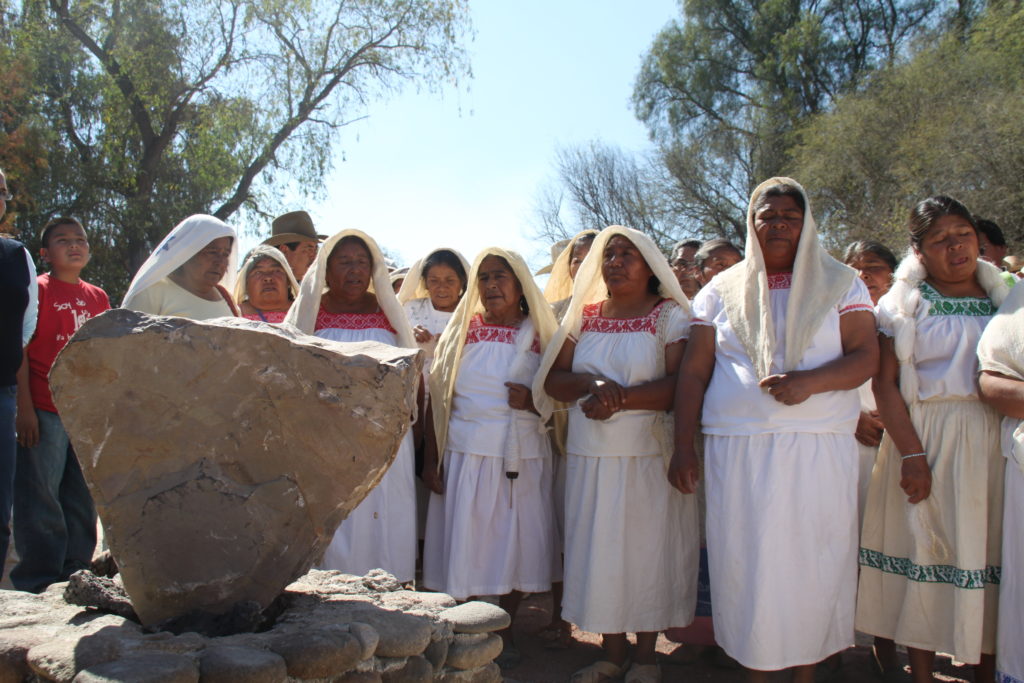
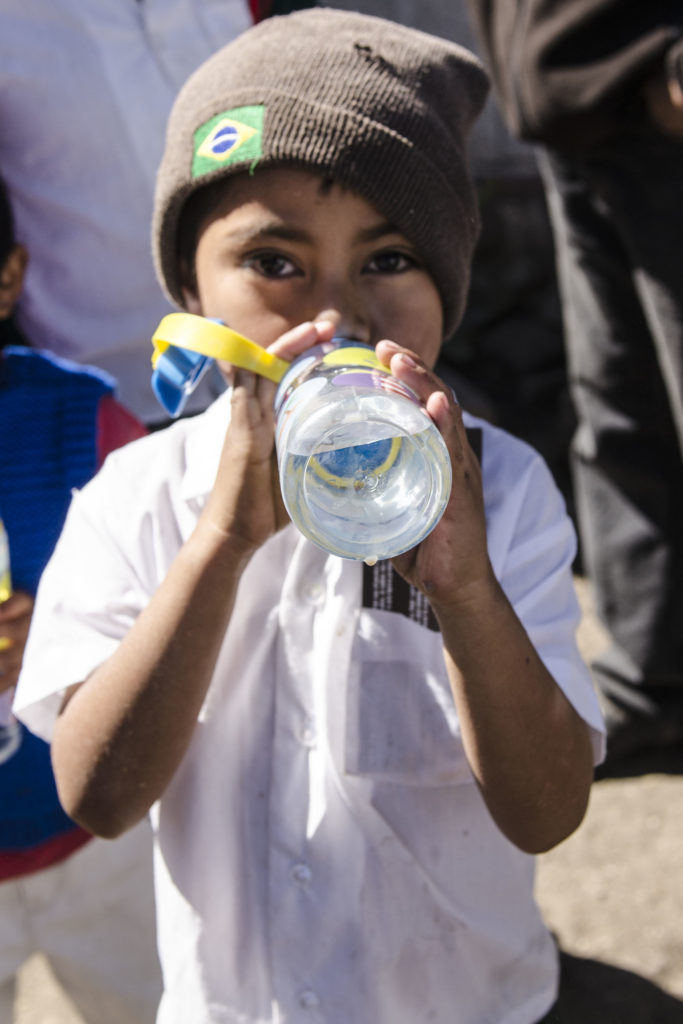
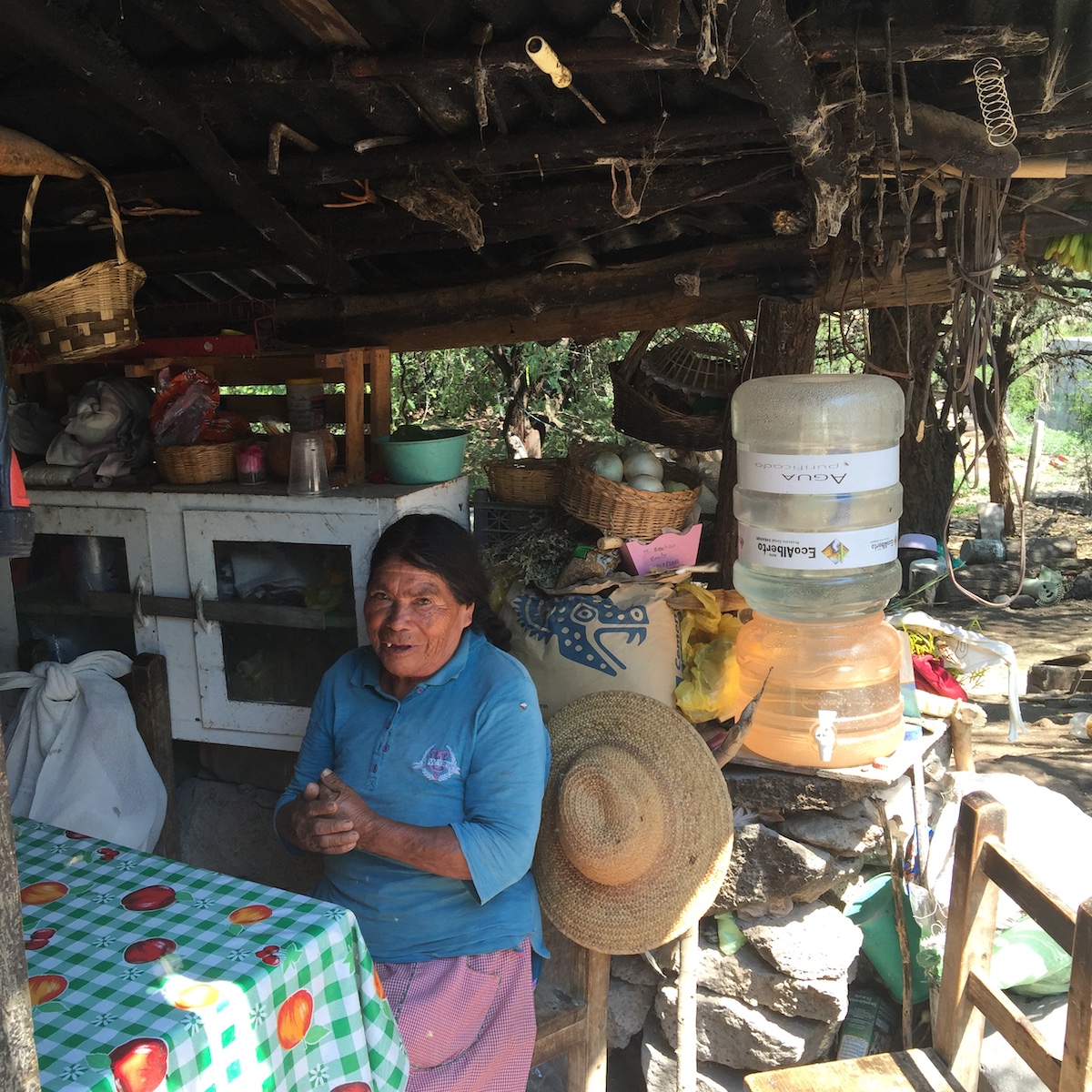
Located in the centre of the country, Hidalgo is known because of its water scarcity. When EcoAlberto was born in 2011, the communities depended on small sources which most of the time were polluted and located far away from their homes.
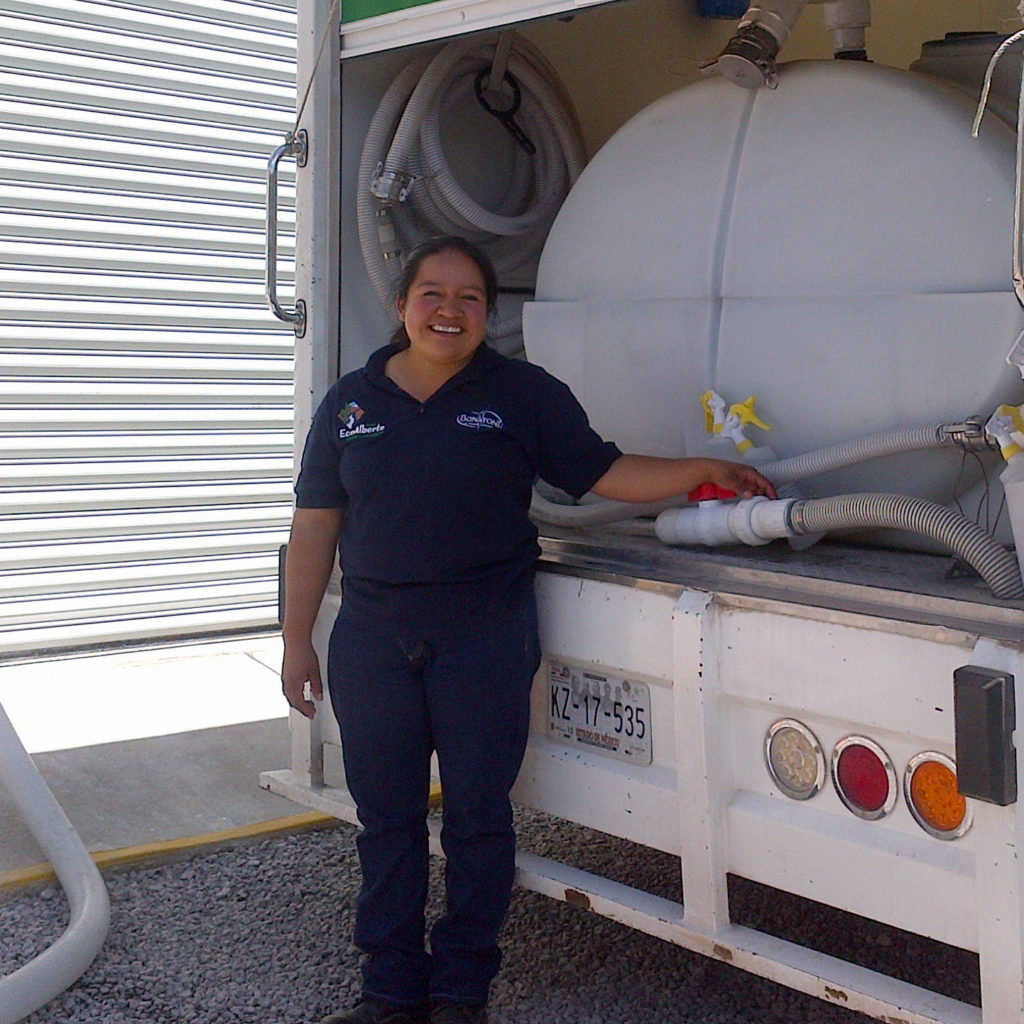
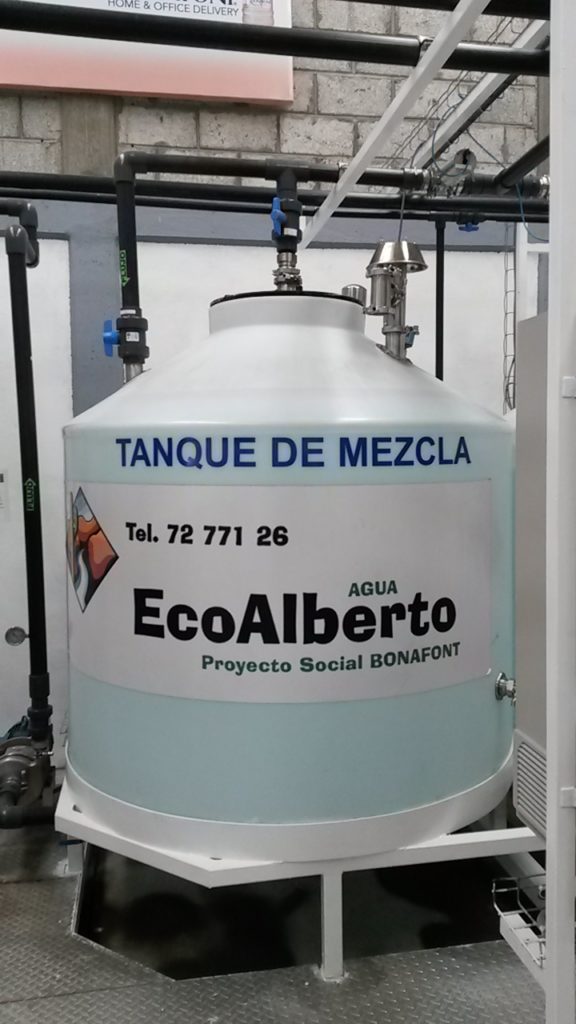
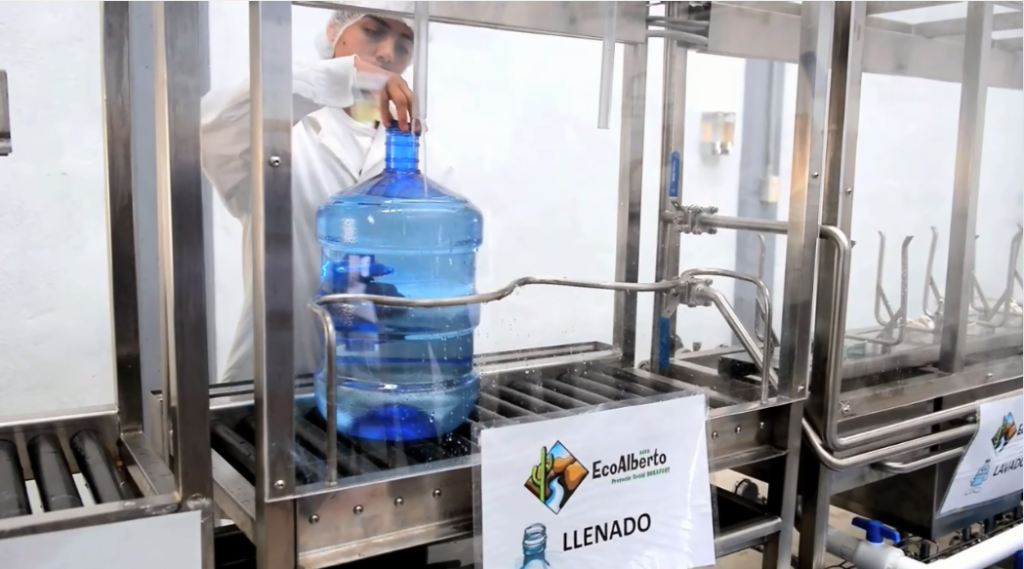
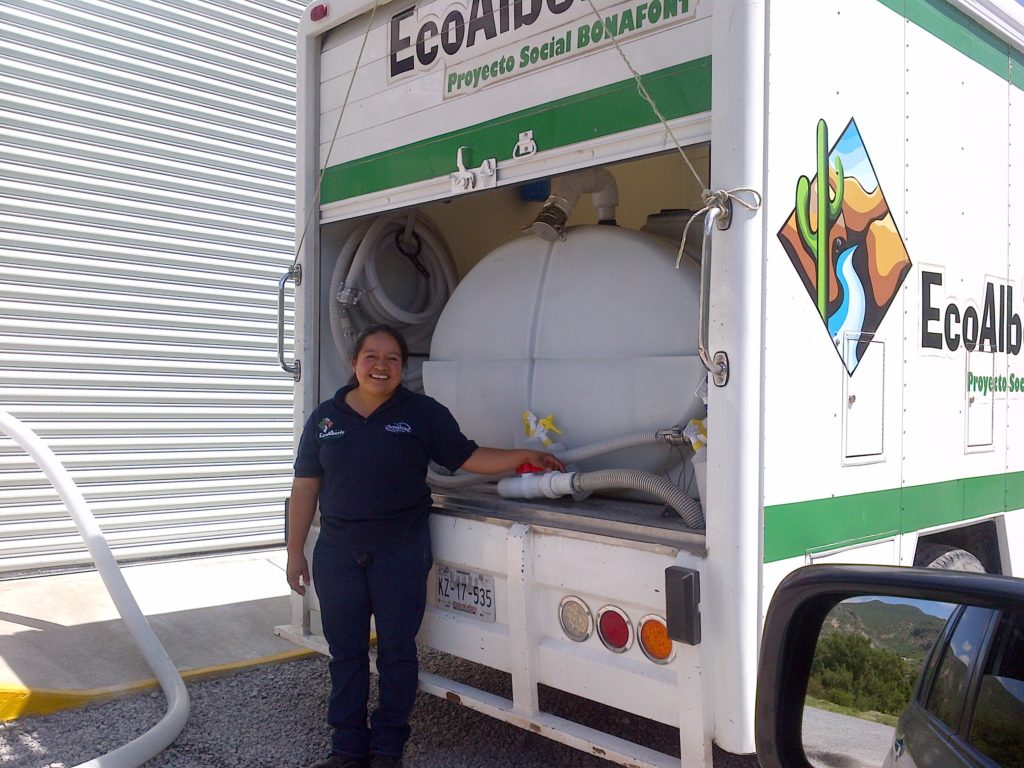
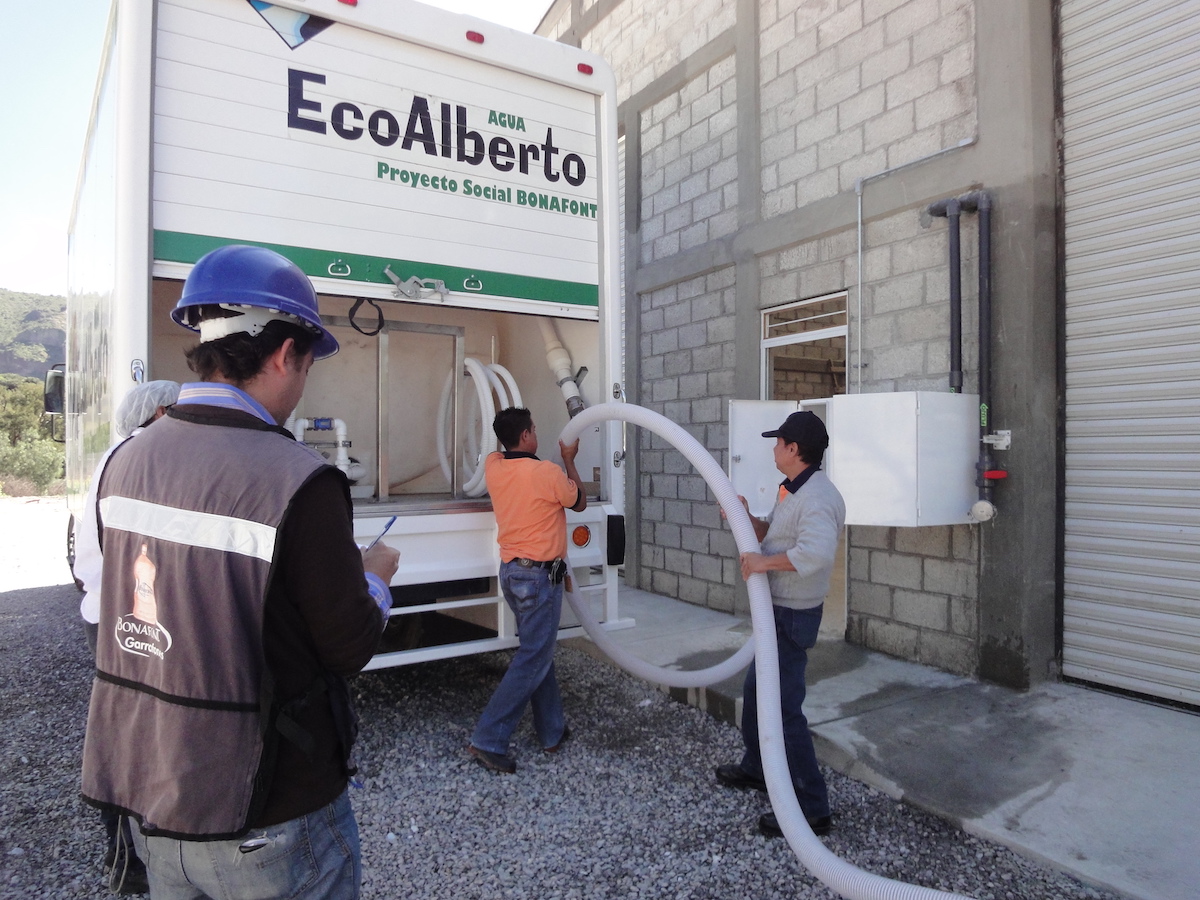
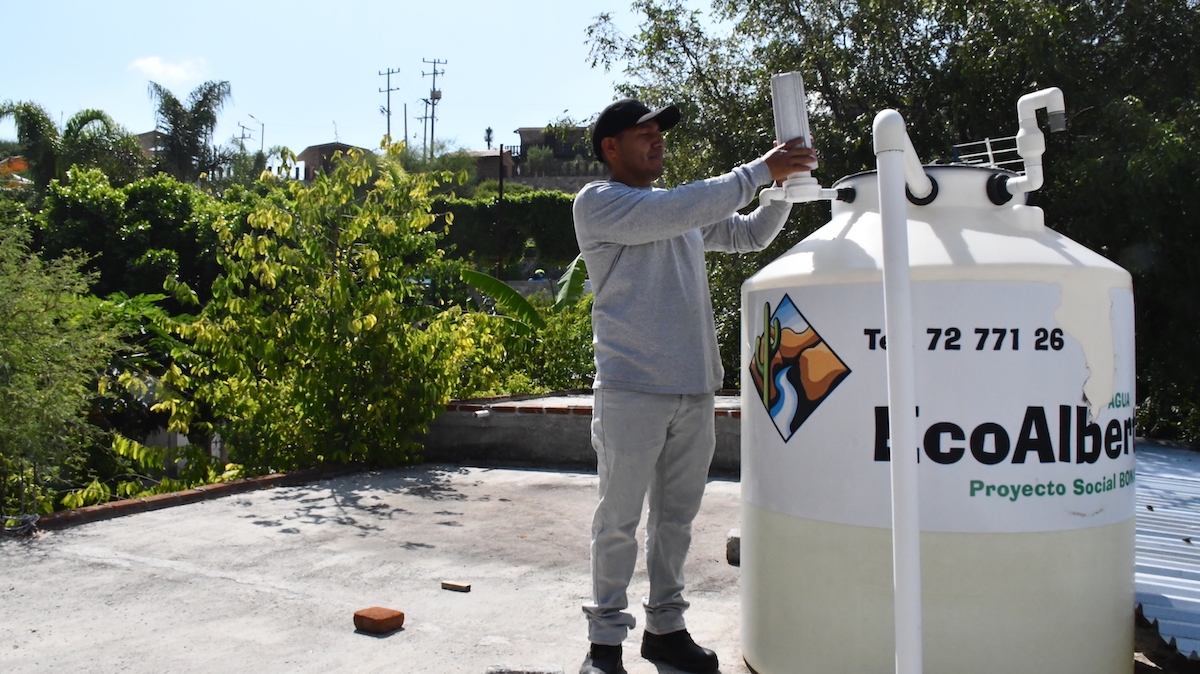
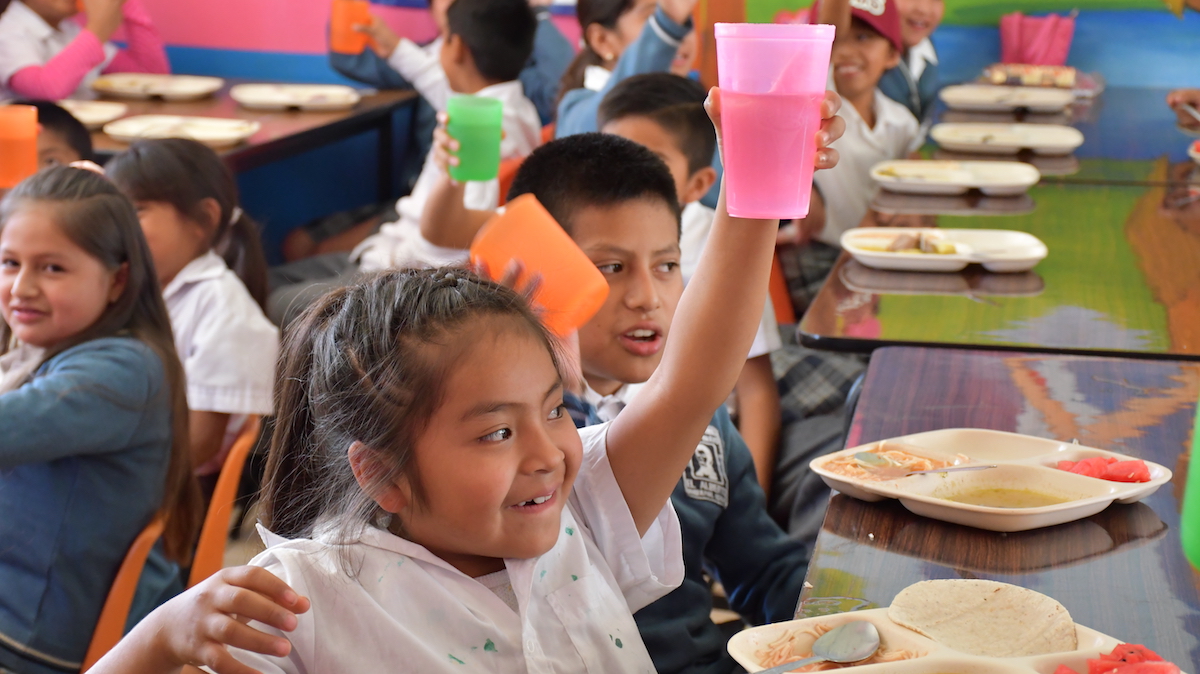
The company EcoAlberto was created in this area to provide access to safe drinking water. Nowadays it has benefited more than 30,000 people in 78 indigenous communities. The water is delivered in big tanks to fill the smaller tanks of shops and schools, the meeting points where indigenous women sell this safe water to increase their income and promote healthy water and healthier hydration practices.
15,763
People with access to safe drinking water
3.257 million
of liters sold (2021)
*Impact figures from the Danone Communities report as of the end of 2024
Xochilt
Hidalgo, Mexico
“I had to carry the water in buckets all the way to the community. It used to take me more than 3 hours a day, to go and bring back water home. It was a difficult and tiresome task, taking away a lot of my time.
Now I own a small shop where I sell Eco Alberto’s safe drinking water to my community. I’m happy to be able to help my community have easy access to safe drinking water. This also is empowering for women around me: now they don’t have to collect water anymore and they can work and earn a living.”
La Laiterie du Berger: a success story at the heart of the Danone Communities model
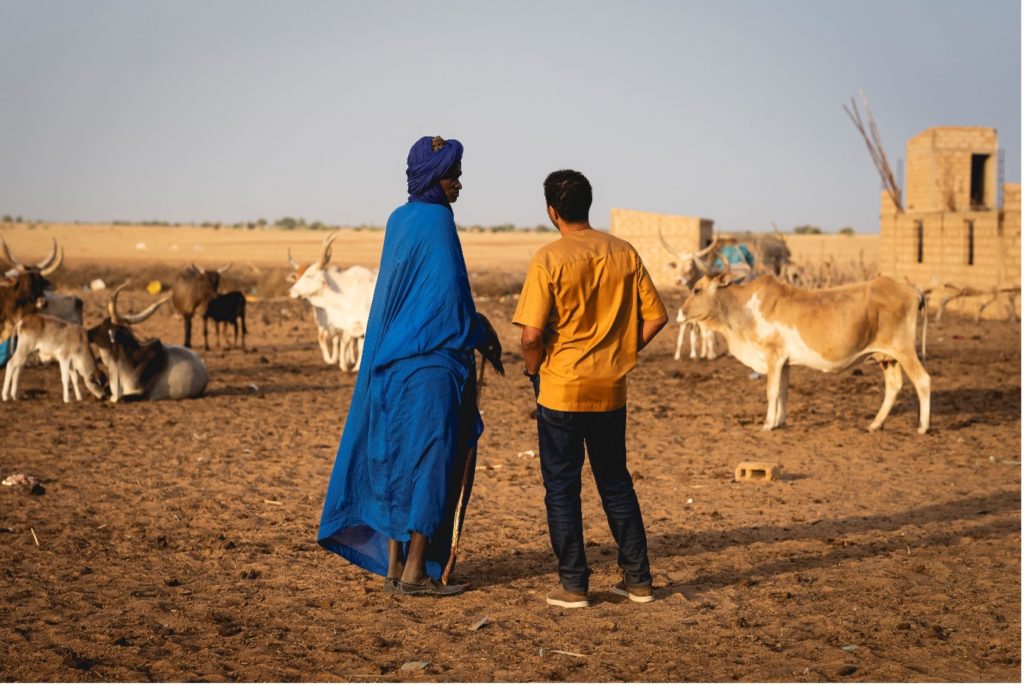
In 2007, Bagoré Bathily, a Franco-Senegalese veterinarian, founded La Laiterie du Berger with an ambitious goal: enable Fulani herders in Senegal to make a decent living from their activity by promoting the production of local milk. At the time, nearly 90% of the milk consumed in Senegal was imported, even though 30% of the population depended on livestock farming.
Danone Communities got involved as early as 2008 alongside Bagoré and his team, providing patient financing as well as unique business support: Danone volunteers shared their expertise in brand development, industrial management, management control, HR, and operations. This mobilization led to the construction of a solid business model and enabled the company to grow by 30 to 40%.
A major economic and social impact
Today, La Laiterie du Berger:
Works with over 3,500 herders to collect fresh local milk.
Markets its products under the Dolima brand, now a staple across Senegal.
Generated over 5,420 direct and indirect jobs.
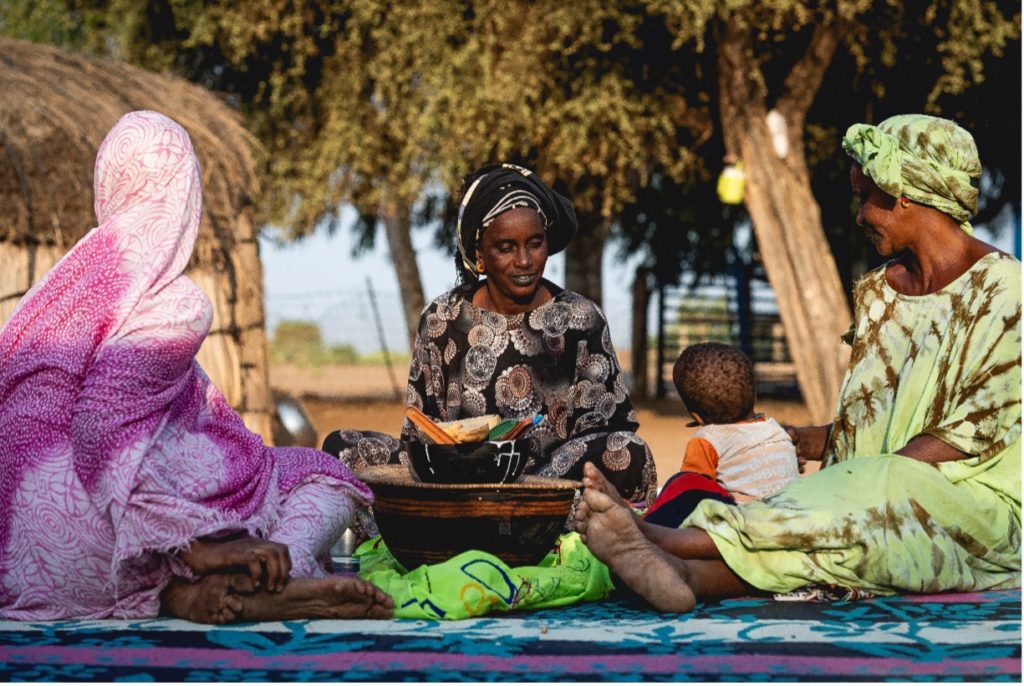
Trained 1,522 women’s groups in entrepreneurship.
Impacts 32,000 local stakeholders across the value chain.
Sells its products in 35,000 points of sale in Senegal and Gambia.
A successful exit, true to our mission
In 2023, La Laiterie du Berger reached a sufficient level of maturity, both financially and in terms of social impact. Danone Communities then decided to exit the capital it had invested, in line with its mission to support social businesses until they achieve considerable impact and financial balance.
The two shareholders, Danone Communities and Phitrust, then made way for a partnership between Concert Bathily and Danone to support a new phase of growth.
This exit allows Danone Communities to continue investing in new businesses that provide access to safe drinking water and quality food for vulnerable populations.
An inspiring model that serves Danone’s mission
La Laiterie du Berger fully embodies Danone’s mission: to bring health through food to as many people as possible. By promoting locally produced milk, building an inclusive supply chain, and developing accessible, nutritious products, the company has addressed public health challenges while strengthening the local economy.
This project demonstrates that it is possible to reconcile social impact and economic performance, relying on innovative business solutions to sustainably improve living conditions for vulnerable populations.
The successful capital exit of Danone Communities from La Laiterie du Berger perfectly illustrates our approach: supporting social businessesuntil they reach a sufficient level of maturity to continue their mission, in line with Danone’s values and commitments.
1 in 5 children are born into families living under the poverty line
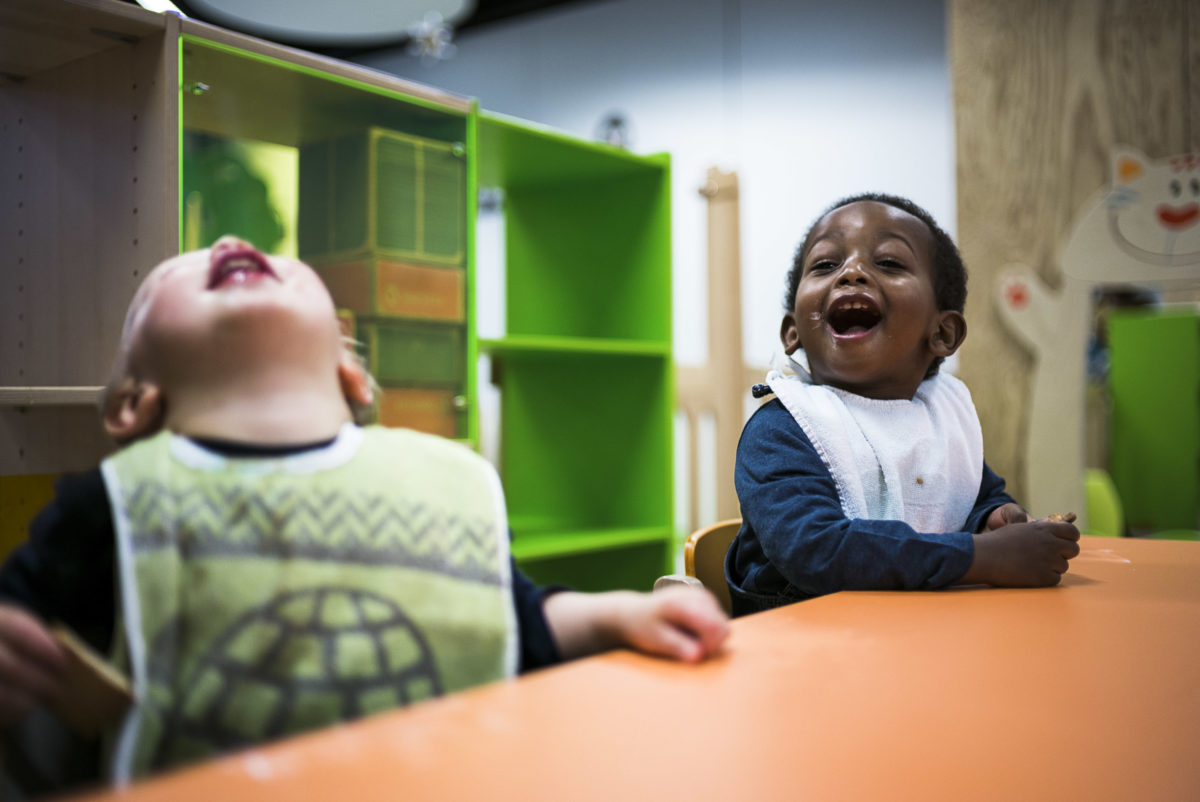
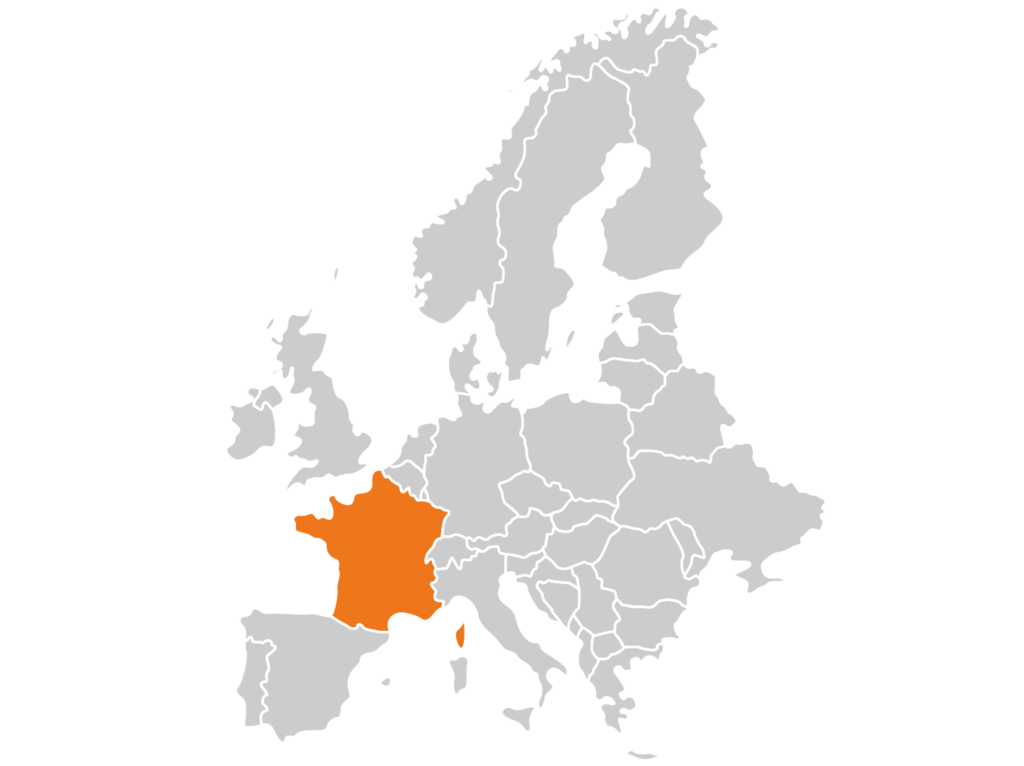
Sustainably improving the health of children aged 0 to 3 from families facing financial hardship in France
Context and Social Issue
In France, many families living under financial constraint struggle to access infant nutrition that meets the needs of children aged 0 to 3 years old.
Financial hardship, combined with a lack of reliable nutritional information, can lead to constrained food choices and increase health inequalities from the earliest years of life.
It is estimated that a significant proportion of children from families in precarious situations are exposed to nutritional risks that may have lasting consequences on their development and future health.
Programme Malin: a concrete solution for better infant nutrition
Created over 15 years ago, Programme Malin offers a structural response to this public health issue in France.
The program supports families with young children through a combined approach:
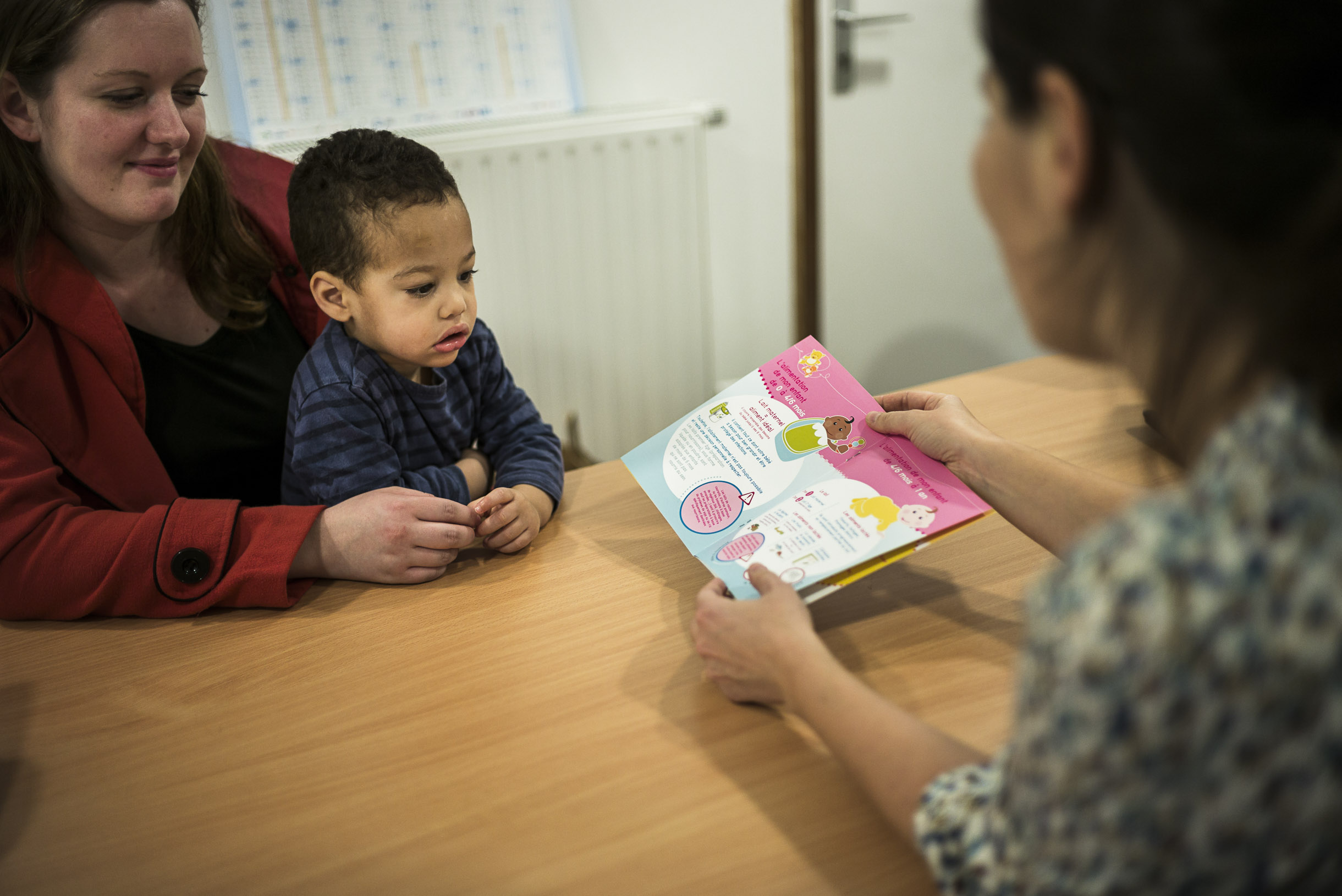
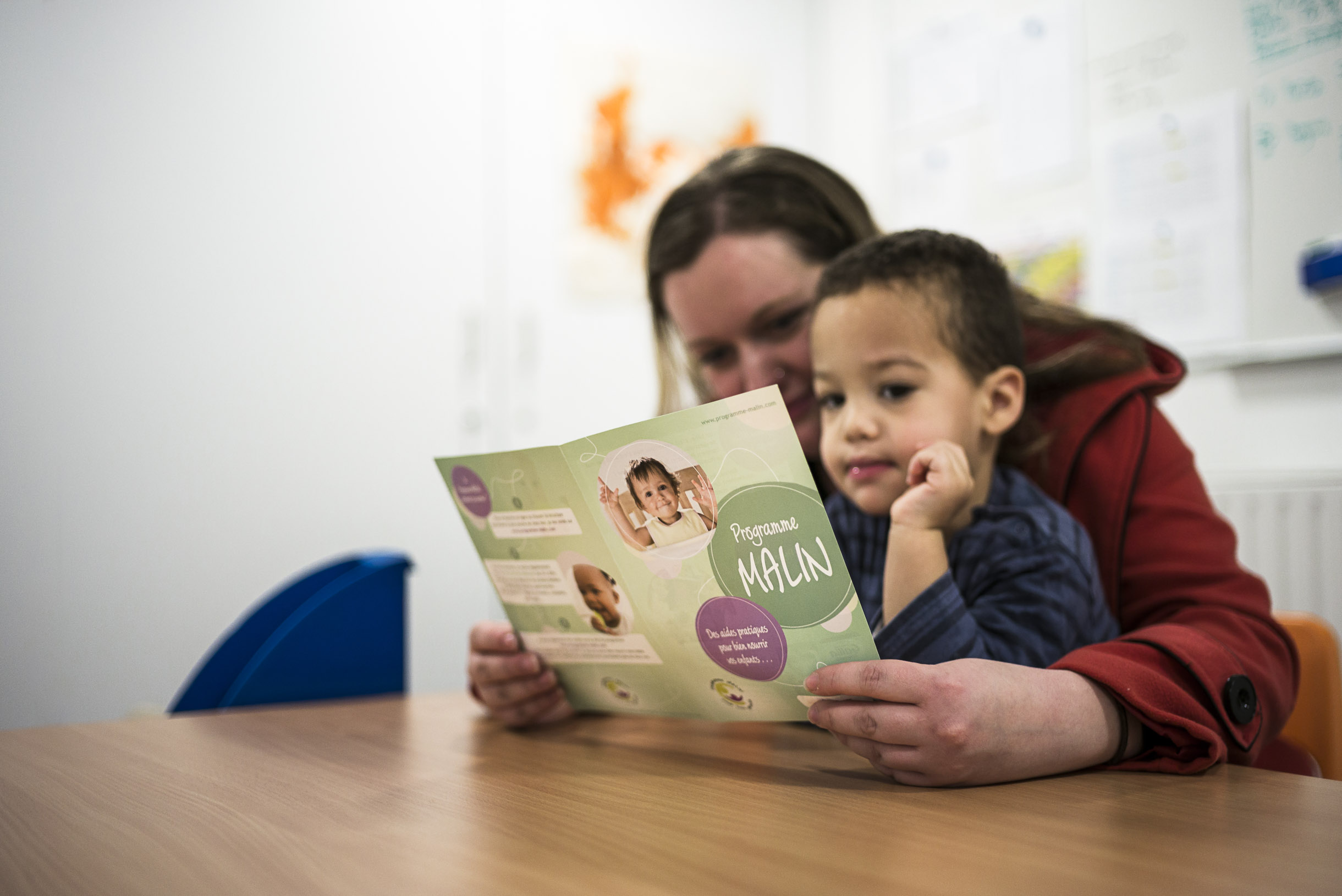
Nutritional information and support: advice validated by pediatricians that is reliable, practical, and accessible, tailored to the nutritional needs of children aged 0 to 3
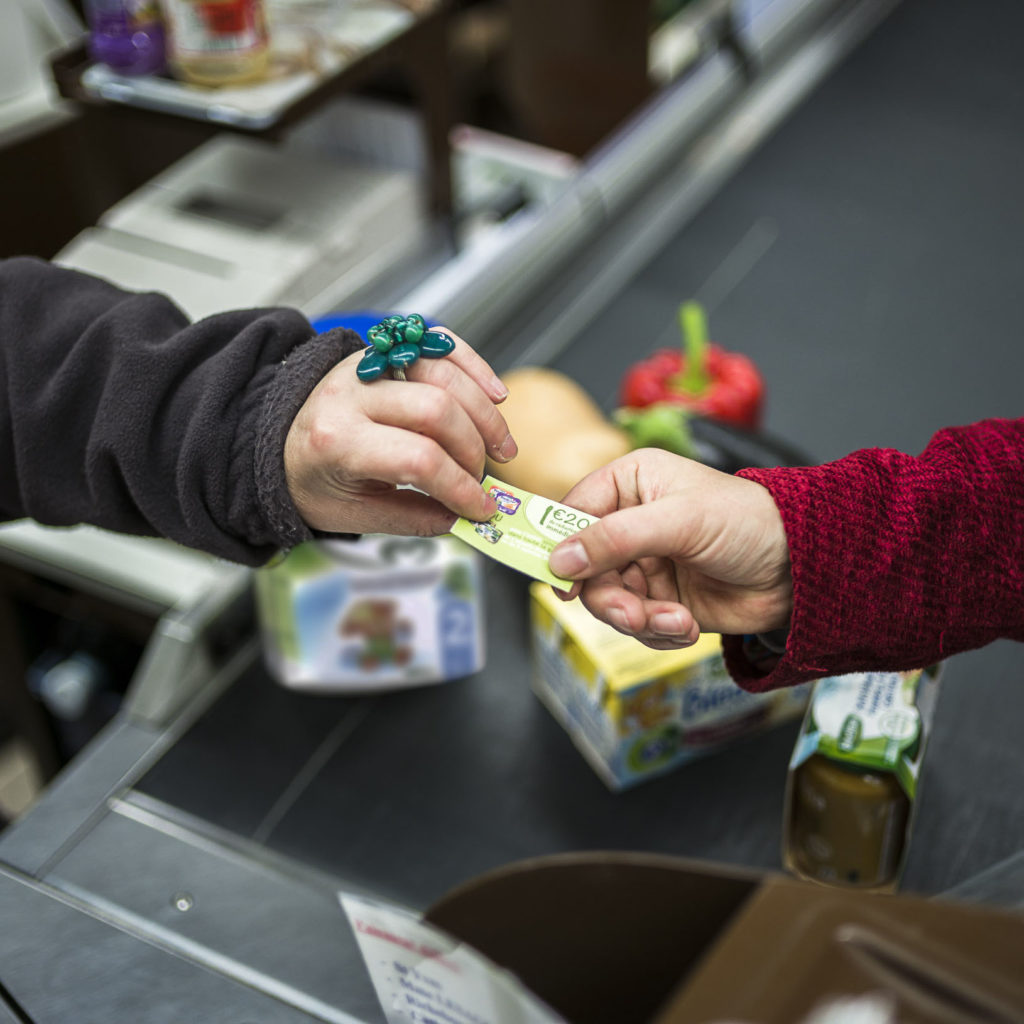
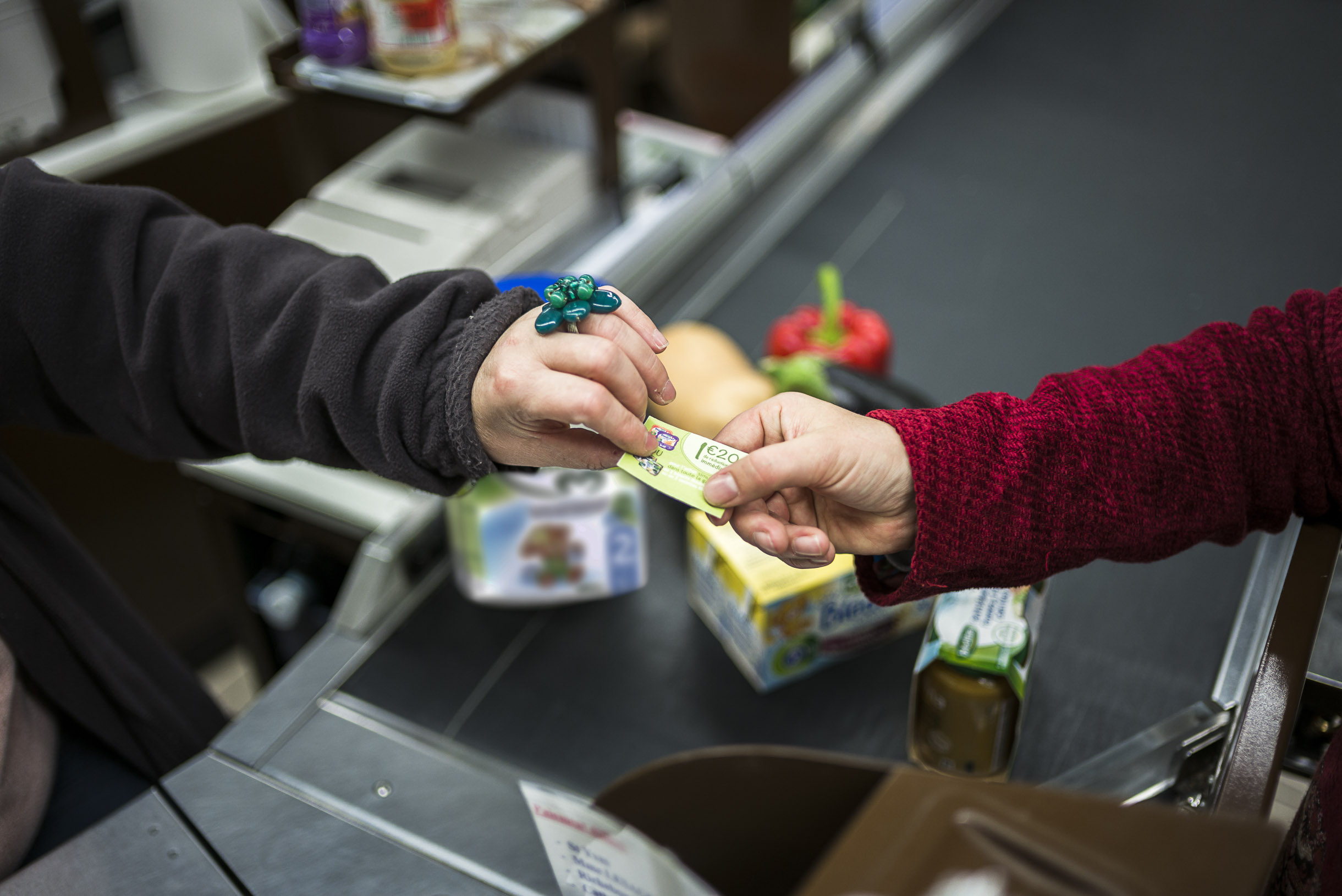
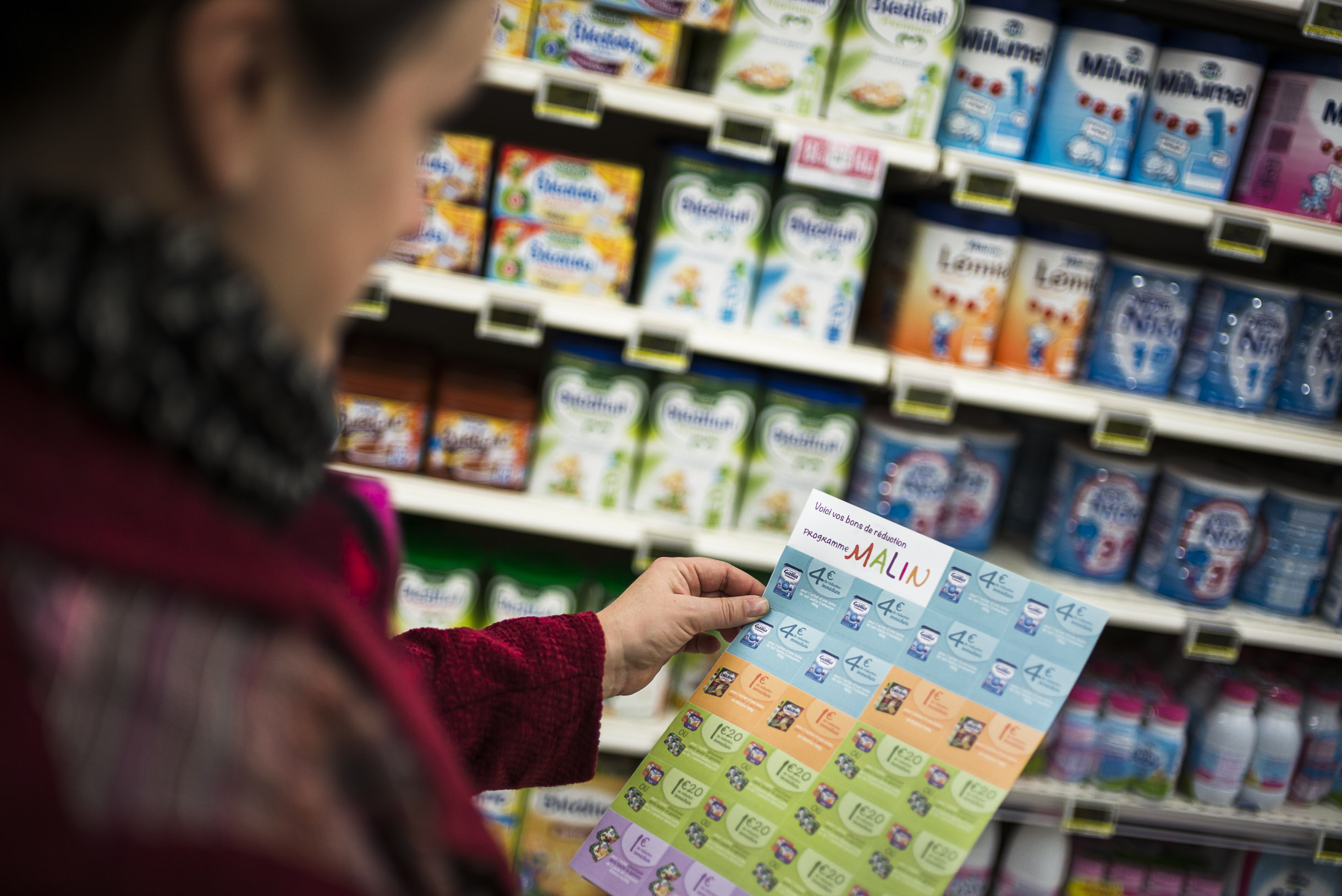
Direct financial support: Discounts that allow families to access suitable, quality products at an affordable price, through mainstream distribution channels (supermarkets, online sales).
Strong local roots: partnerships with social, institutional, and retail stakeholders
The goal is clear: enable families to ensure quality nutrition for their children, without budget being a barrier.
The impact of Programme Malin on health
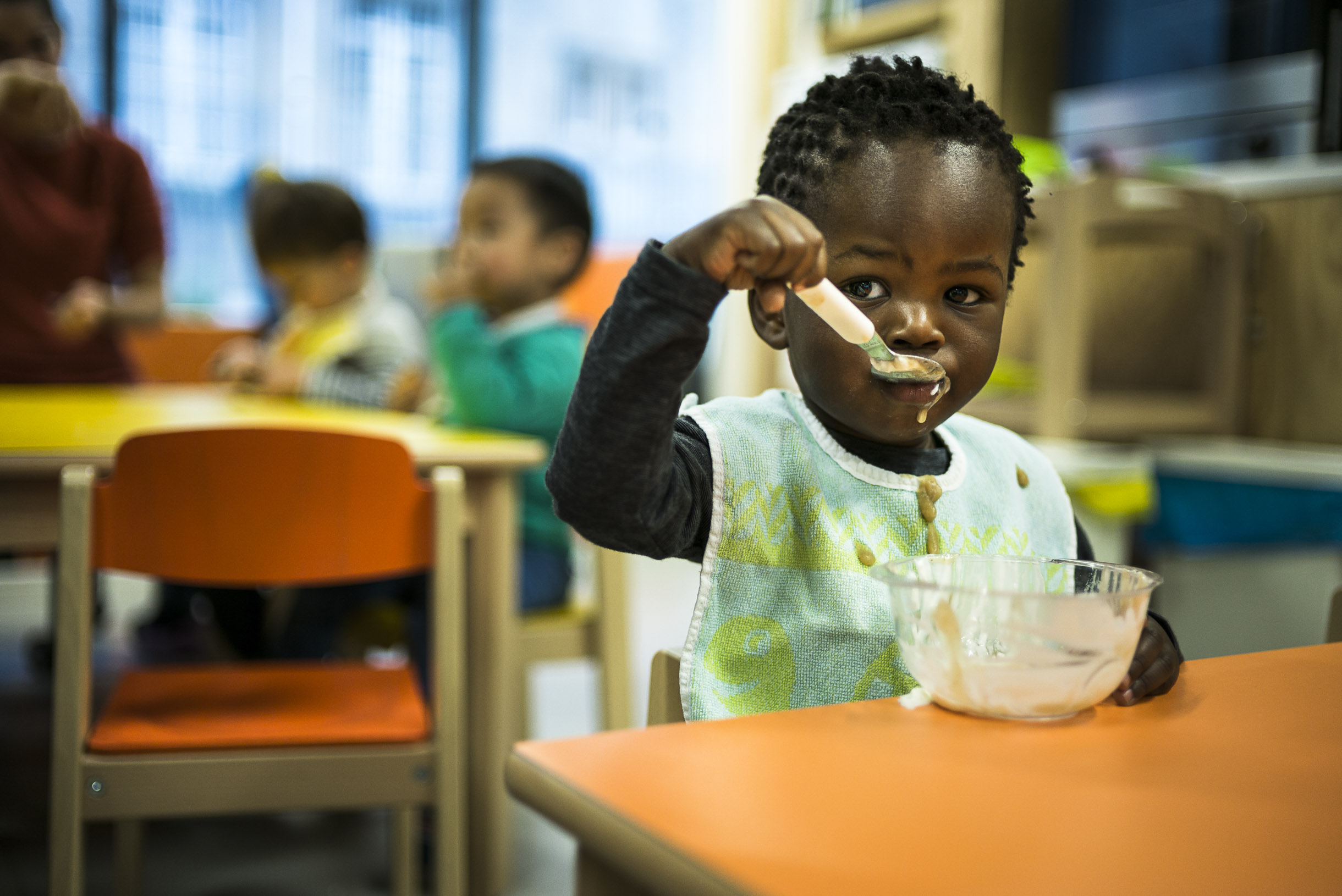
Programme Malin addresses a key determinant of young children’s health: eating practices during the first 1,000 days, a decisive period for their development and future health.
Beyond financial access, the program has demonstrated its impact on families’ consumption habits, promoting dietary choices better suited to the nutritional needs of children.
Observed results show a lasting change in eating behaviors (for example, a significant increase in the consumption of infant formula, replacing UHT milk, which is better suited to the nutritional needs of children aged 0 to 3), made possible by the combination of:
accessible and educational nutritional support,
concrete economic levers,
and a relationship of trust with beneficiary families.
Since its creation:
Over 300,000 children have been supported by Programme Malin in France
Programme Malin currently supports nearly 1 in 5 children from families facing financial hardship
By facilitating access to suitable products and strengthening parents’ nutritional knowledge, the program thus helps to:
prevent early nutritional risks,
reduce social health inequalities,
and sustainably improve the health of children from a very young age.
A partnership-based and economically sustainable model
The Programme Malin is founded on a hybrid model combining:
Public partnerships (CNAF, national institutions, local authorities)
in-store and online discounts funded by partner brands, for example Danone brands: Blédina, Gallia, Velouté, Les 2 Vaches, Danone
donation schemes, including salary rounding
philanthropic support
This model enables large-scale impact while progressively strengthening the programme’s financial autonomy.
How Danone Communities provides practical support to the Programme Malin
As a founding and longstanding partner, Danone Communities has supported the Programme Malin since its inception.
This support takes the form of:
strategic guidance in structuring its economic model
support for scaling up and strengthening the national partnership
work on measuring and steering health impact, in line with Danone’s mission: to bring health through food to as many people as possible
By supporting the Programme Malin, Danone Communities helps provide appropriate infant nutrition to vulnerable families and takes concrete action to positively impact health worldwide, in line with Danone’s mission.
+300,000
children have been impacted since the creation of the program
figure at the end of December 2025
Adèle
mother, France
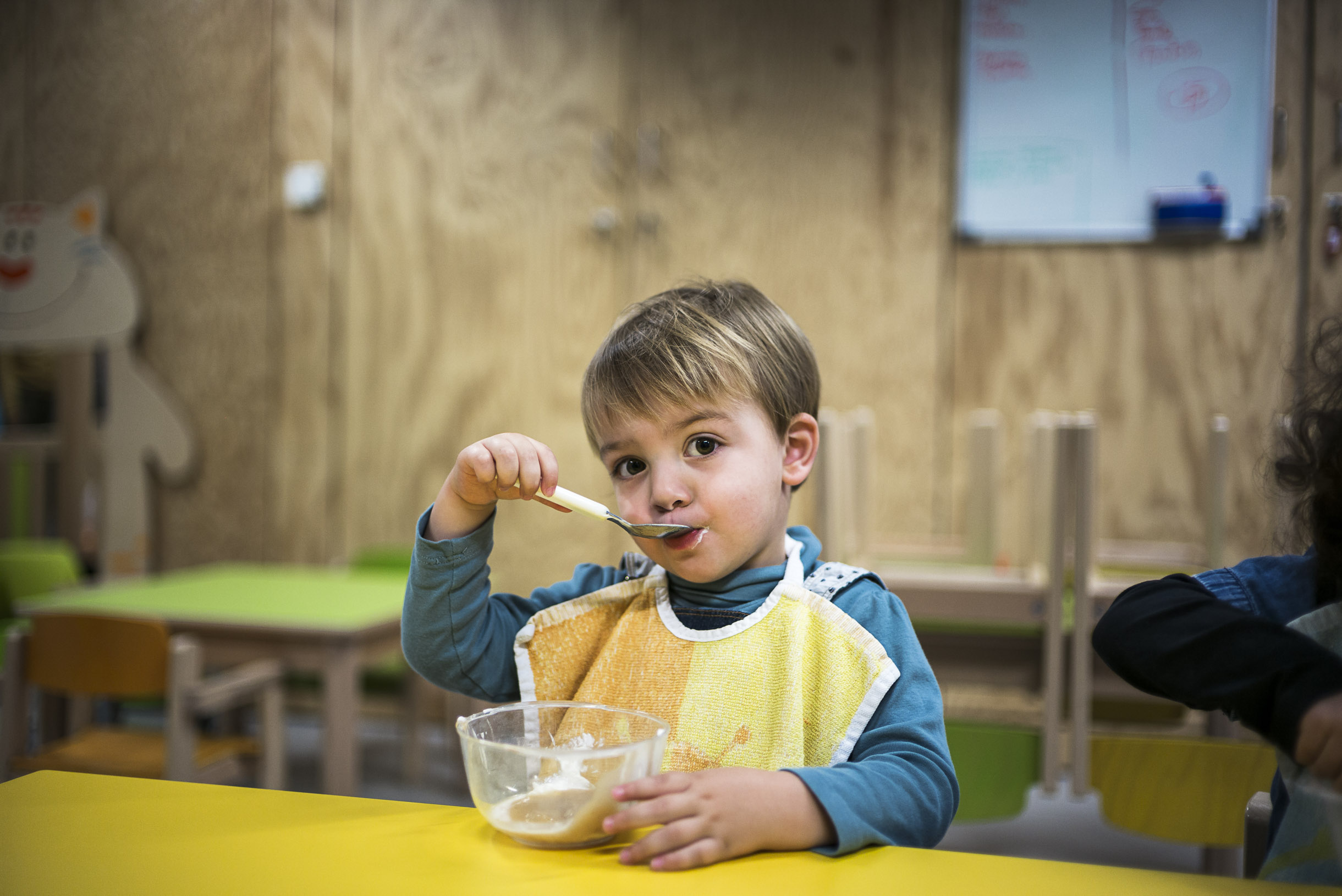
It is late in the evening when Adèle comes home. Adèle has a part-time job and she is a single mother of Gabriel, 6-month old, and Louis, 2-year old. She does not have much help raising her sons and she is trying her best to sustain the boys and herself. Adèle did not have a lot of time to learn about and prepare healthy nutrition for her children.
It was a great relief when the pediatric nurse told her about the Malin program. The program helped Adèle to understand the nutritional needs and gave her tools to guarantee healthy nutrition for her sons.
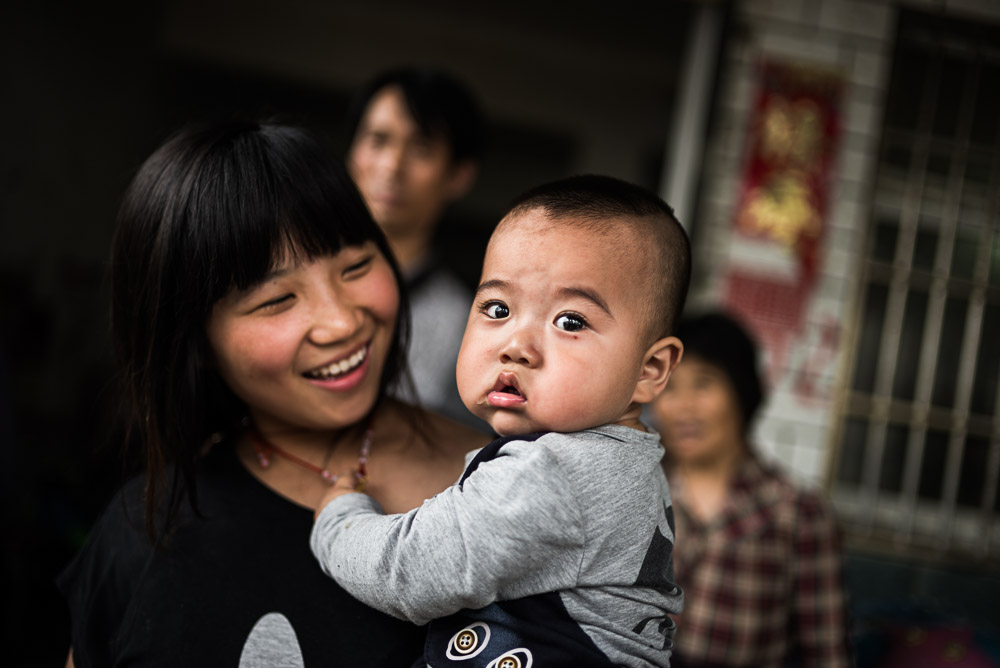
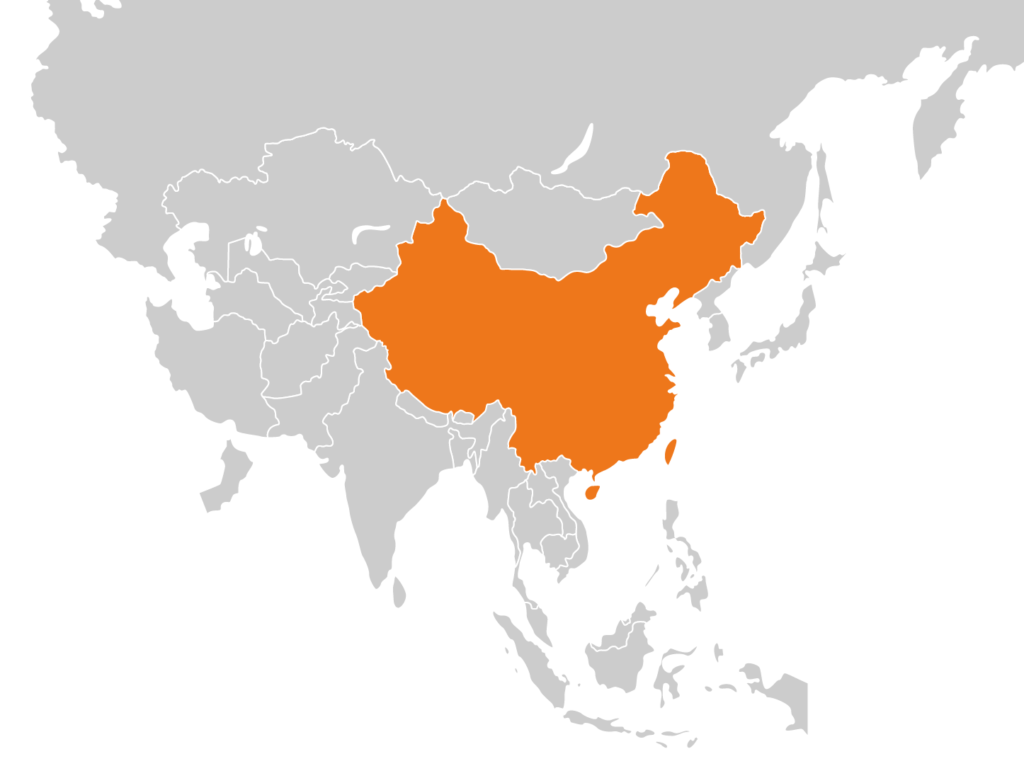
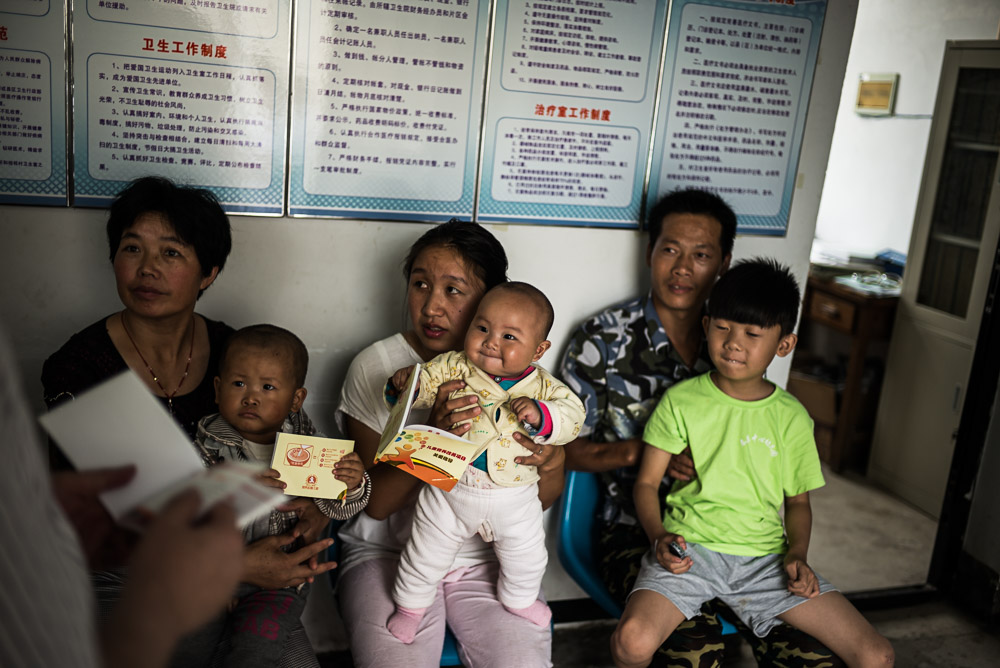
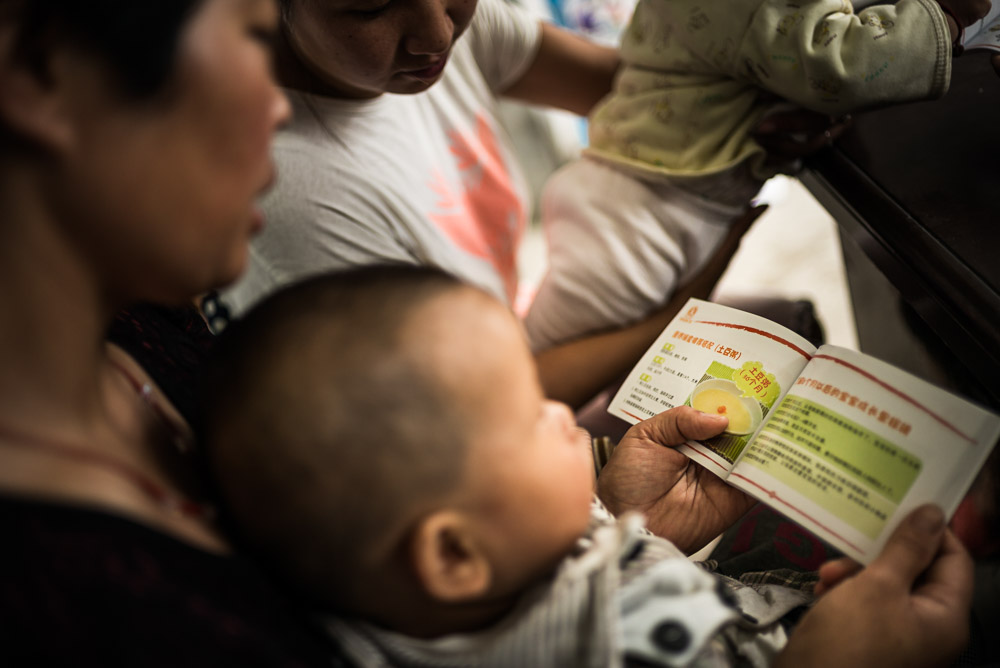
In an ever-expanding China, parents from poor rural communities leave their villages to go to work in the cities. Infants are often entrusted to their grandparents. It is the reason why the breastfeeding rate is low and anemia (mostly iron deficit) affects 10 million children, especially in rural areas among children under 2-year-old.
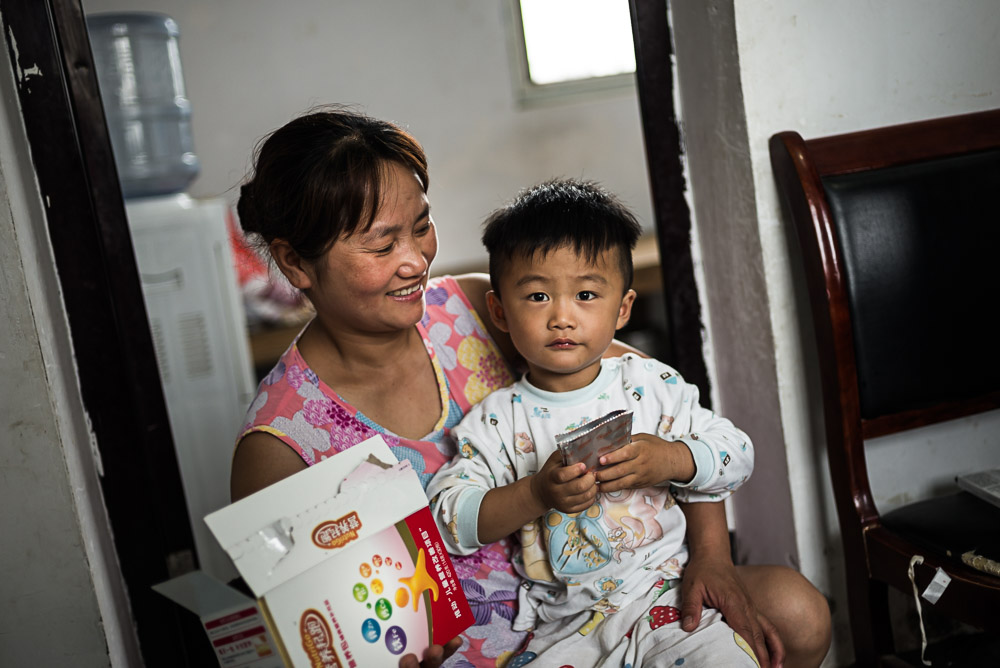
Mrs Chen and Mr Zhu, two Professors, decided to tackle this issue by developing Ying Yang Bao – a nutrition supplement pack that is enriched with essential micronutrients and can be sprinkled on rice, noodles or beverages of kids.
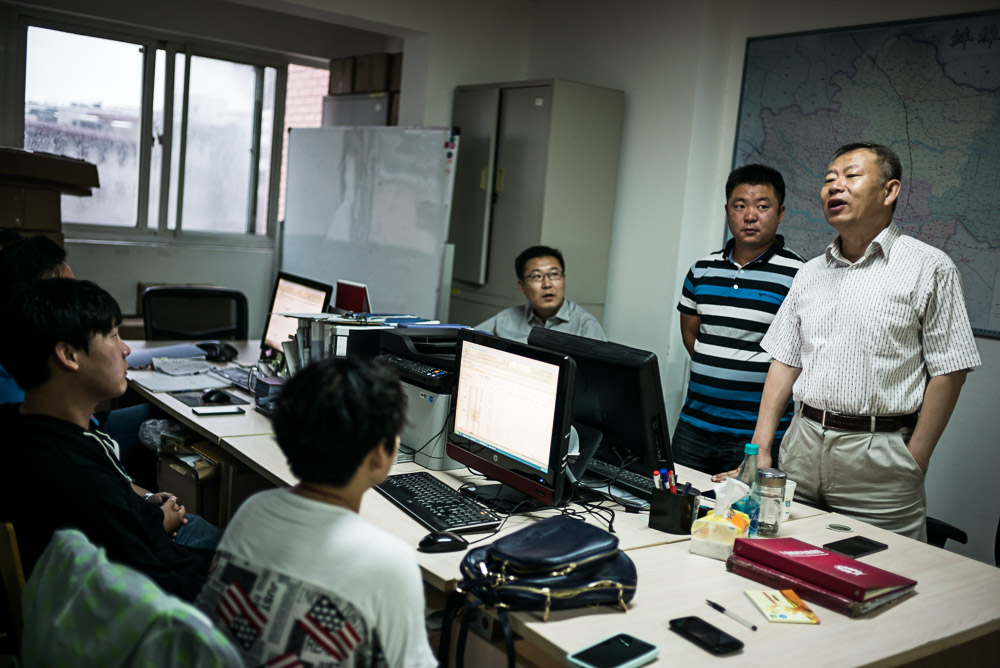
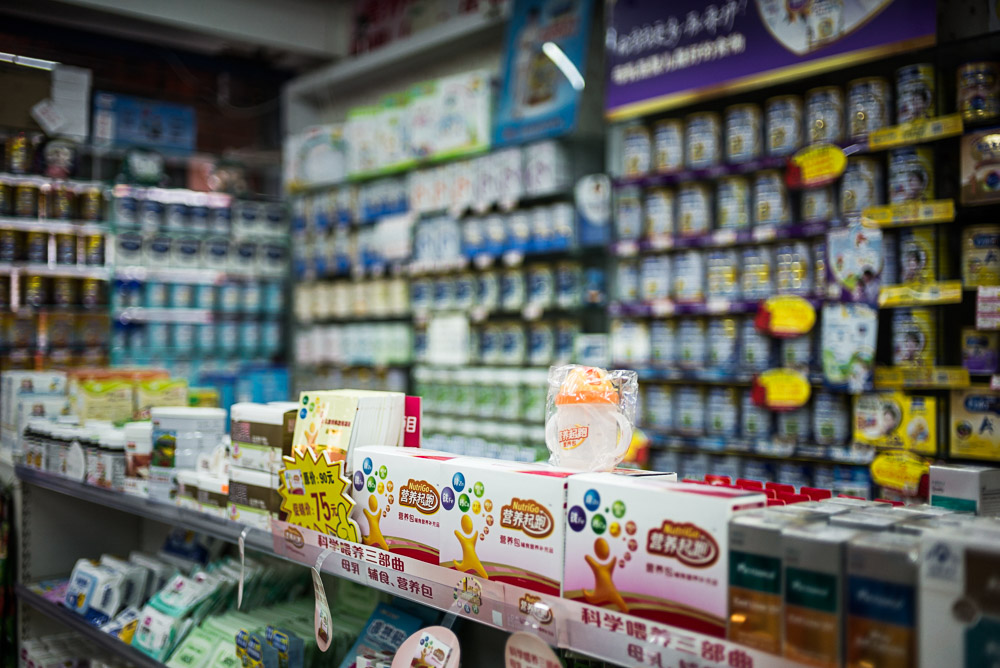
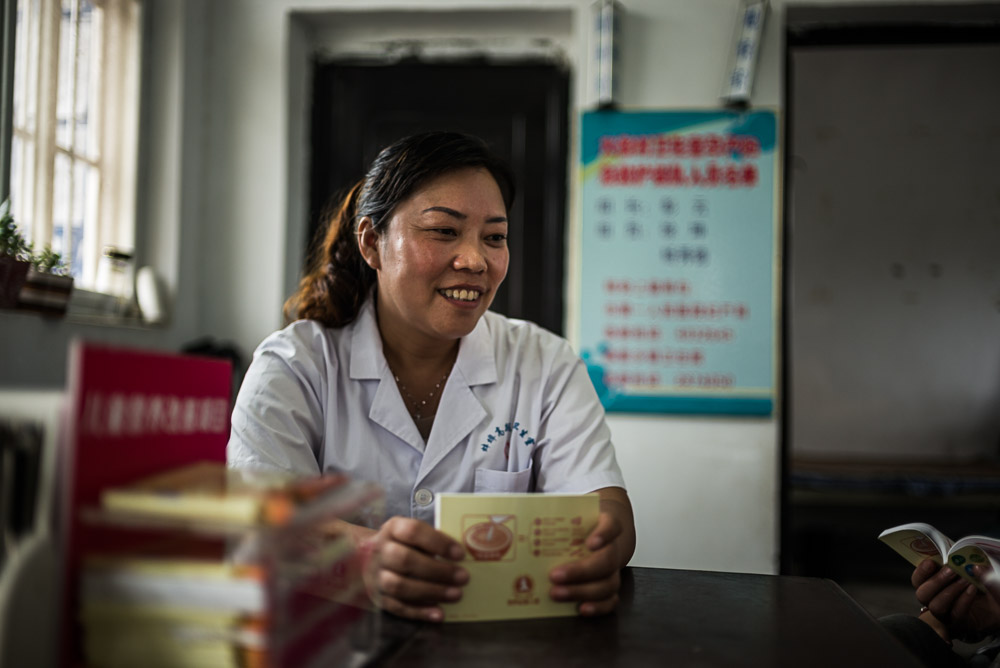
After a successful pilot, YingYang Bao is now sold by the social business Nutrigo in Eastern & Central China. Encouraged by the positive impacts from Ying Yang Bao, the Chinese government started to distribute it in the 300 poorest districts and joined forces with Nutrigo to educate health workers.
25%
A dose of Ying Yang Bao provides at least 25% of a kid’s daily micronutrients needs
85,000
the product is sold in 2 provinces and 85 000 babies benefit from it (2021)
Mrs Xiao
Grandmother, Bengbu, Anhui Province
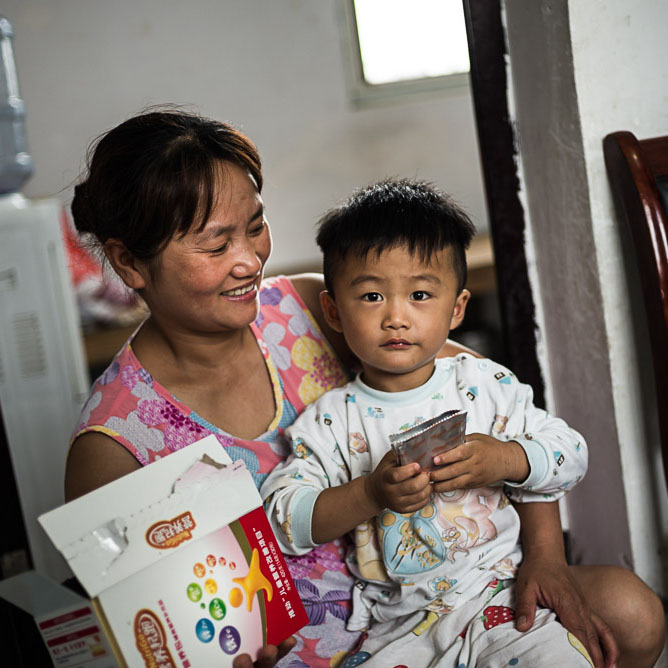
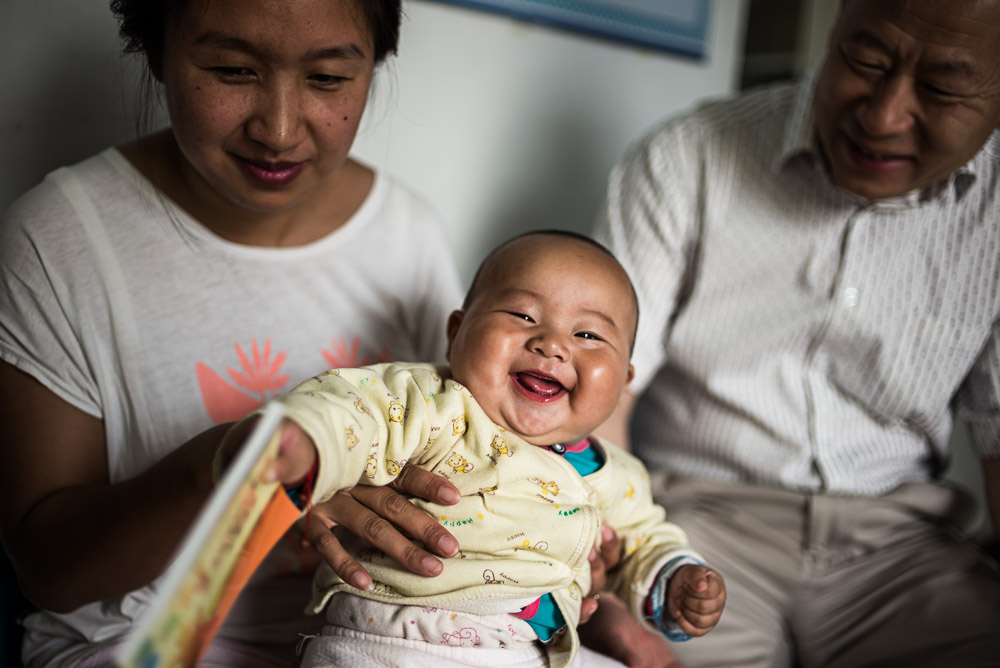
Mrs Xiao story is a story of many grandmothers in her town. With her husband they are taking care of their grandson while her daughter and her husband are working in a city. There is no work available in her town, so many young people are forced to move and search for earnings in big cities.
One of the main concerns Mrs Xiao has, is how to guarantee good nutrition to her grandchild. She is aware that adequate nutrition plays a crucial role in her grandson development. It was a few months ago when a village health practitioner introduced YingYang Bao to her. She went to talk to her, as her grandchild was often tired and sick.
Now she is regularly adding Ying Yang Bao to the meals she is preparing for her grandson and she is seeing he is much more active and not so sickly.
Population living below the poverty line of USD 4.20 per person per day: 64.02% in 2022(The World Bank)
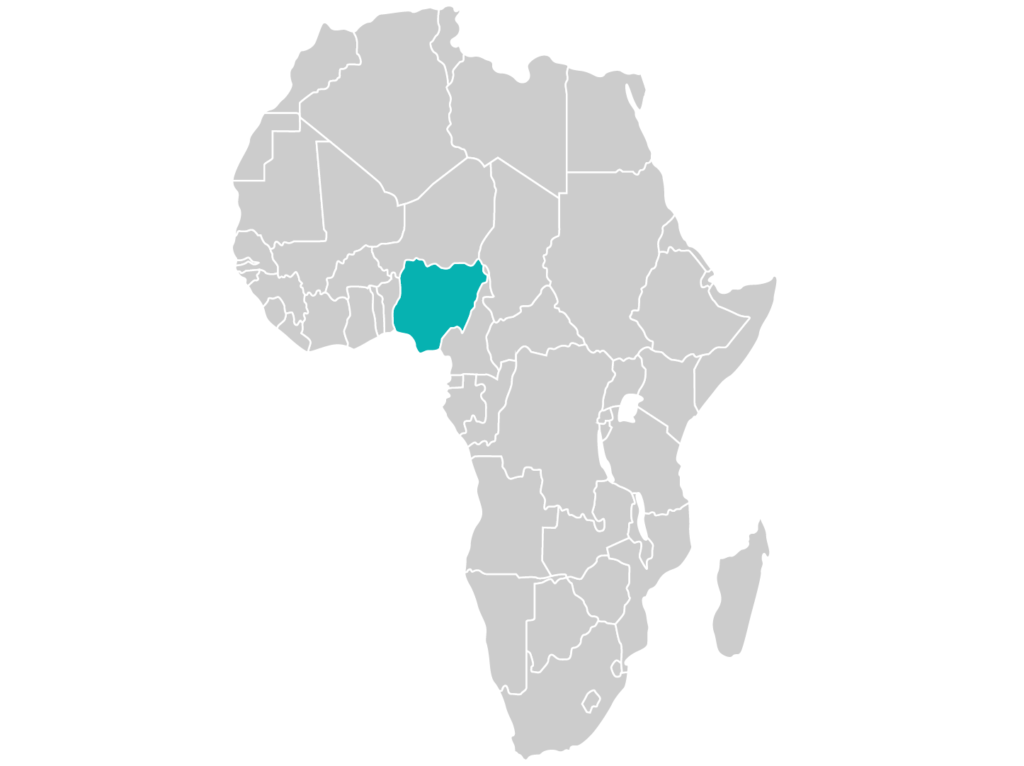
About 31.5% of Nigeria’s population does not have access to a safe drinking water source. This percentage represents more than 60 million people.(source)
This video was filmed in 2023; the figures have since changed.
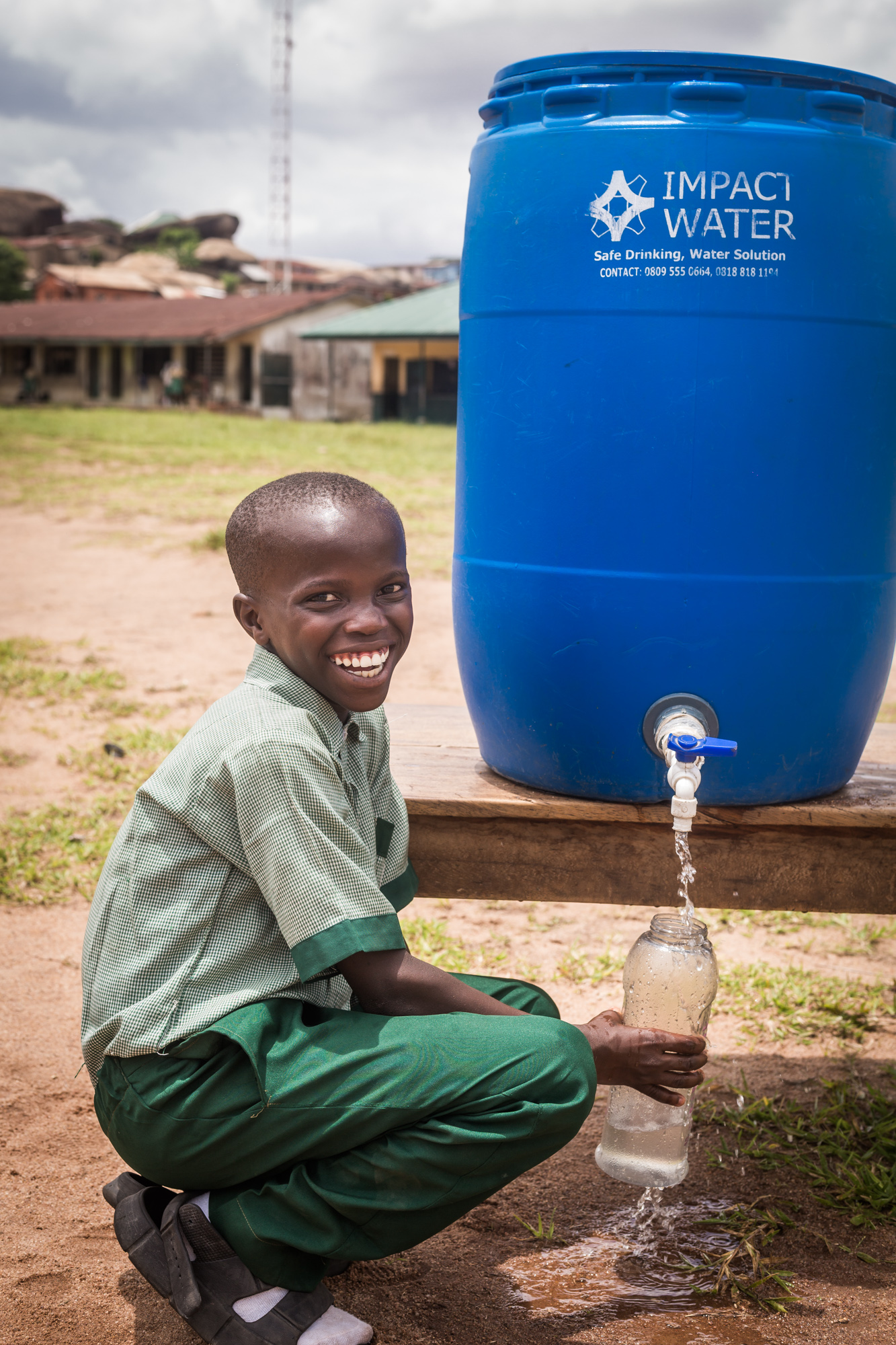
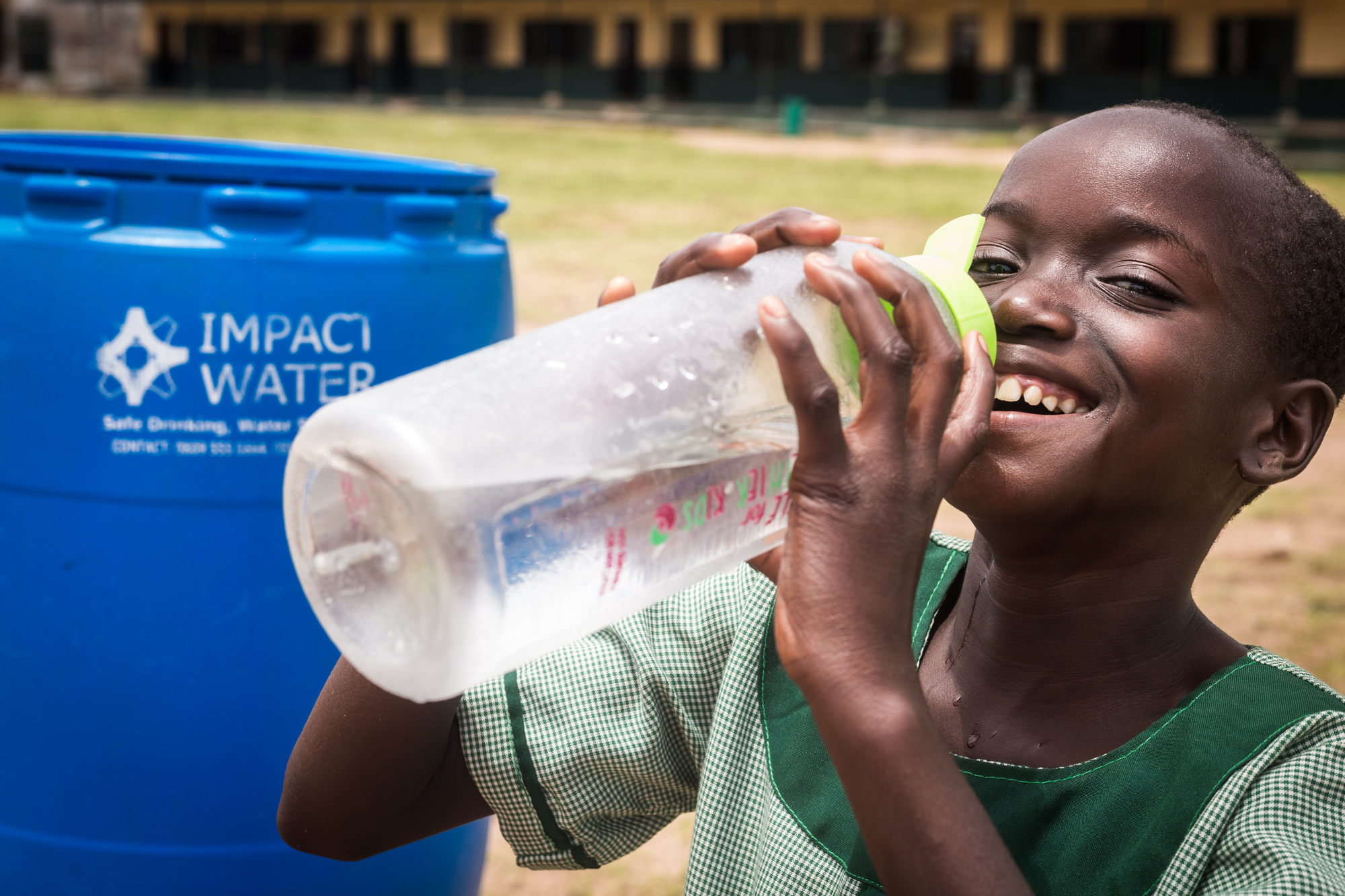
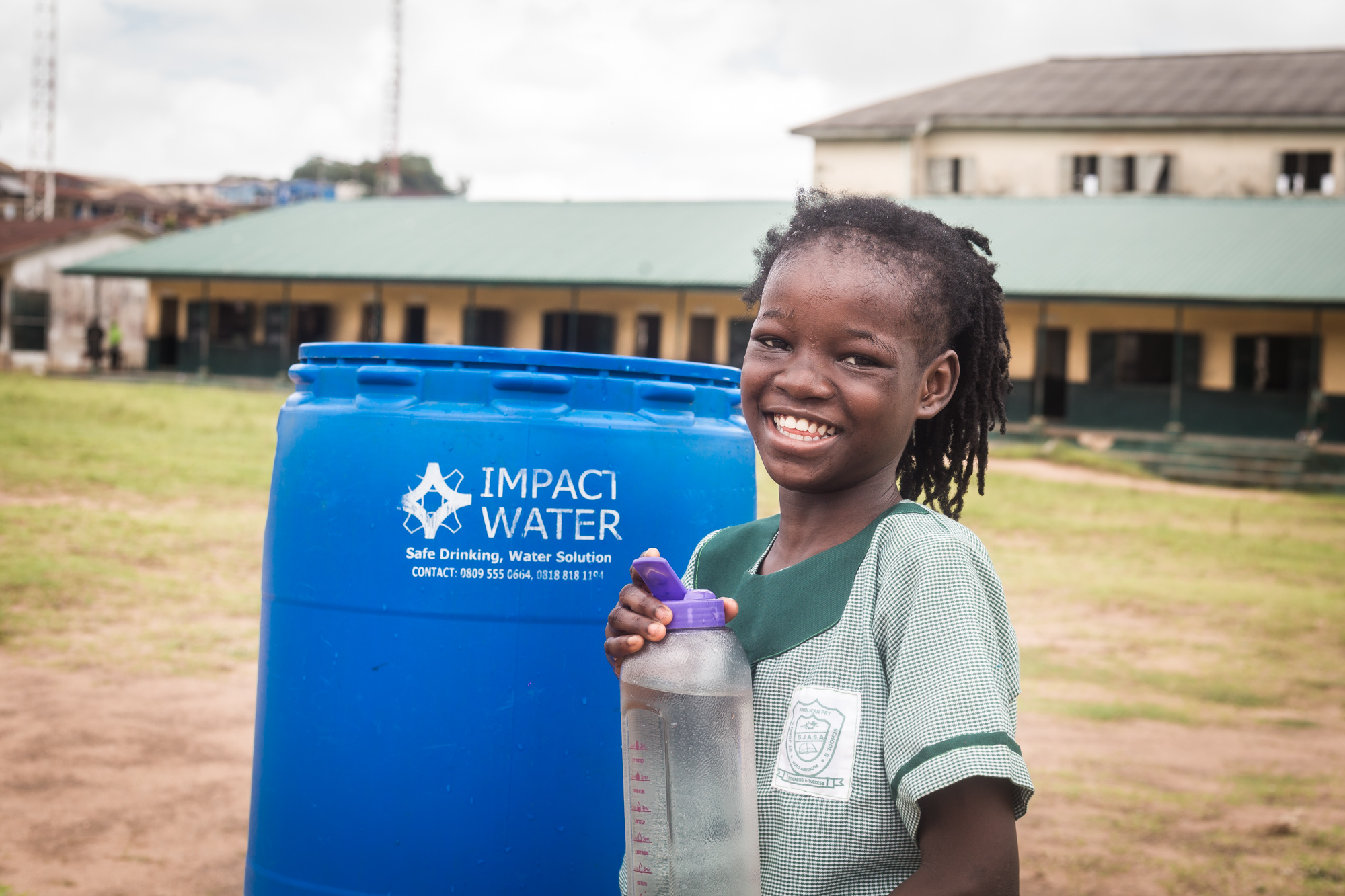
Impact Water: Drinking water at school—an engine for children’s health
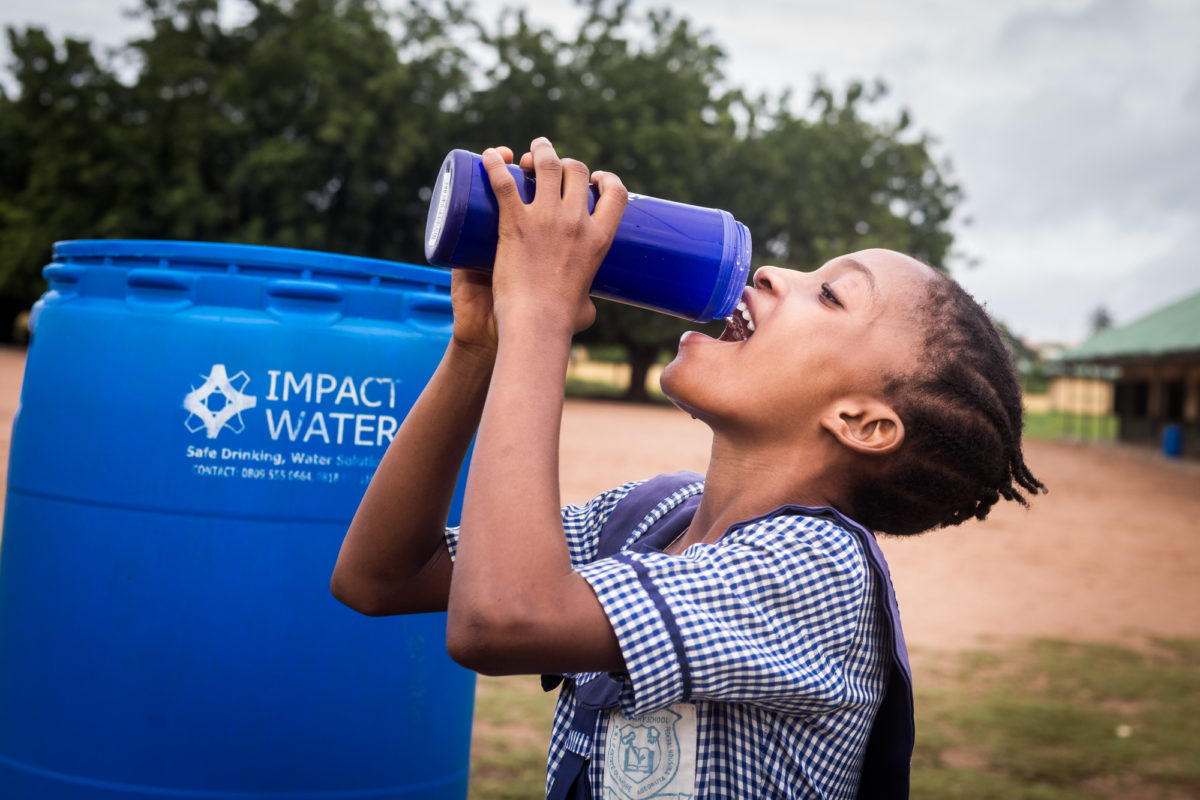
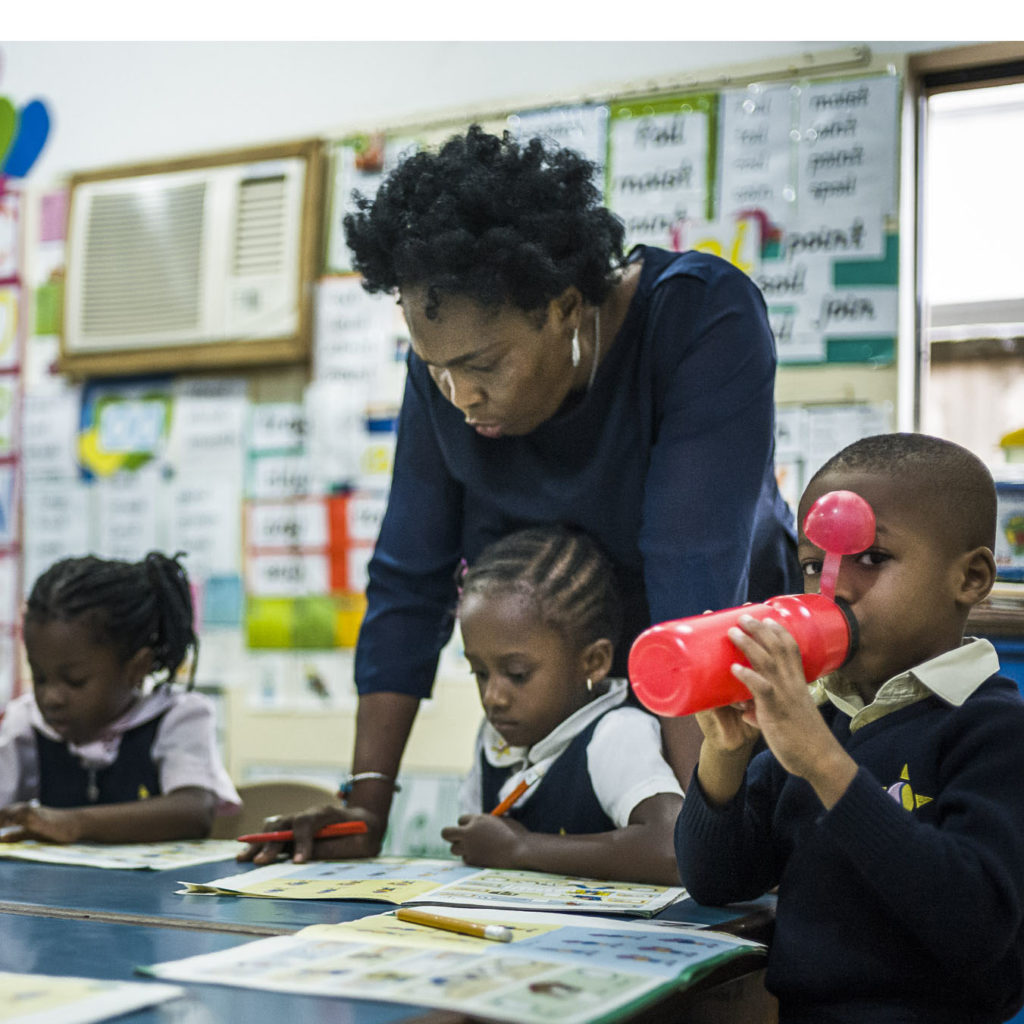
In many African countries, public schools do not have access to safe drinking water. Children are exposed to major health risks, including waterborne diseases such as diarrhea, which impact their health, concentration, and school attendance.
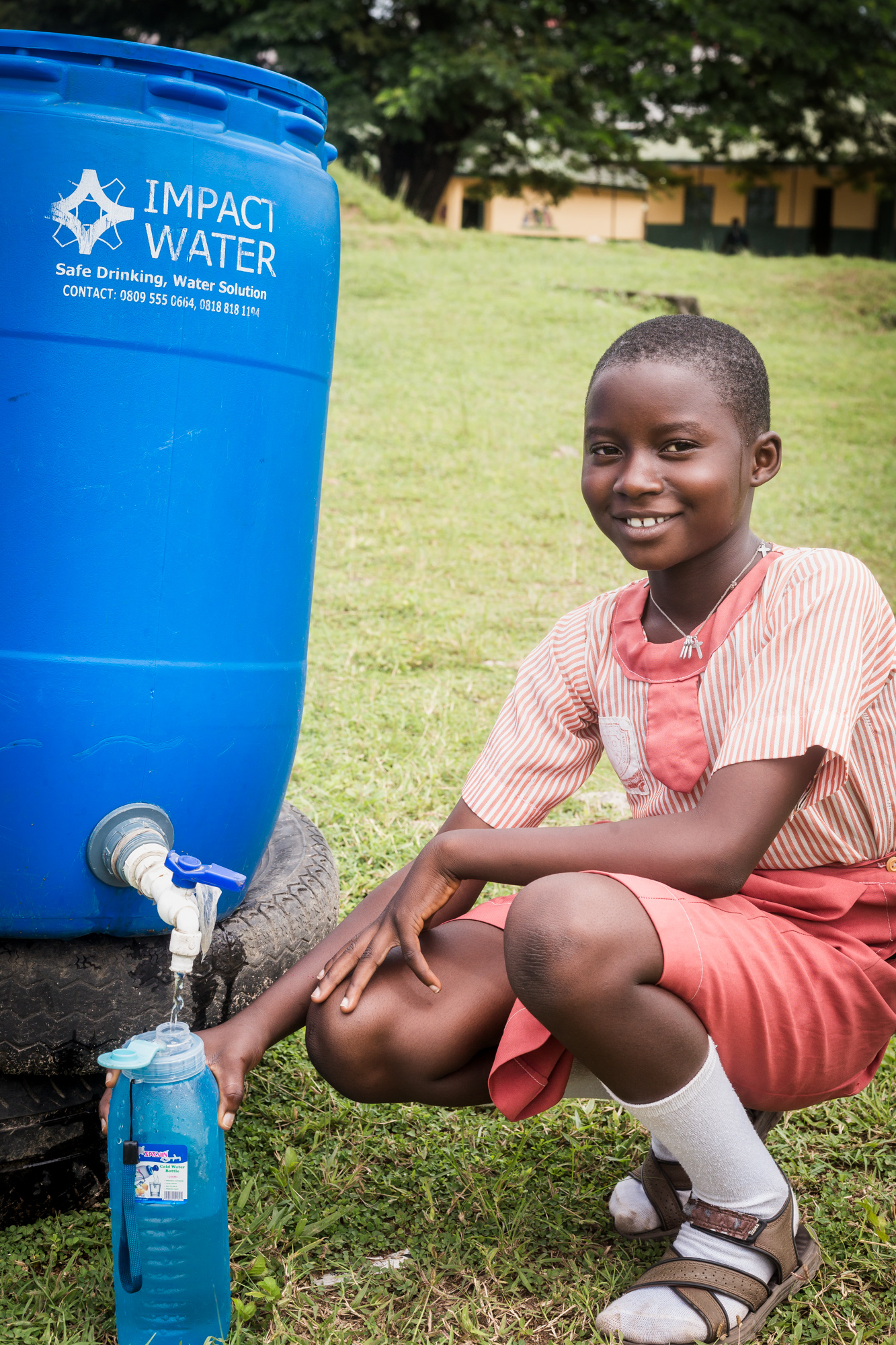
Impact Water offers a simple, scalable solution: point-of-use water treatment systems installed directly in schools, accompanied by hygiene trainings and frequent system maintenance. The goal is to improve student health and empower schools to provide reliable access to safe drinking water throughout the school year.
After several years of activity and expertise development in Uganda, Impact Water launched its operations in Nigeria in 2017.
The company works with the education and health ministries to equip schools and universities with chlorine-based water treatment units for free.
Its business model historically has been based on the sale of carbon credits, as its partner schools no longer need to boil water to make it safe to drink. However, the venture is now also raising grant funding to increase sustainability and global scaling.
In 2024, Impact Water reached a new milestone: more than 39,000 schools are now equipped with the water treatment systems in Nigeria, providing over 11 million children with access to safe drinking water every day.
Danone Communities supports Impact Water to improve the health of children in schools, in line with our health mission and commitment to impact-driven ventures. The results are tangible:
Reduction in waterborne diseases among children
Improved school attendance thanks to better health
Strengthening of hygiene practices in schools
Sustainable business model based on innovative financing
How Danone Communities actively supports Impact Water, some concrete examples:
Patient financial support: Danone Communities invested in Impact Water to support its development and expansion.
Technical assistance: Our teams contributed to the optimization of the operational model and impact measurement.
Highlighting the model: Impact Water is regularly showcased as a replicable solution for access to drinking water in schools.
Strategic networking: We facilitate connections with donors to support the expansion of the program.
By supporting Impact Water, Danone Communities helps provide access to safe drinking water for vulnerable populations and takes concrete action to positively impact health worldwide, as part of Danone’s mission.
11,600,000
children impacted in Nigeria
39,000
schools equipped
*Impact figures from the Danone Communities report as of the end of 2024
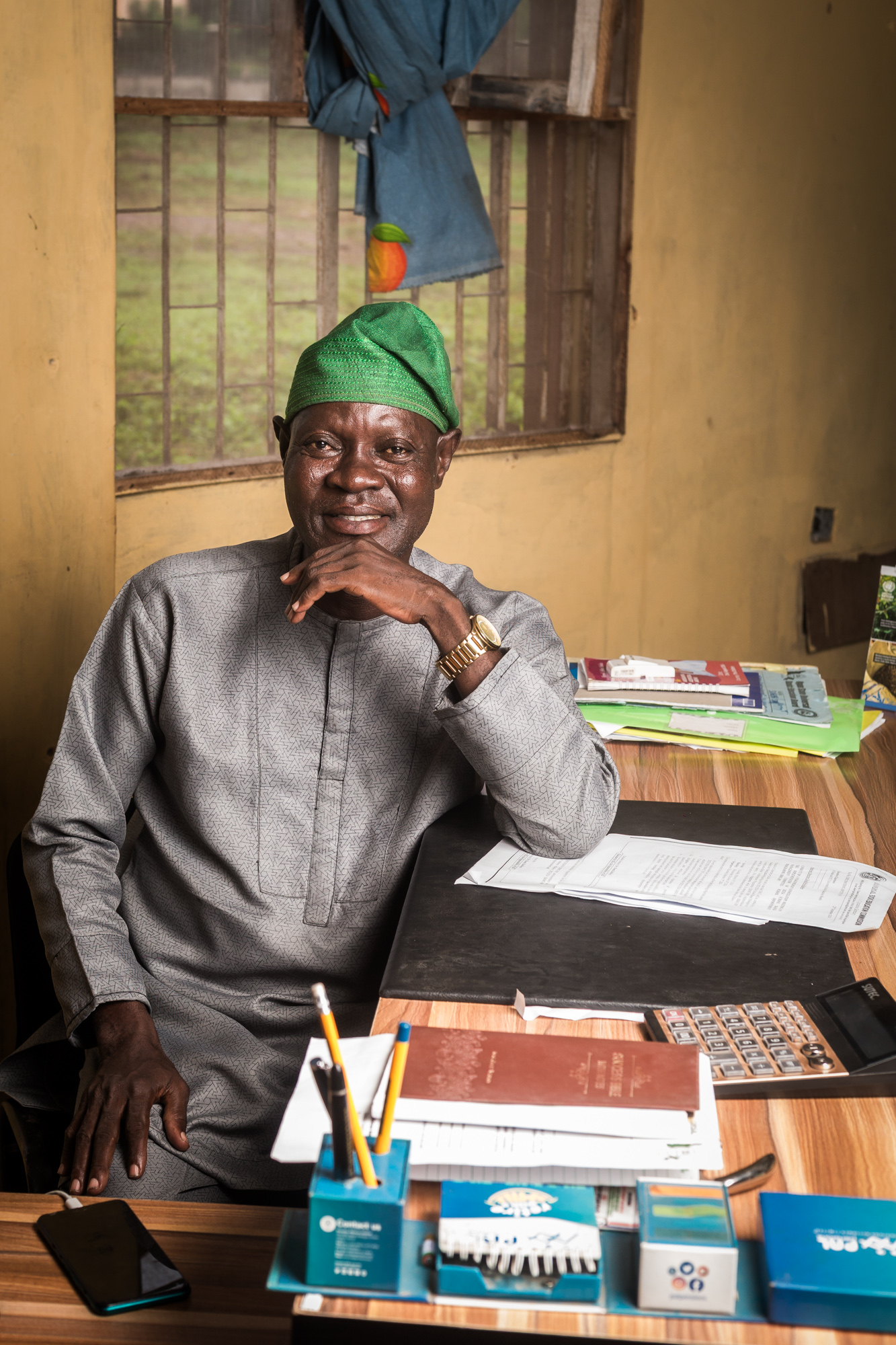
Adaeze
Teacher, Ikeja, Lagos, Nigeria
“Teaching was always my passion, even as a young girl I was tutoring my younger siblings and neighbours’ kids. Before Impact Water was available in my school, boiling was the only toolwe had to provide drinking water for my students. The school struggled with the cost of firewood as well as the hours lost to the chore of boiling water. I was searching for sustainable solutions until I met Zacch, CEO of Impact Water Nigeria, who offered a water treatment system my school could afford.
I would recommend to all of the schools to install the Impact Water system. Before our students had a lot of problems with stomach pain, diarrhoea and other waterborne diseases. Now with Impact Water we have safe drinking water always available in the school. Kids can take water whenever they are thirsty and they do not miss class due to waterborne disease anymore.”
This video was filmed in 2018, the figures have since changed.
Jibu: Drinking water, a driver of economic and social impact in Africa
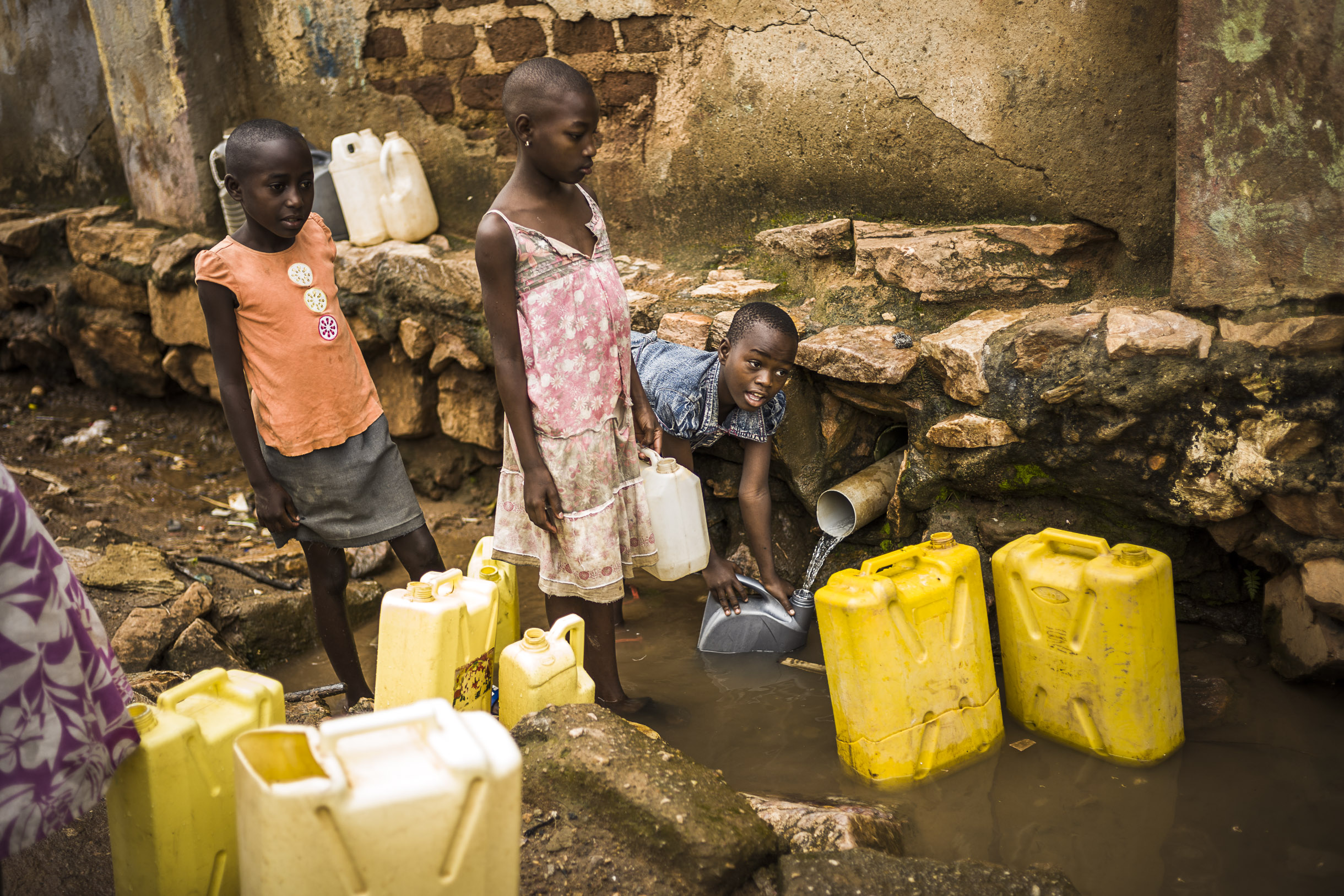
Across the African continent, more than 400 million people do not have access to safe and affordable drinking water (Source: UNICEF 2022). In urban and peri-urban areas, centralized solutions are often unsuitable, expensive, or inaccessible for low-income populations.
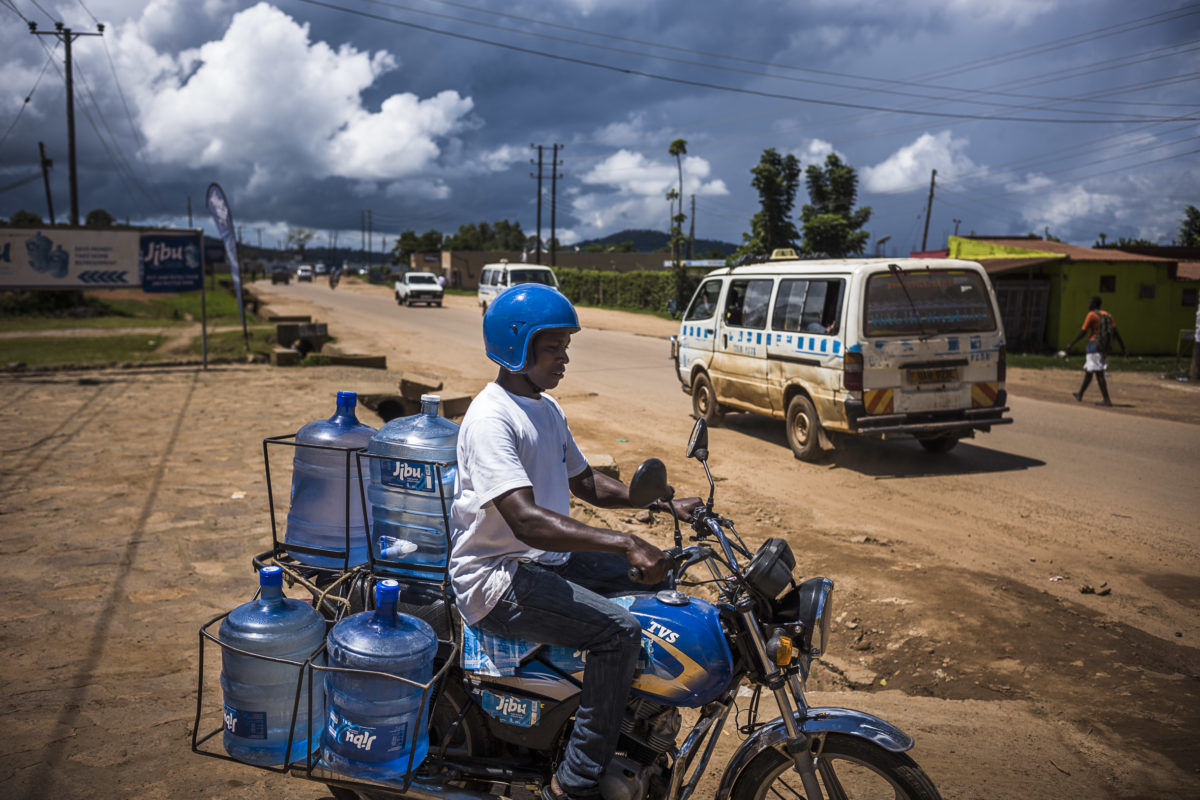
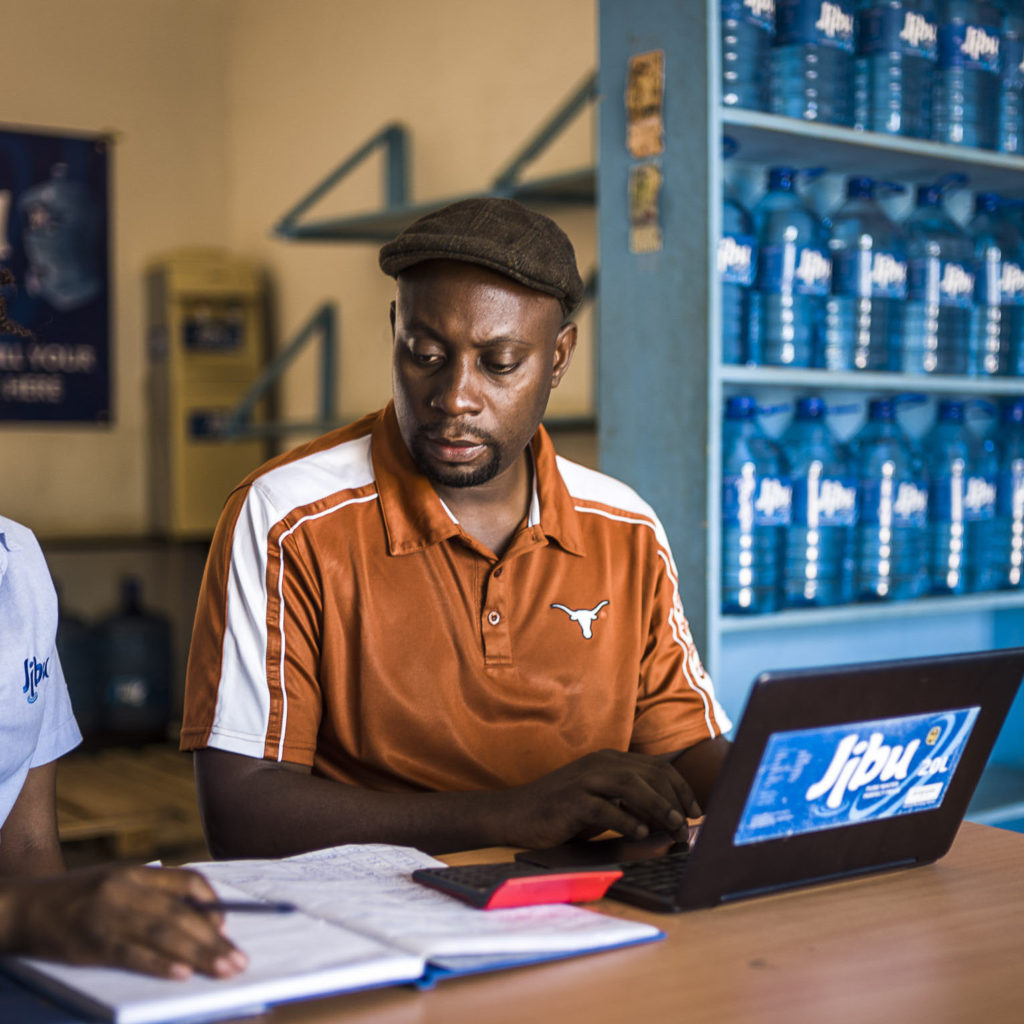
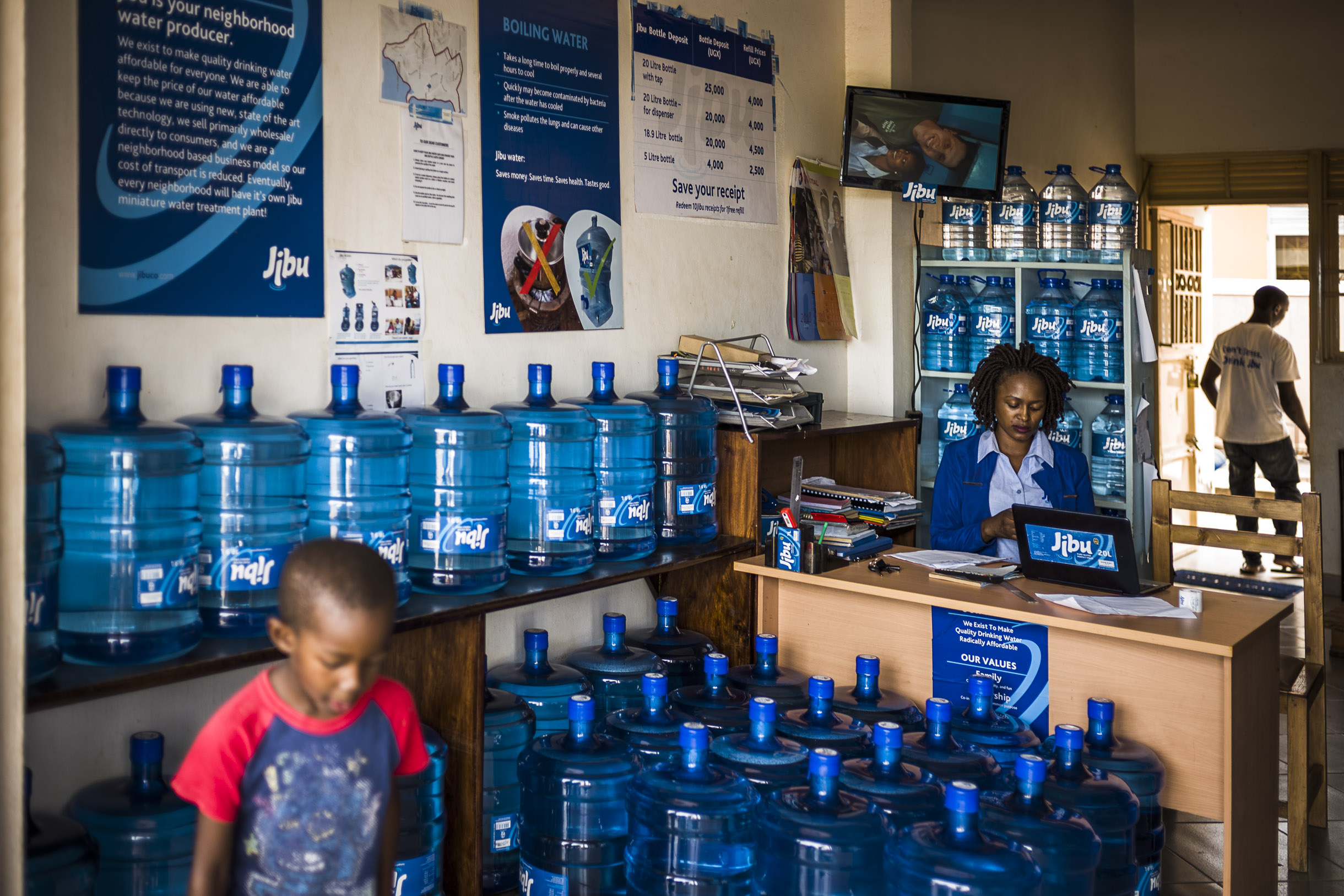
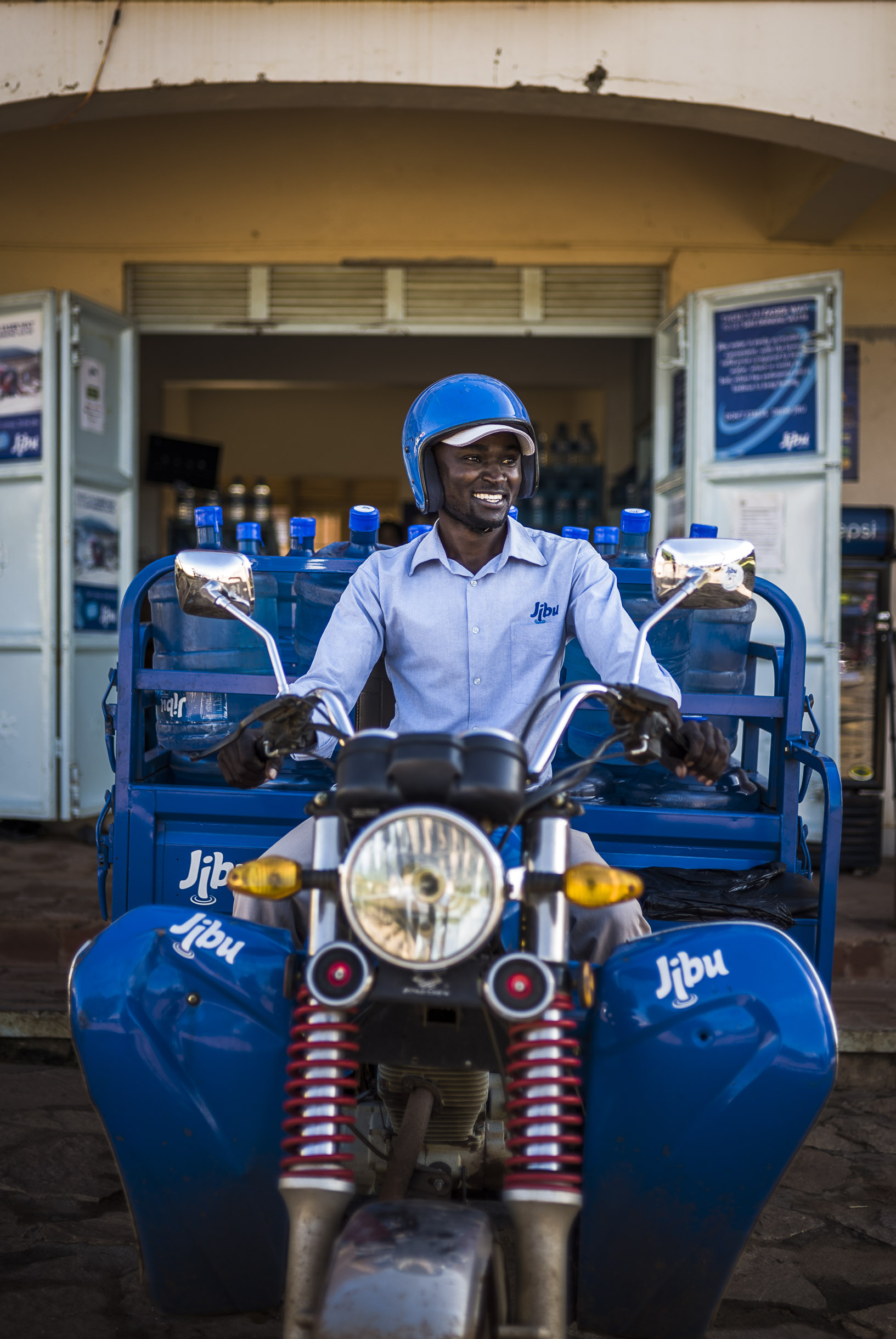
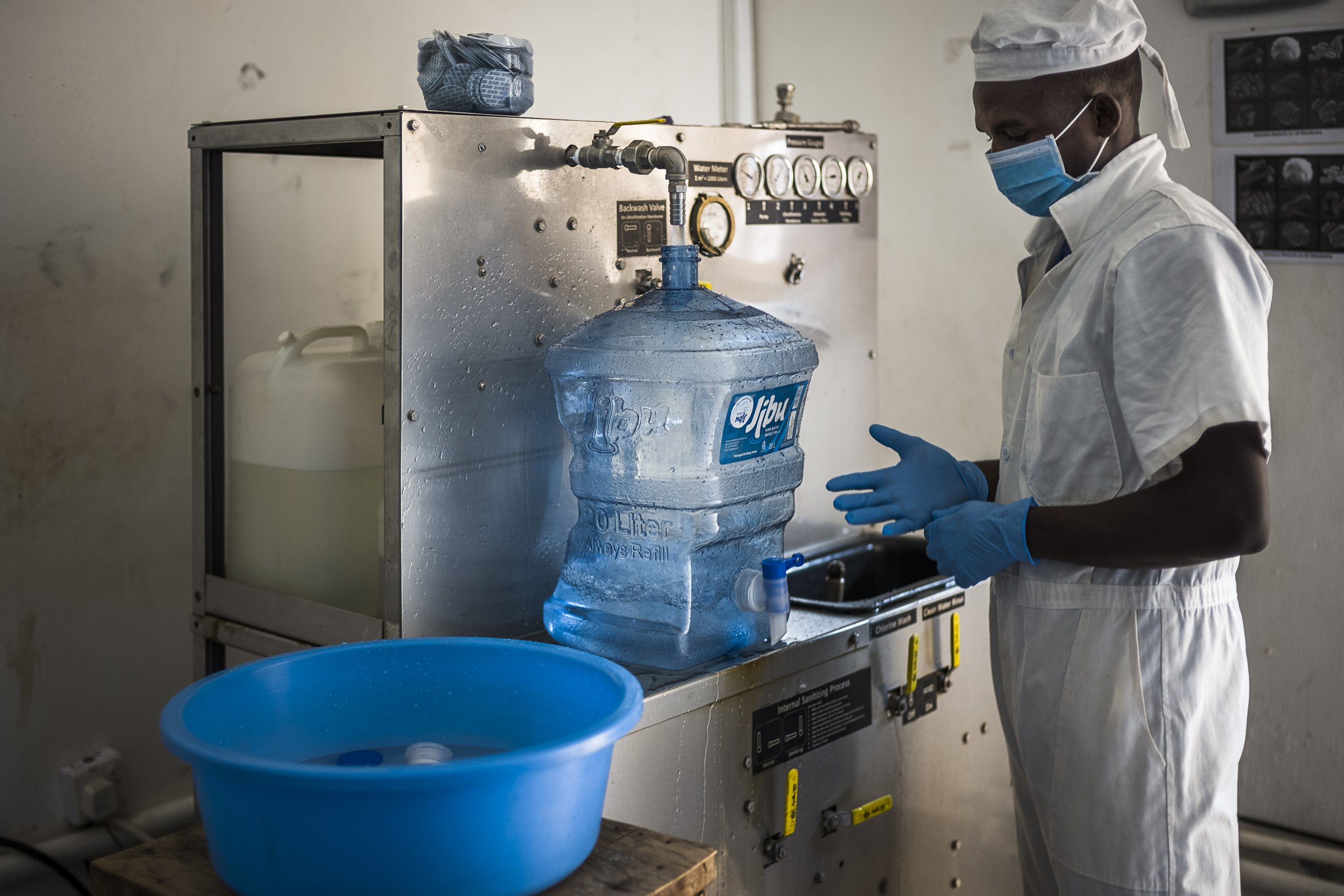
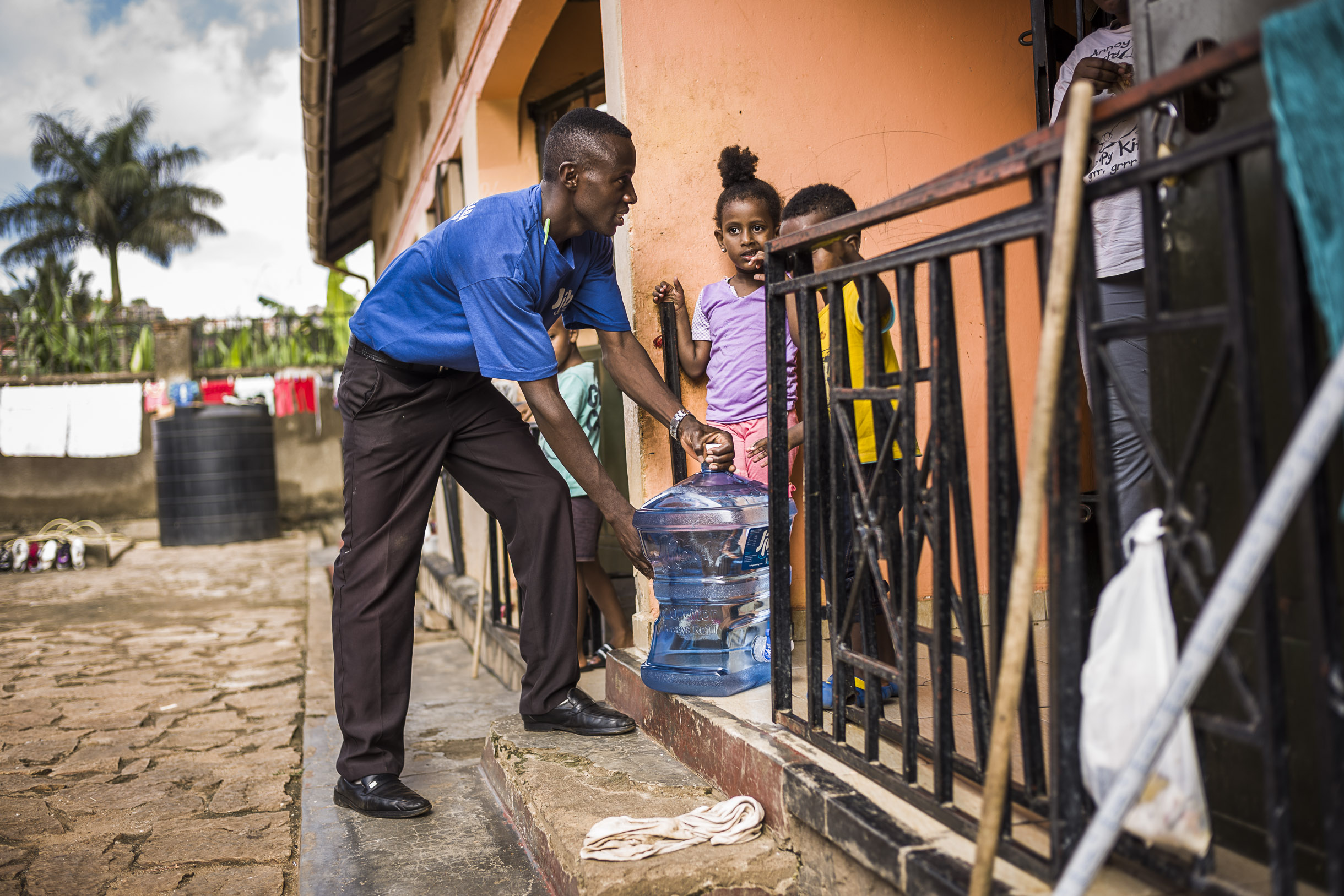
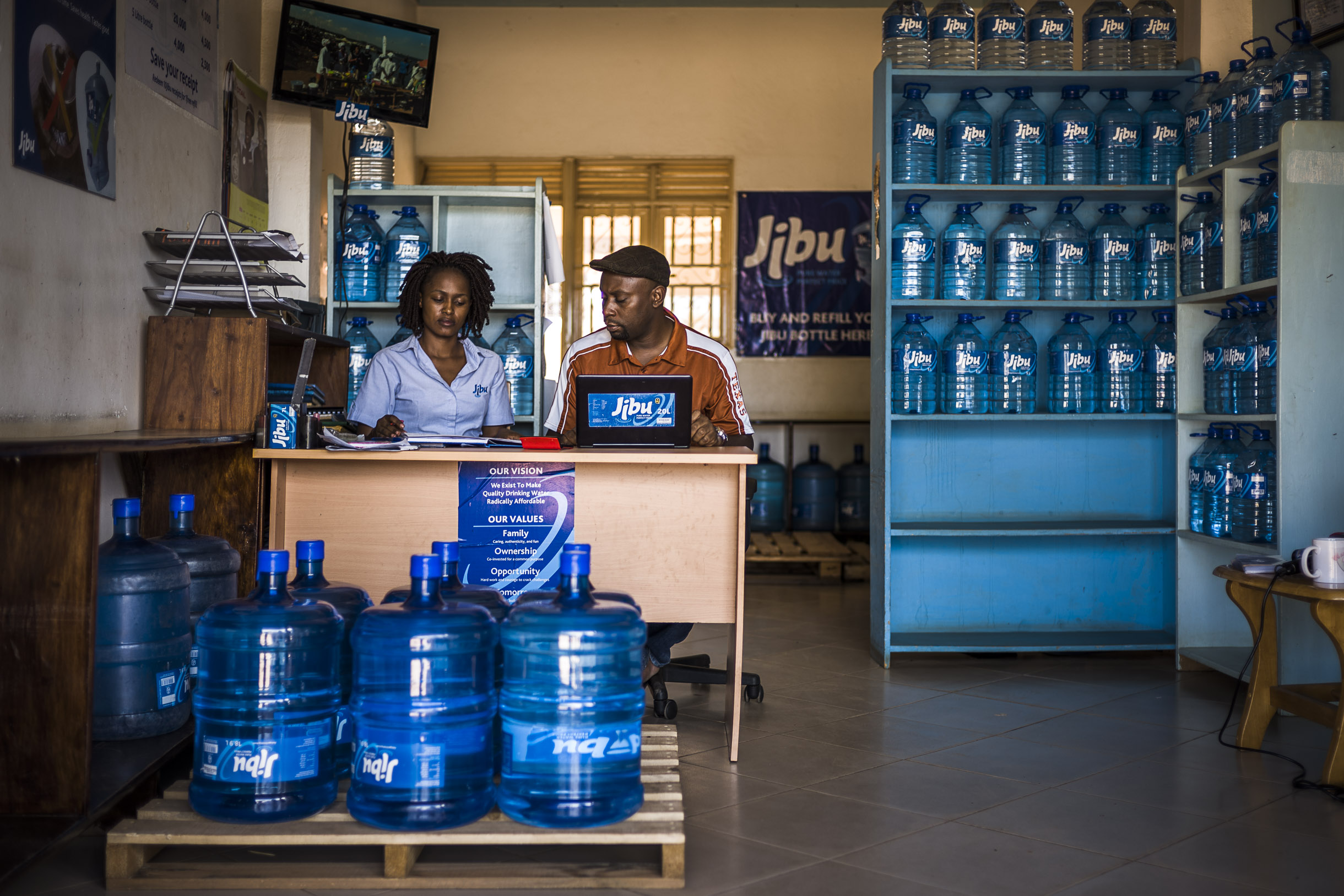
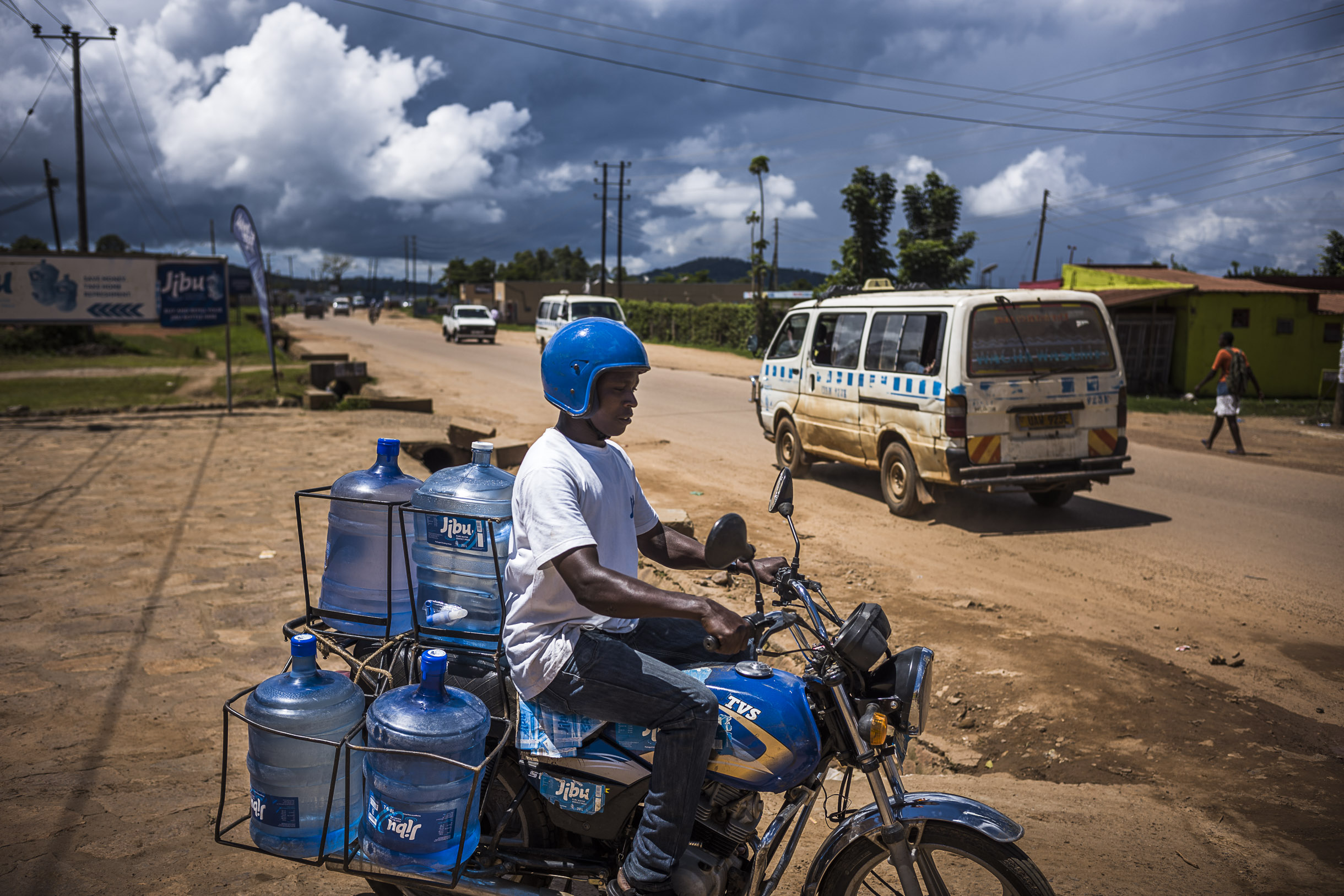
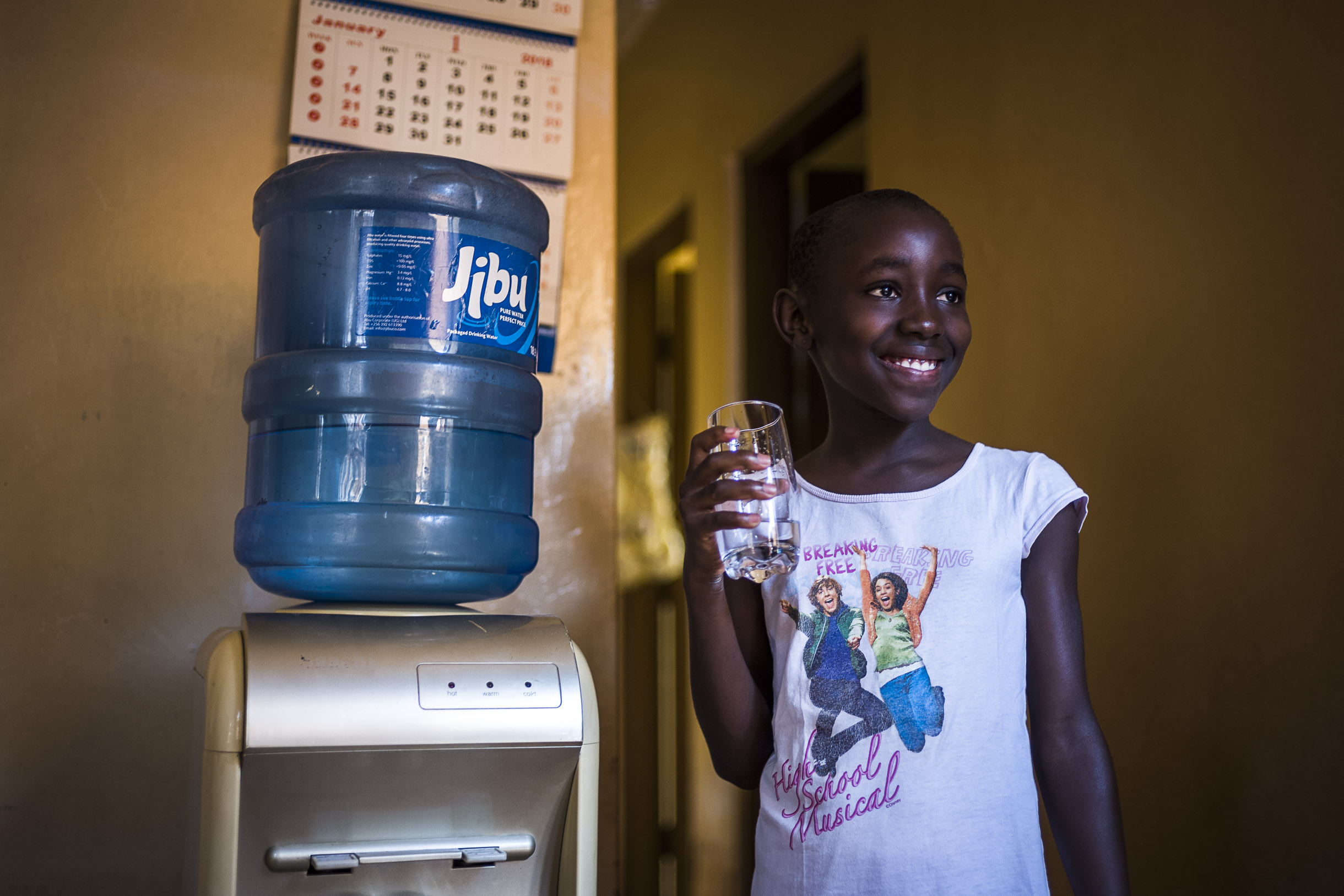
Jibu offers an innovative response to this challenge: a network of franchised water kiosks, which filter and sell drinking water in reusable bottles. This model helps create local jobs, strengthen economic empowerment, and improve community health.
A high-impact entrepreneurial model:
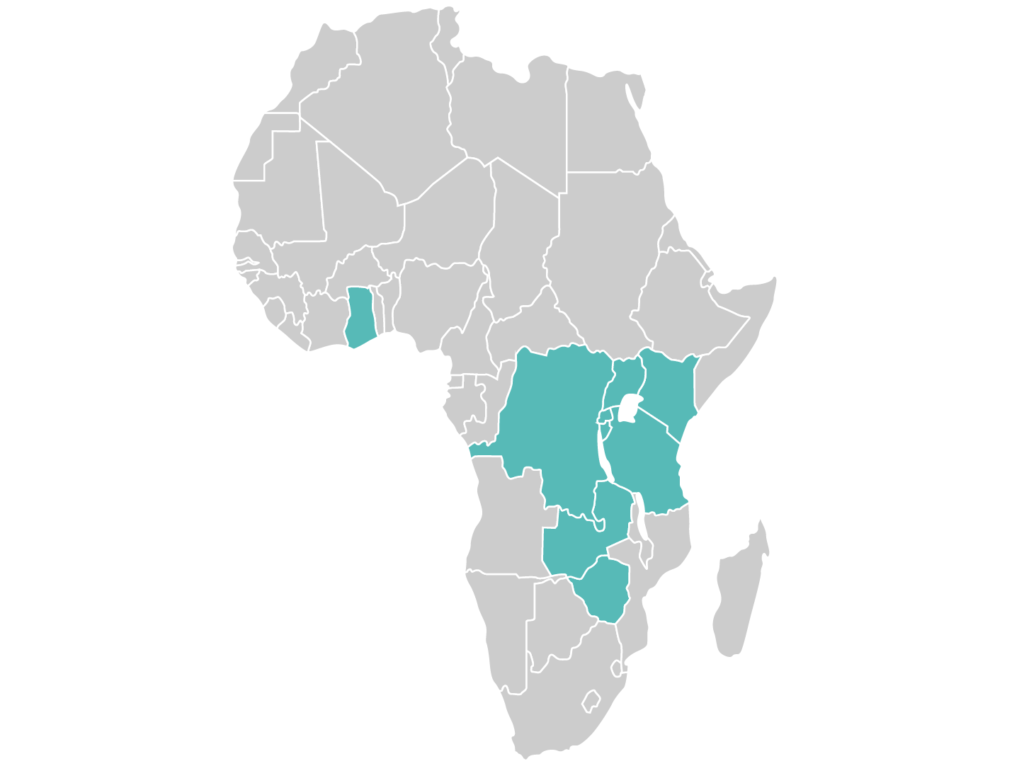
Founded in 2012 by Galen Welsch and Randy Welsch, Jibu now operates in eight African countries: Rwanda, Uganda, Kenya, Tanzania, Democratic Republic of Congo, Zambia, Burundi, and Ghana.
Jibu, which means “solution” in Swahili, aims to create jobs and impact health by selling affordable drinking water through a franchise system of micro-enterprises. It also sells other essential goods (fortified porridge and cooking gas (LPG)).
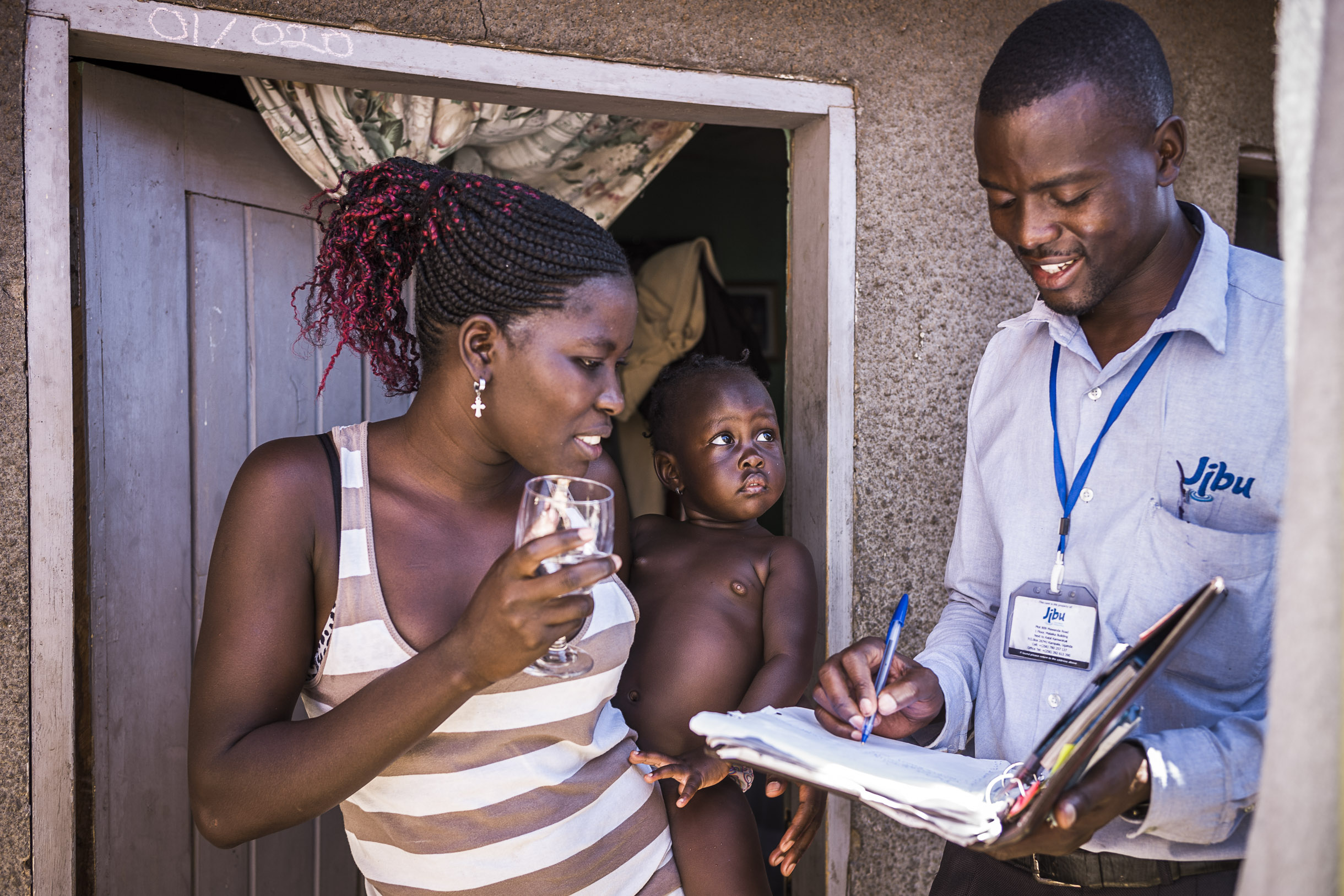
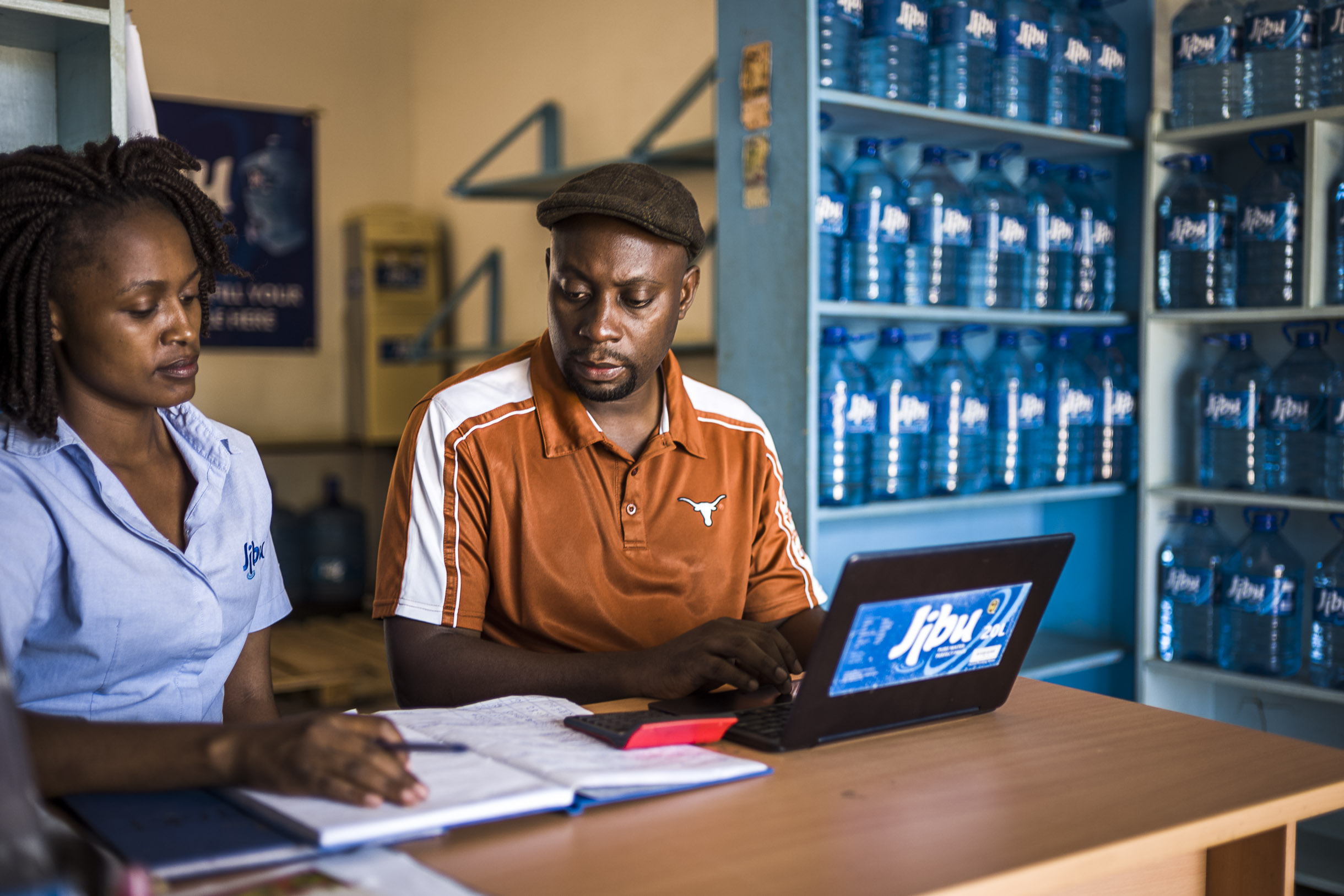
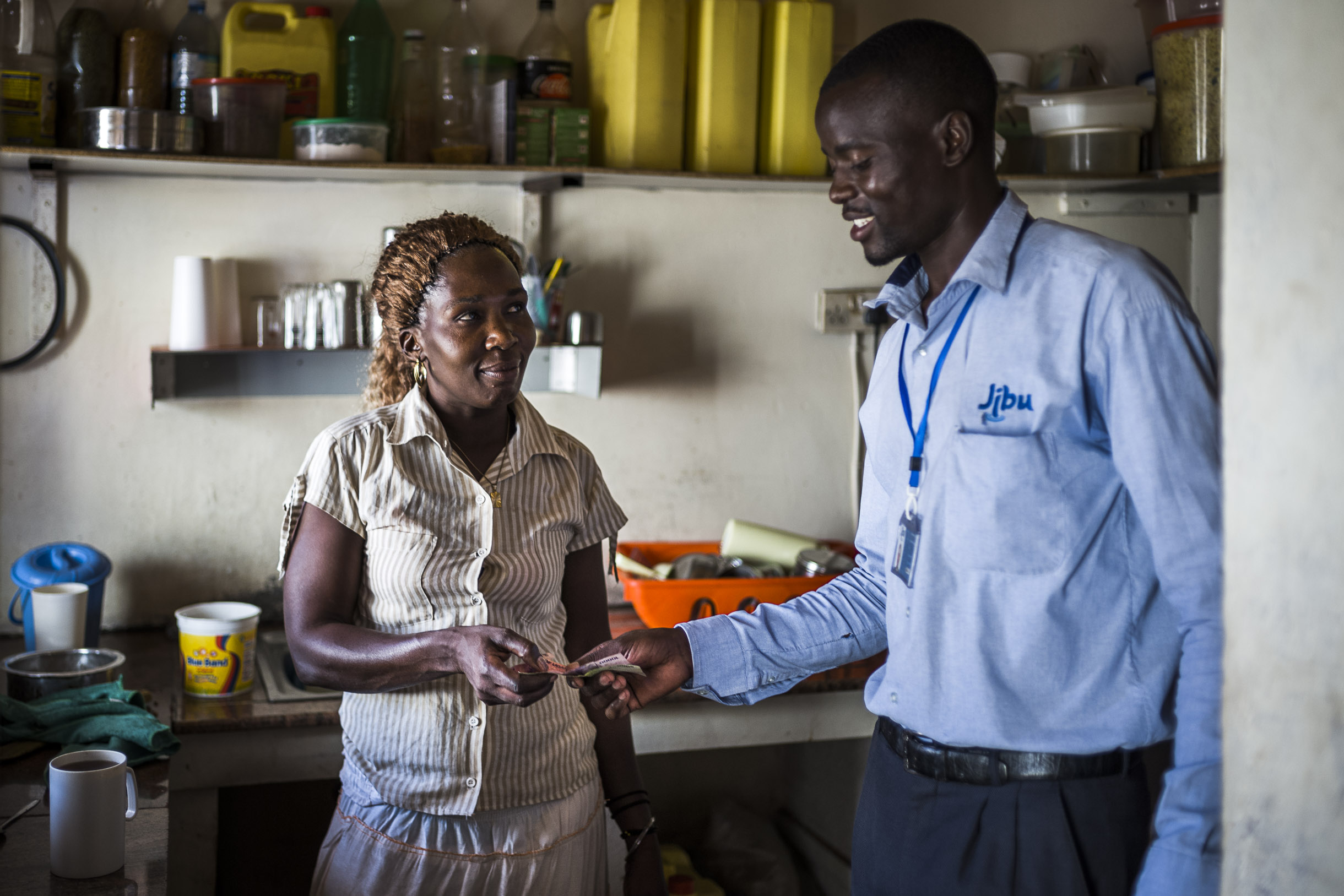
Jibu selects franchisees (entrepreneurs), provides water filtration systems, trains them, and develops marketing campaigns.
The franchisee then operates the water kiosk under the Jibu brand, creates local demand, and manages their team.
The impact of Jibu:
Danone Communities has supported Jibu since 2019, in line with our health mission, our commitment to innovation, and our vision for impact-driven business. The results are tangible:
+260,000 downstream beneficiaries as of end of 2024 (+21% vs. April 2023)
1,274 upstream beneficiaries, including franchisees and local resellers
Creation of local jobs through the franchise model
Diversification of income with the sale of complementary products (fortified flour, banking services)
How Danone Communities actively supports Jibu, some concrete examples:
Patient investment: Danone Communities has invested in Jibu through shares and convertible bonds to support its growth and financial structuring
Technical assistance: Our teams support Jibu in optimizing its business model and structuring its operations
Model promotion: Regularly highlighting Jibu as a high-impact Safe Water Enterprise
By supporting Jibu, Danone Communities helps provide access to safe drinking water for vulnerable populations and takes concrete action to positively impact health around the world, in line with Danone’s mission.
260,000
people impacted in 2024
226
kiosks
*Impact figures from the Danone Communities report as of the end of 2024
Ivan
Jibu Entrepreneur, Kampala, Uganda
“I was born and raised in Kampala, Uganda. I’ve always been involved in my local community and am very well aware of the challenges of unemployment and lack of access to safe drinking water.
I am an old friend of Randy Welsch, co-founder of Jibu, and when one bright afternoon Randy explained his idea of water kiosks to me, I was very excited to become part of this great story. Jibu gave me everything I needed to start a successful business – start-up capital, state of the art technology, and expert business advice.
Becoming a Jibu franchisee brought me regular income to support my family and brought to the neighbourhood affordable safe drinking water just steps from their home. As the business is growing I needed a helping hand. This was a great opportunity to generate jobs for people in my community and to bring positive change.”
Population below the poverty line of $4.20 per person per day: 22.96% in 2022 (The World Bank)
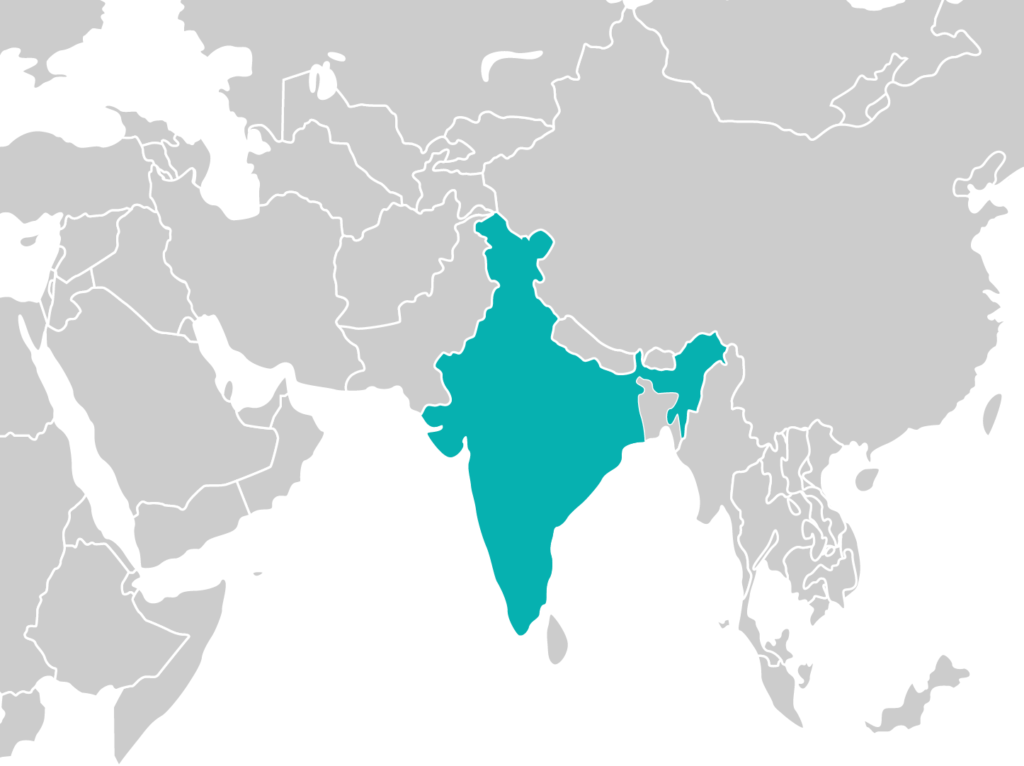
In India, according to the public think tank NITI Aayog, 75% of households do not have access to safe drinking water at home, and water distribution is intermittent in all cities. Groundwater is heavily contaminated by fluoride, arsenic, nitrates, and iron. (source)
This video was filmed in 2017; the numbers have since changed.
In India, more than 78 million people lack access to safe drinking water. The country ranks 120th out of 122 on the global Water Quality Index. Every year, 37.7 million Indians are affected by waterborne diseases, and 1.5 million children die from diarrhea. The health and economic impacts are massive, estimated at $600 million per year.
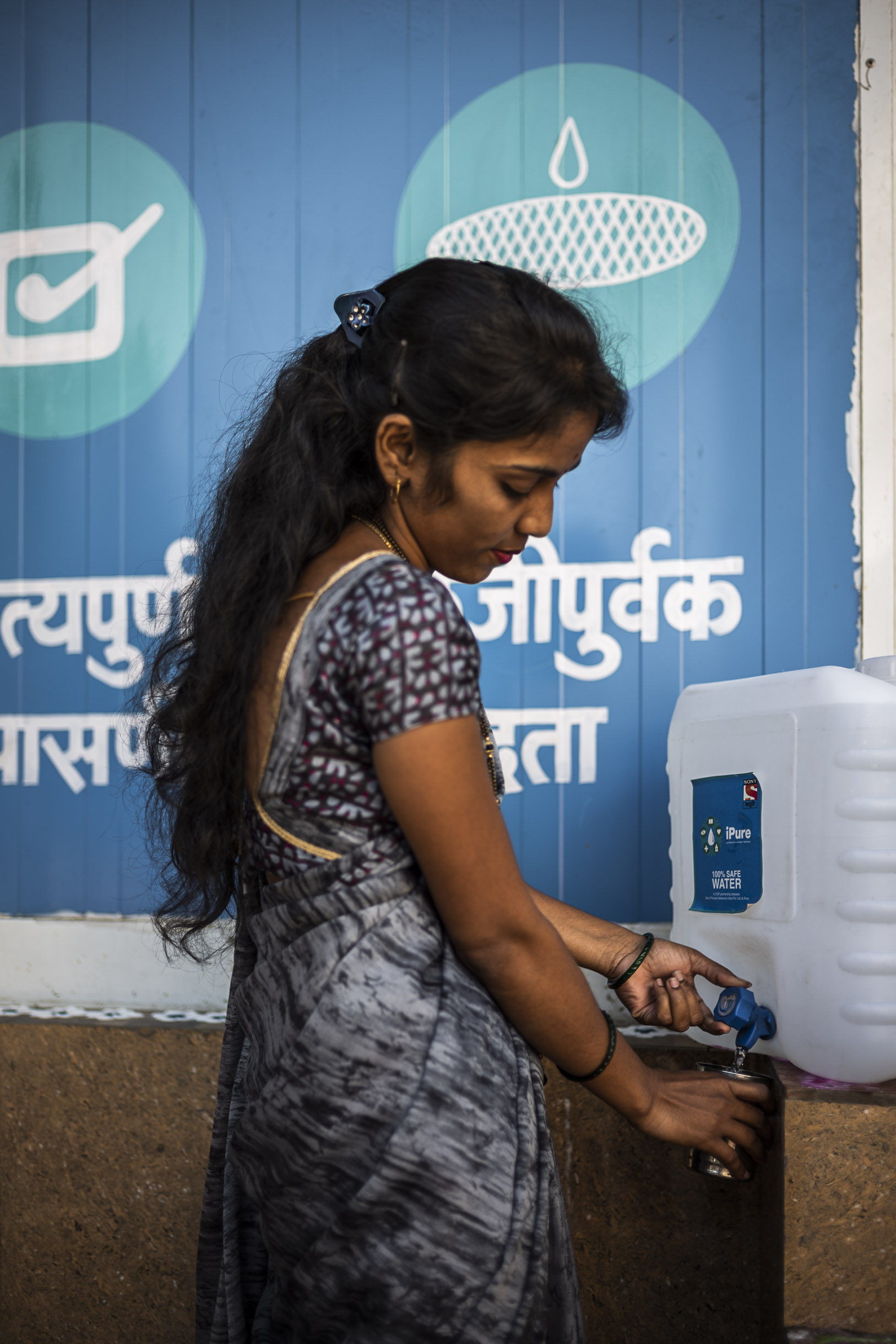
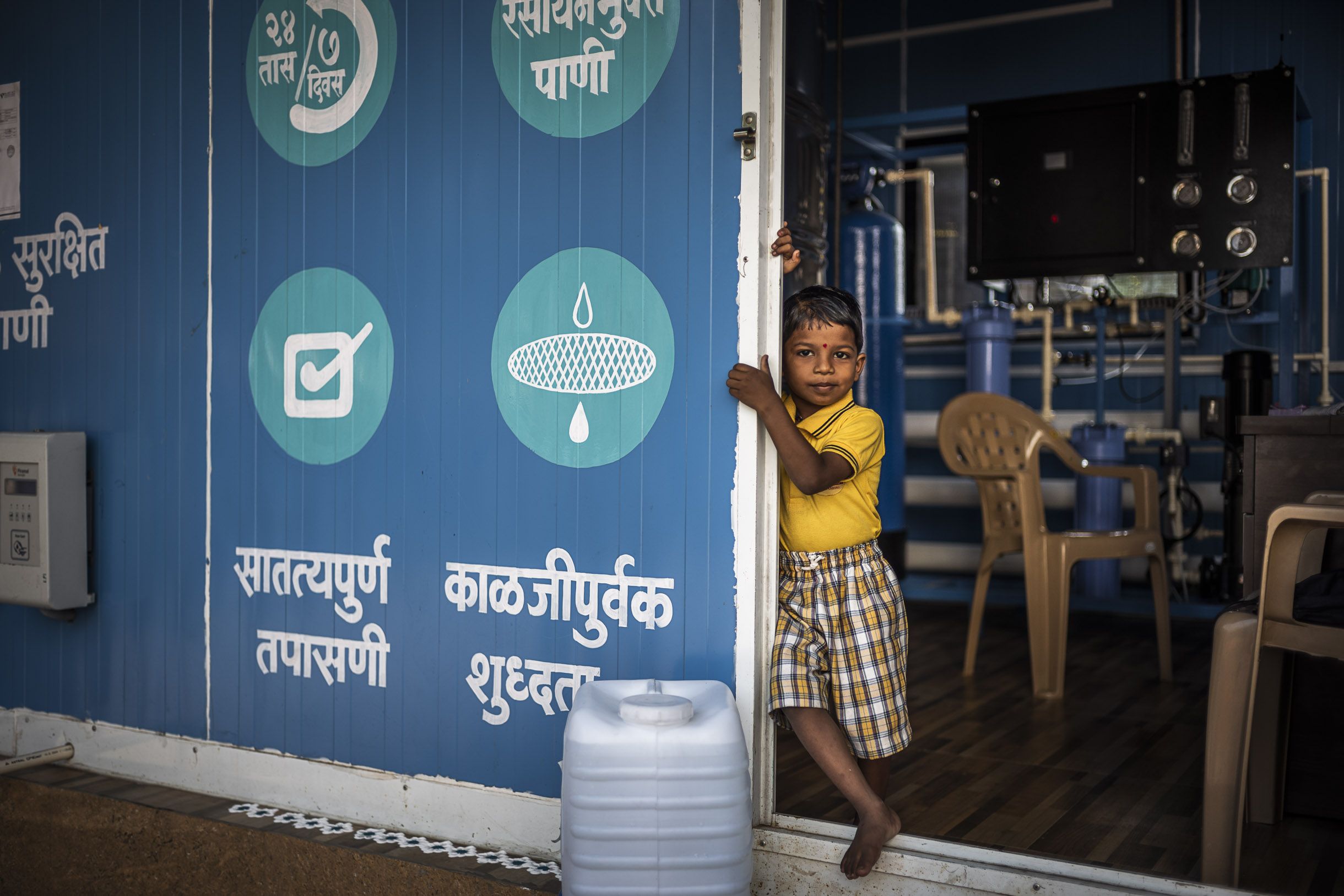
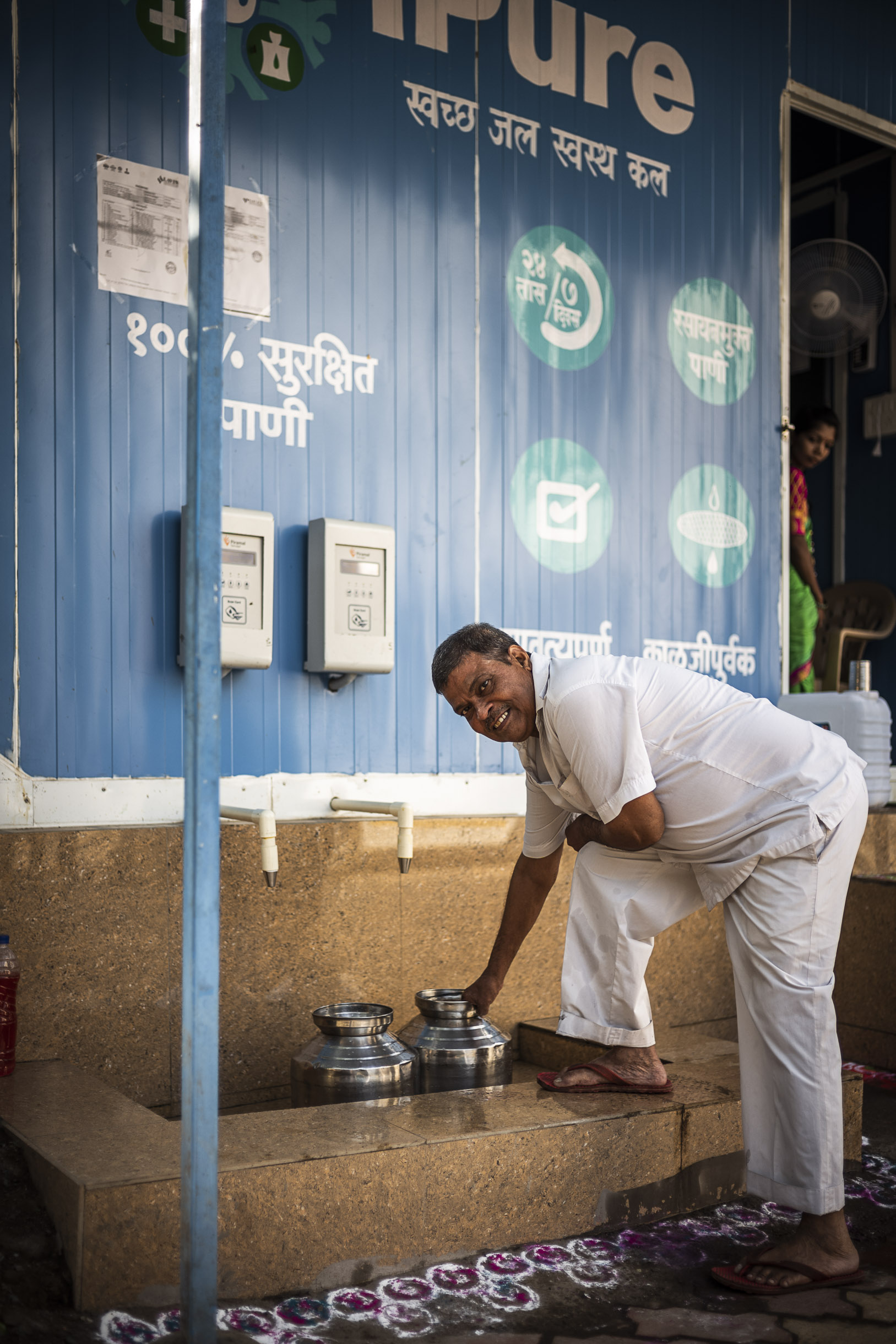
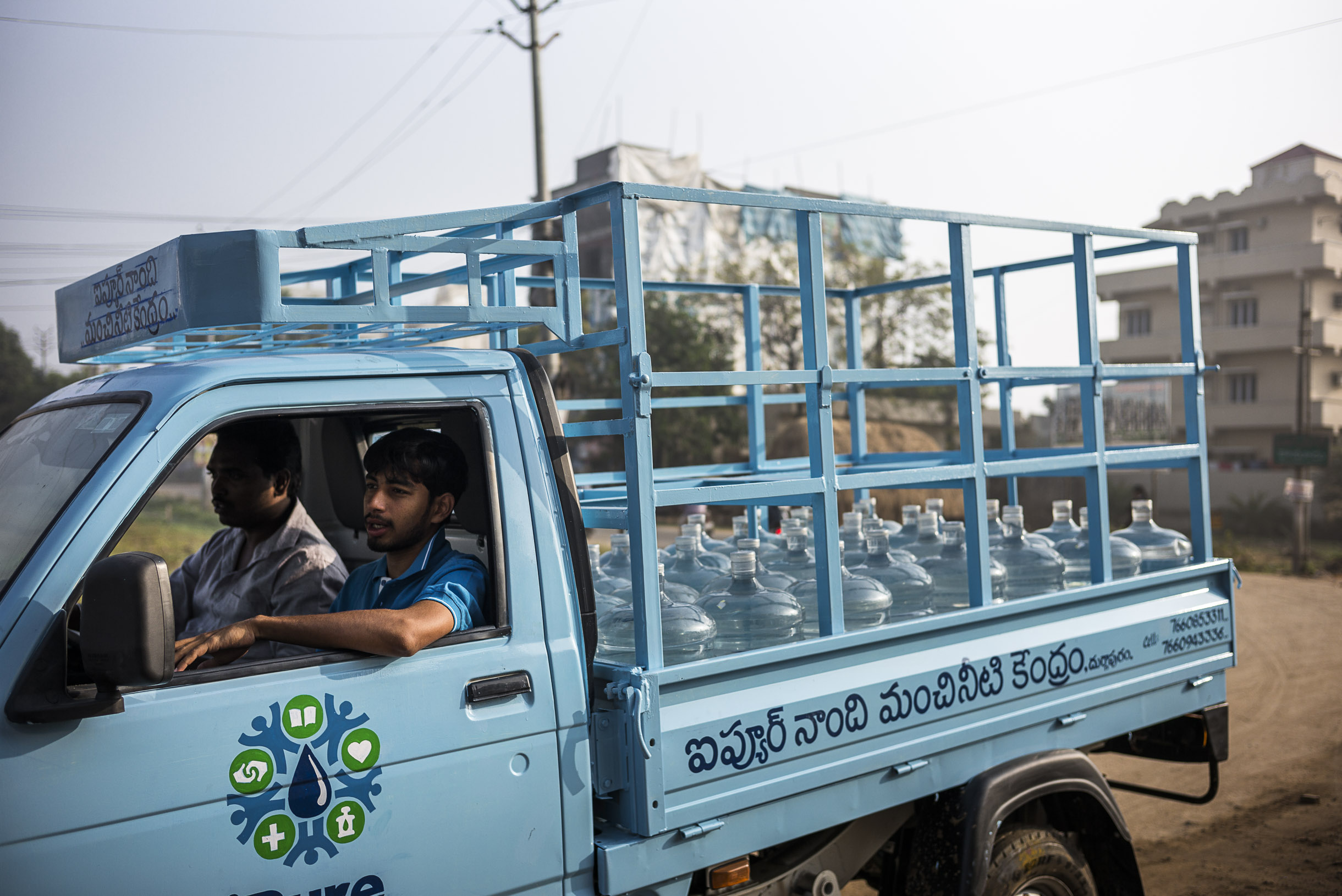
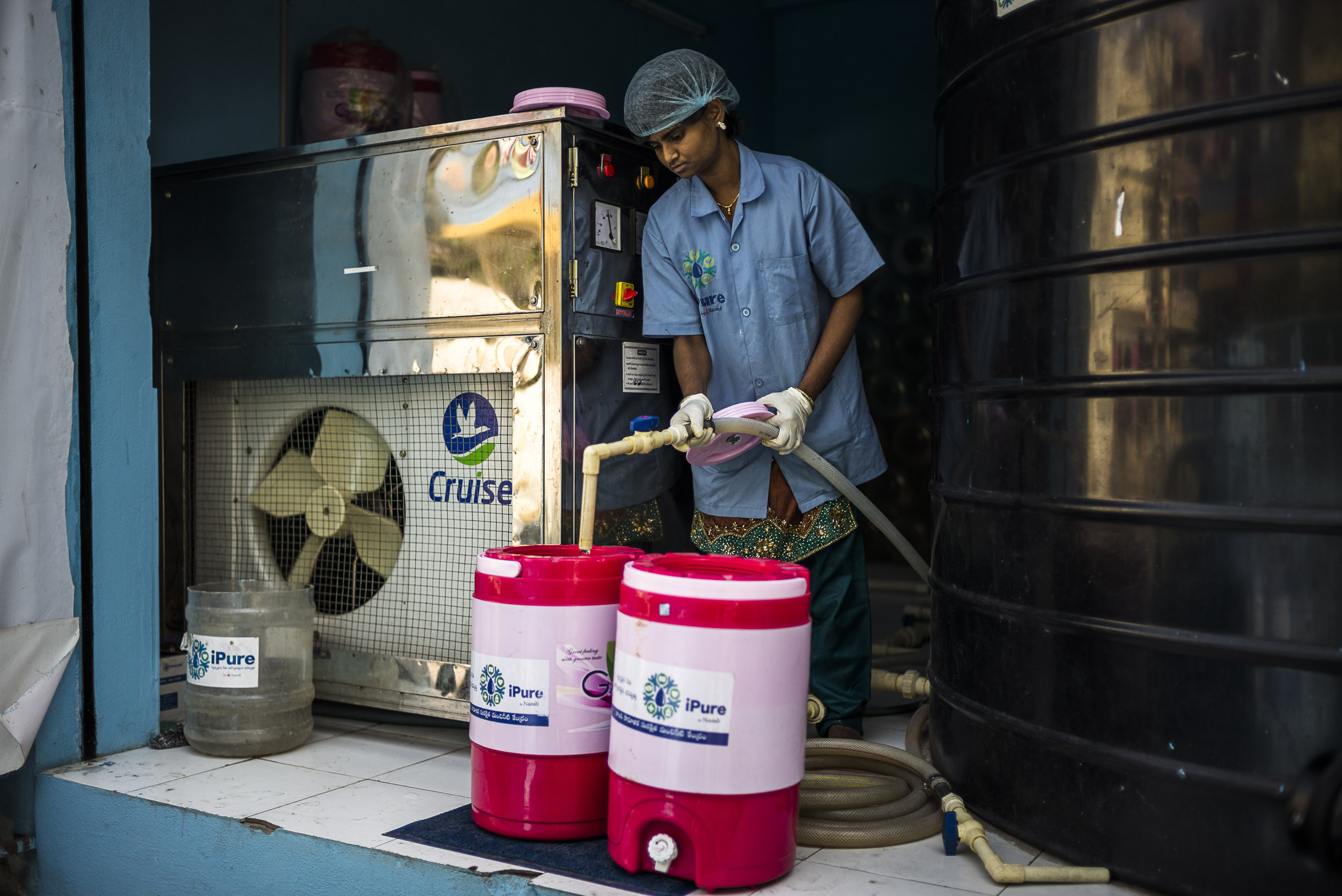
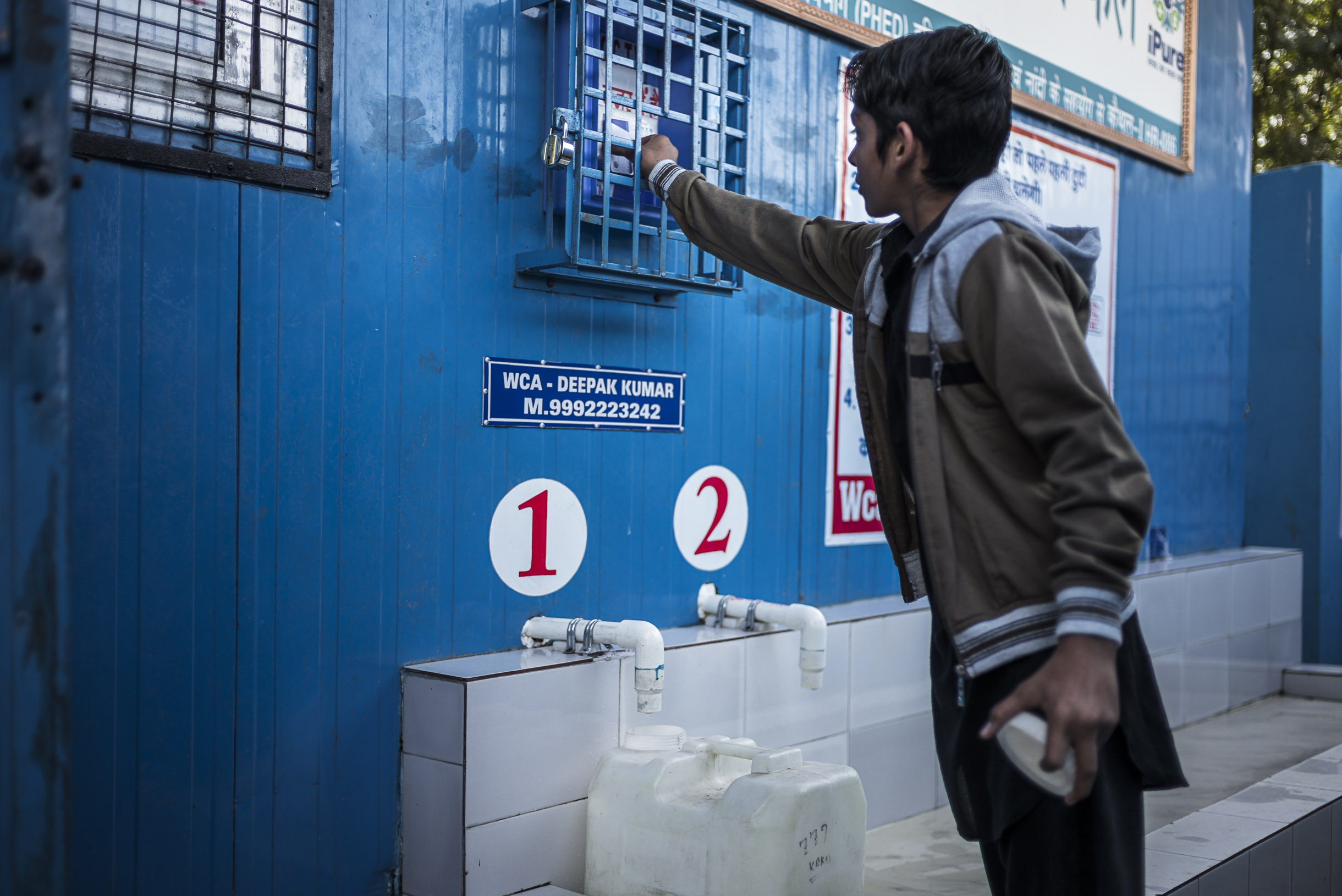
Naandi Community Water Services (NCWS) is committed to addressing this challenge with a community-based and innovative technology model: water kiosks equipped with reverse osmosis technology managed locally.
These kiosks provide quality drinking water at an affordable price, while creating jobs and strengthening local capacity.
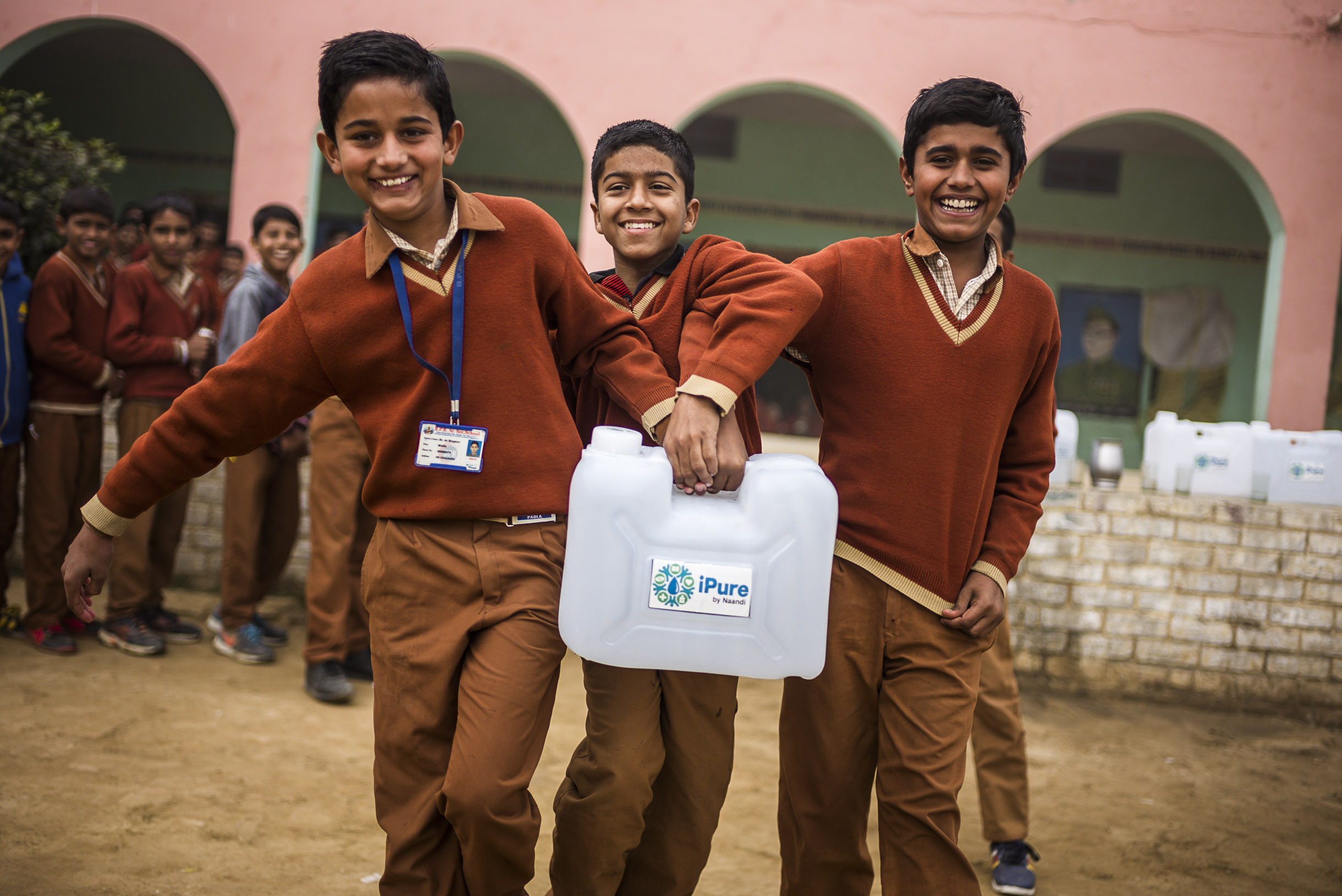
In addition to Water Kiosks, NCWS is present in schools, with water access programs that allow children to drink safe water throughout the day.
An innovative and sustainable model
The water kiosk model is based on a tripartite partnership between the local community, a donor, and NCWS. NCWS manages this partnership by choosing the kiosk location, purchasing filtration equipment, ensuring water quality, conducting change management campaigns, and training community members who operate and manage the water kiosks.
Founded in 2010, Naandi now operates in 7 Indian states (Punjab, Rajasthan, Haryana, Andhra Pradesh, Telangana, Karnataka, and Maharashtra), with 522 kiosks installed and 592,000 daily beneficiaries.
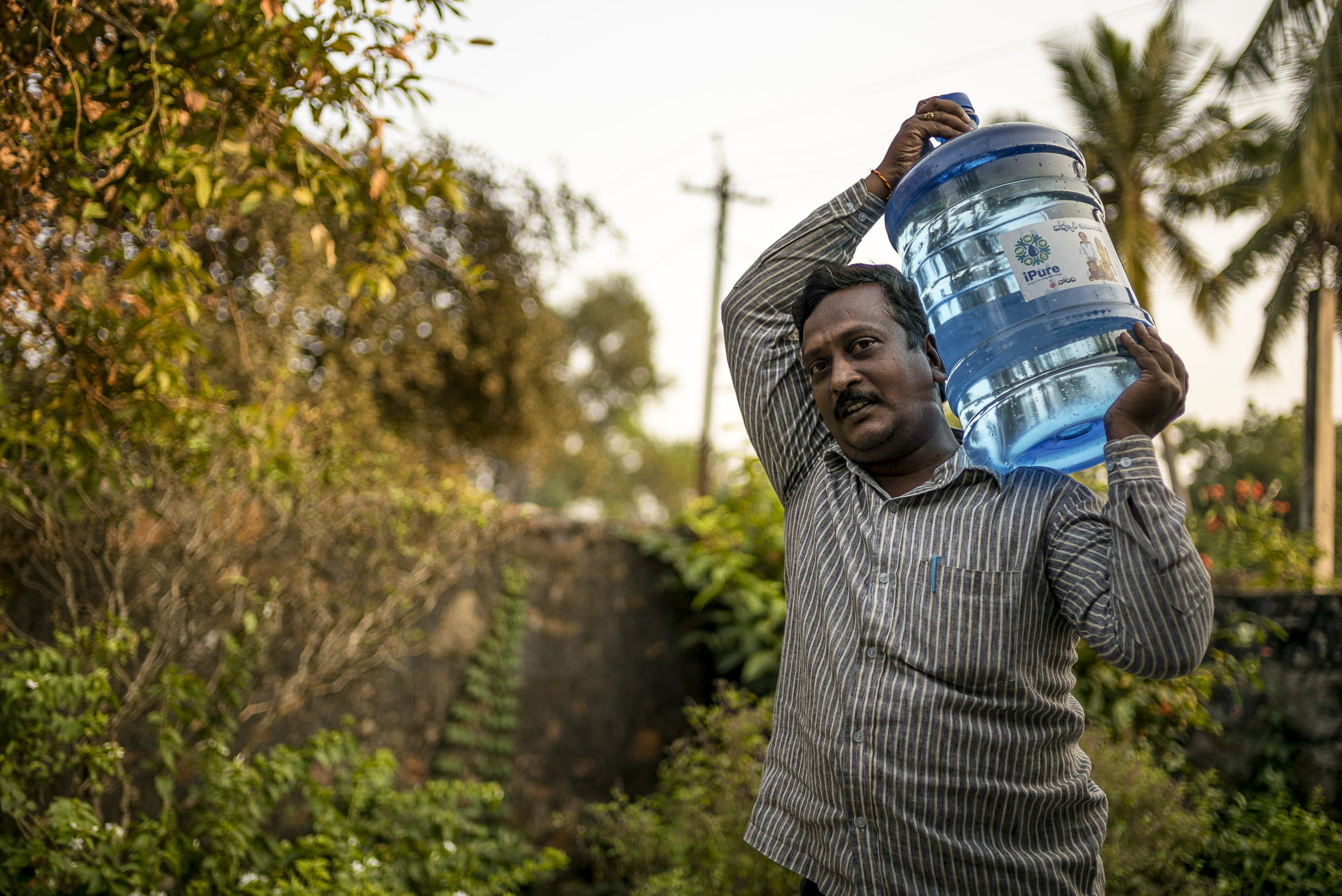
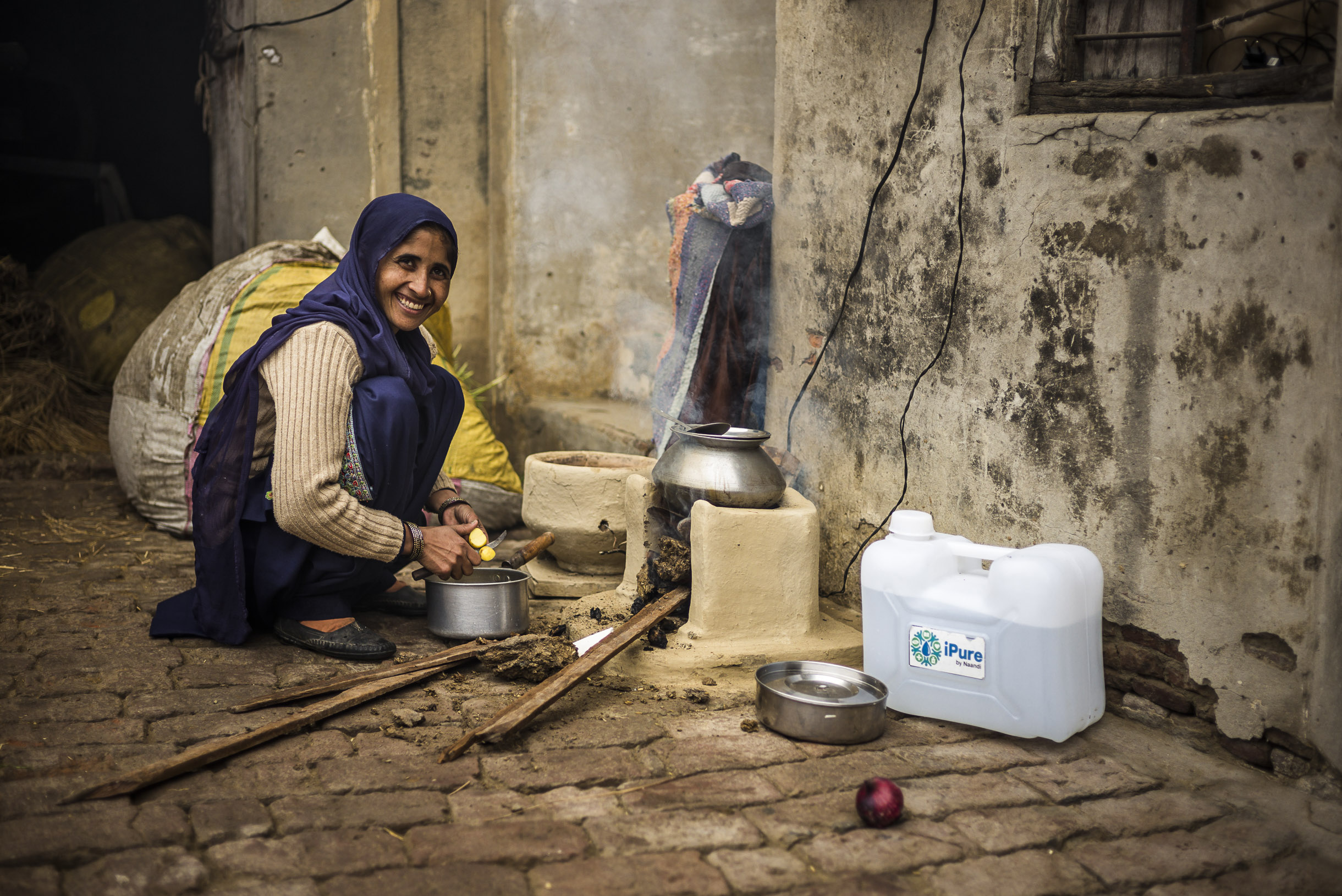
Naandi has a hybrid business model. The company sells two brands: the iPure brand, which serves vulnerable populations in rural areas, and the iQuench brand, which is sold to large companies in Hyderabad.
iPure: water sold in rural areas at a low price. This water is distributed through kiosks installed by Naandi in rural zones. The company trains local entrepreneurs to ensure the maintenance and daily management of these kiosks. After seven years, the kiosks are handed over to the communities: this is already the case for 273 of them.
iQuench: bottled water sold in urban areas (Hyderabad), with profits reinvested into iPure. Water jugs are sold to companies, providing employees with access to safe drinking water at work.
Naandi is now B Corp certified, with practices recognized among the best in the world for its relationship with communities.
The impact of Naandi on health and communities
Danone Communities supports Naandi to improve the health of vulnerable populations in India, in line with our health mission, our commitment to innovation, and our vision of impact-driven business. The results are concrete:
592,000 people benefit from safe drinking water every day
35,000 children have access to water in their schools
Reduction in school absenteeism from 23.1% to 2.3% thanks to water access
51% of beneficiaries report being in better health since the kiosks were installed
40% increase in the number of men taking responsibility for fetching water, reducing the burden on women
273 kiosks have been transferred to communities after seven years of operation
How Danone Communities actively supports Naandi, some concrete examples:
Patient investment: Danone Communities has been a shareholder since 2010, supporting the structure and growth of the model
Technical Assistance: Our teams support Naandi in governance, strategy, and impact measurement
Model promotion: Naandi is regularly highlighted as an example of a sustainable community solution
Strategic networking: We facilitate connections with public and private partners to support the expansion of the model
592,000
people impacted in 2024
522
kiosks installed
*Impact figures from the Danone Communities report as of the end of 2024
Dalaya
Student, Jhajjar, Haryana, India
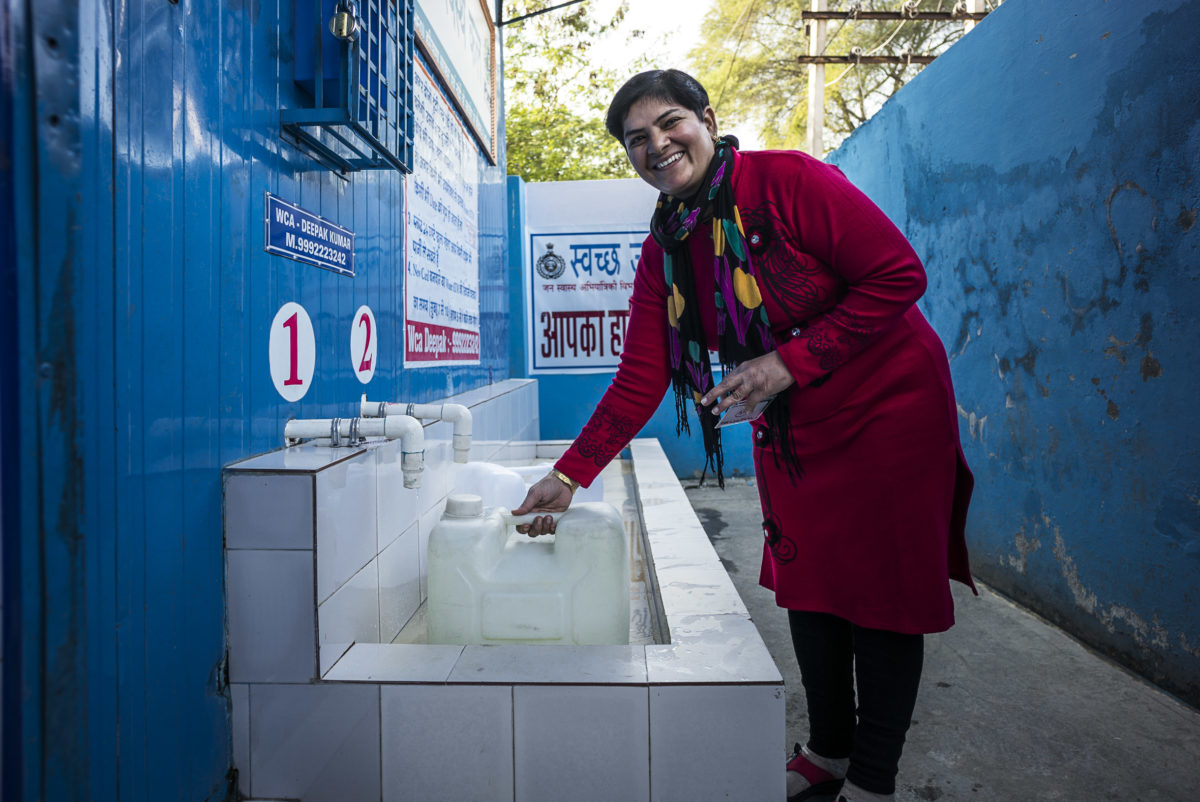
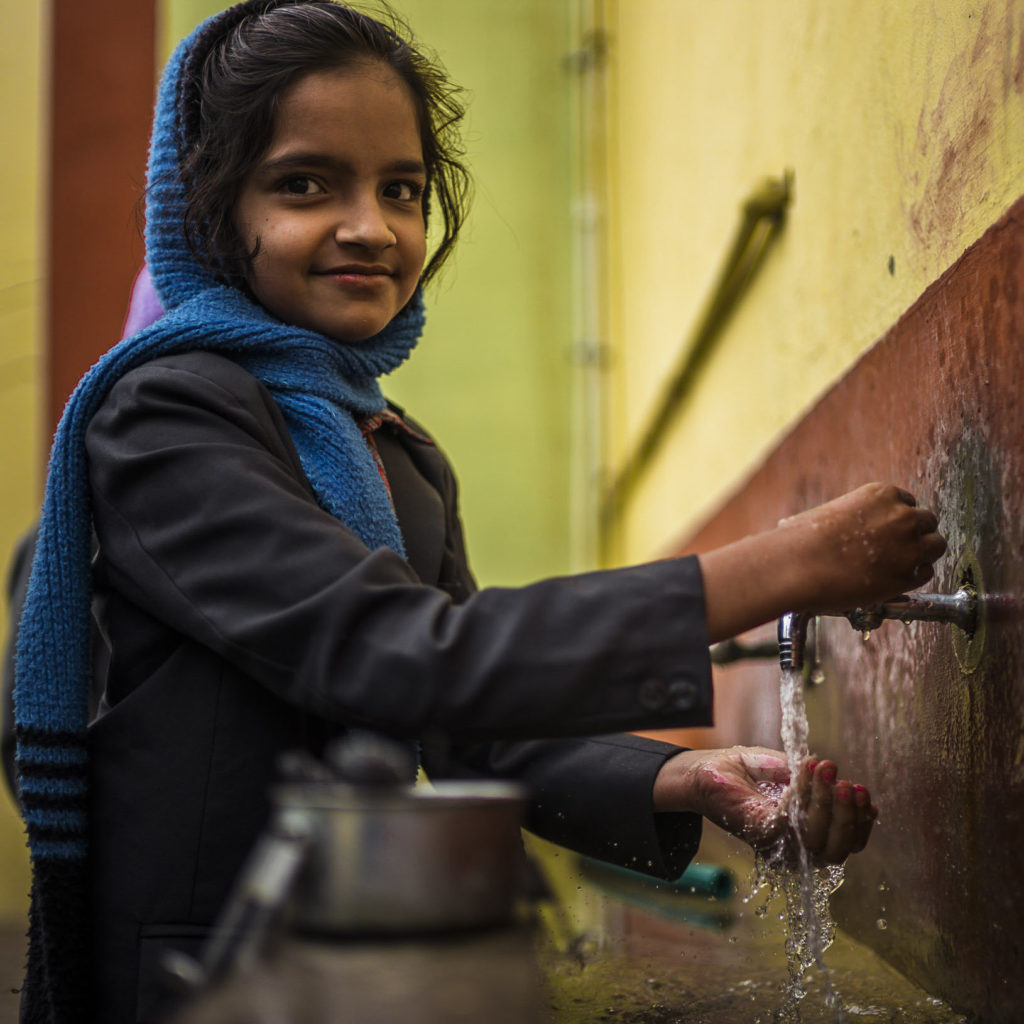
“My name is Dalaya, I live in the village of Jhajjar. I was responsible for collecting water for my family. It was a long walk from my house to community water well and I needed to walk the distance daily and carry heavy water jars. Sometimes I was missing class as collecting the water run took a lot of time and energy.
Today there is a Naandi water kiosk in my village, very close to my house, and my mother goes and buys water there. The water is safe and affordable. It tastes good too. My mother has more time now, so she took on sewing, to have some income and support the family. I’m a very good student and now I’m never late to school anymore.”
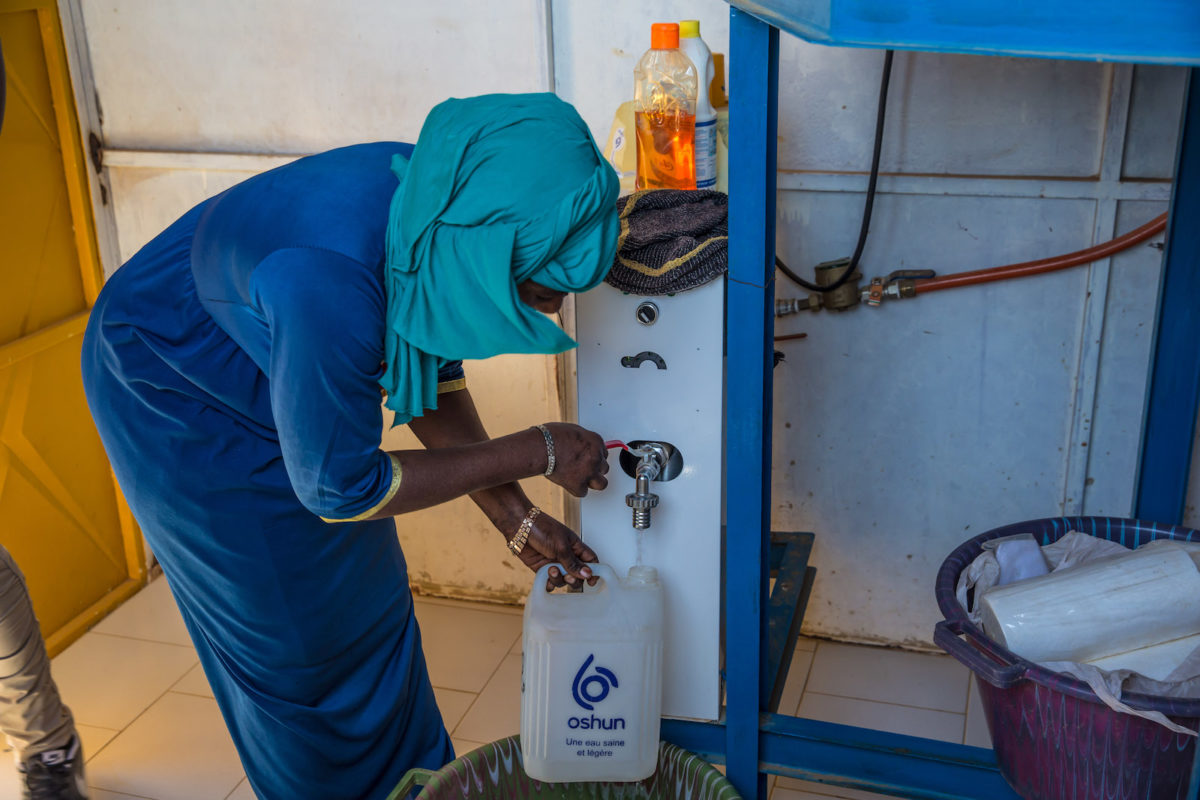
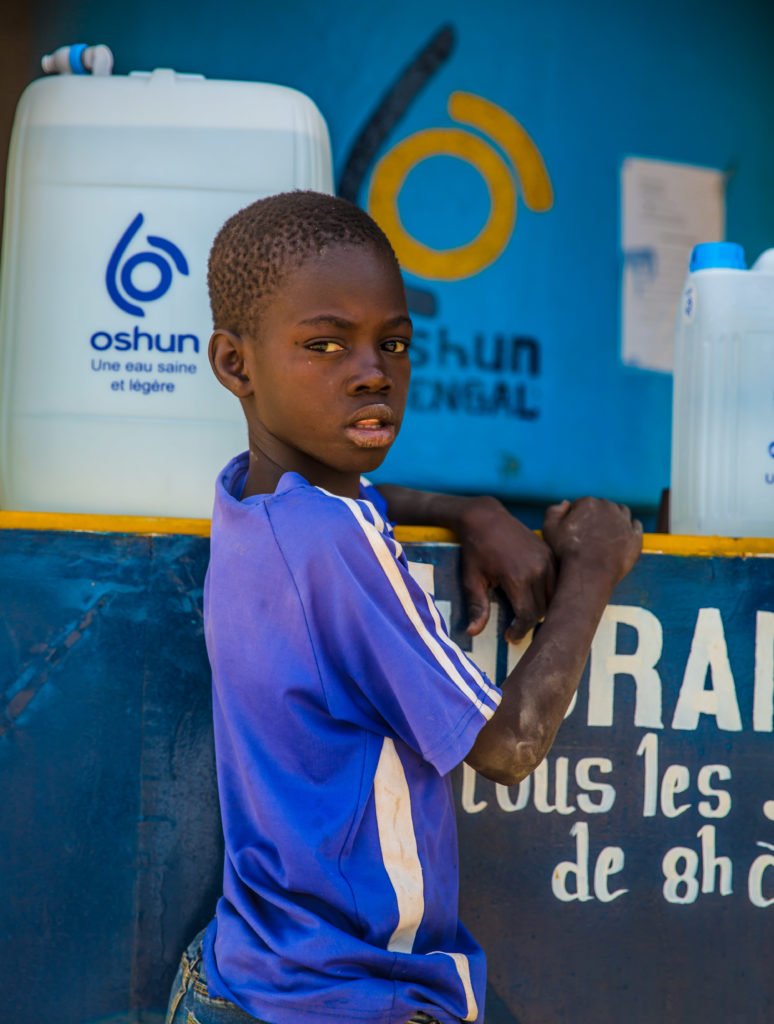
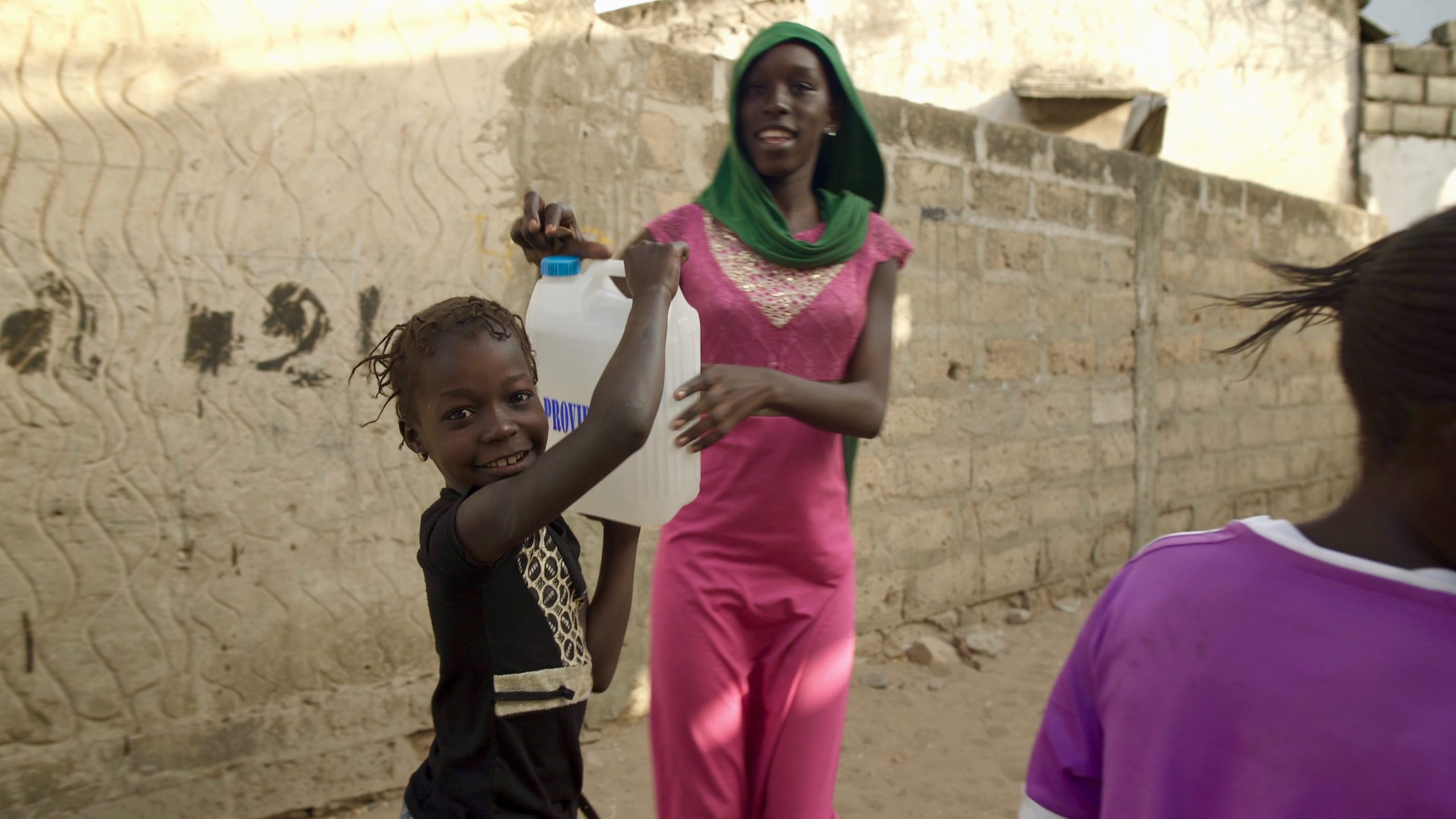
Oshun was created as an initiative from 3 French companies, including the Société du Canal de Provence, to address the issue of safe drinking water in the Sahel.
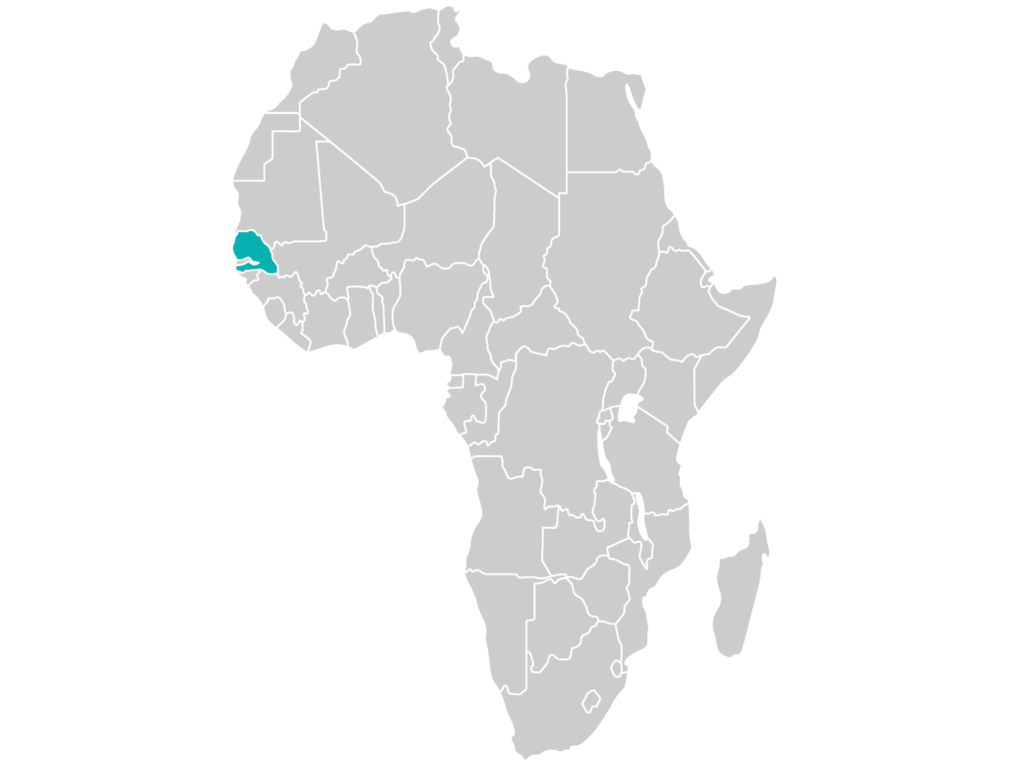
In Senegal, a big portion of the population is still facing challenges in accessing safe drinking water, including unequal access to potable water and sanitation services.
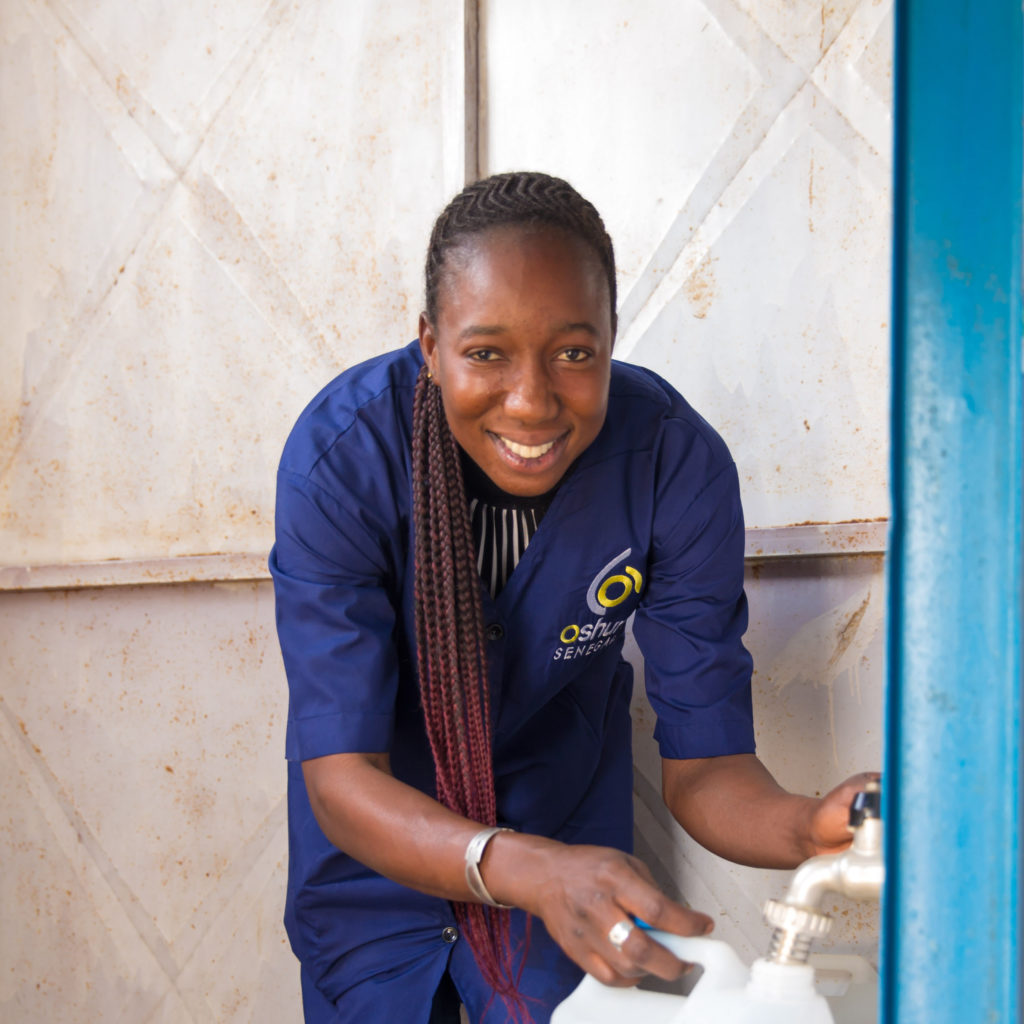
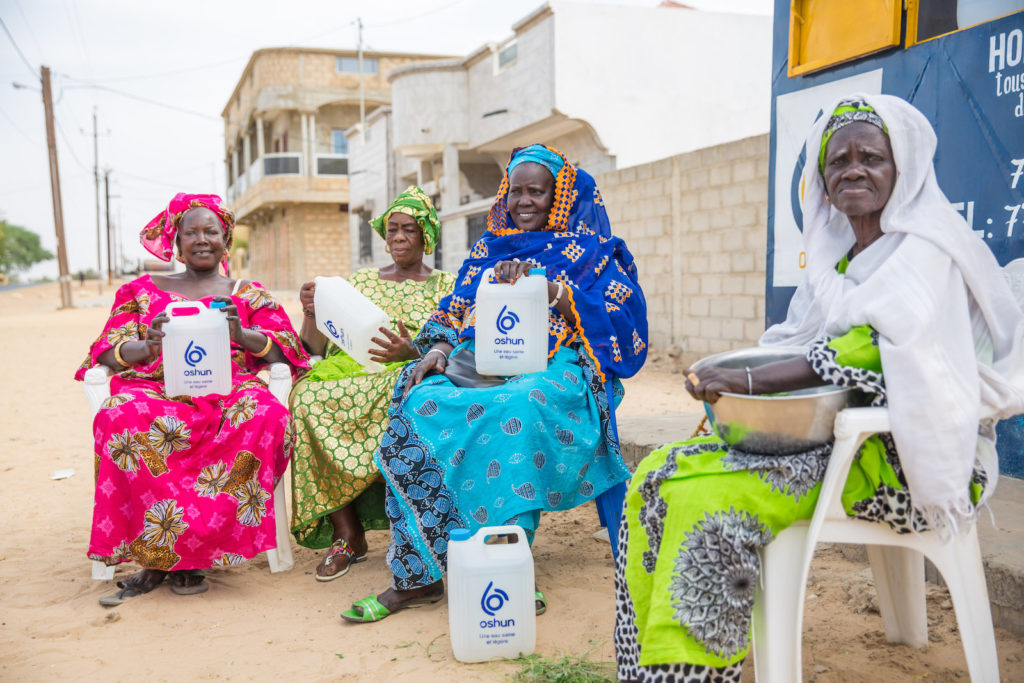
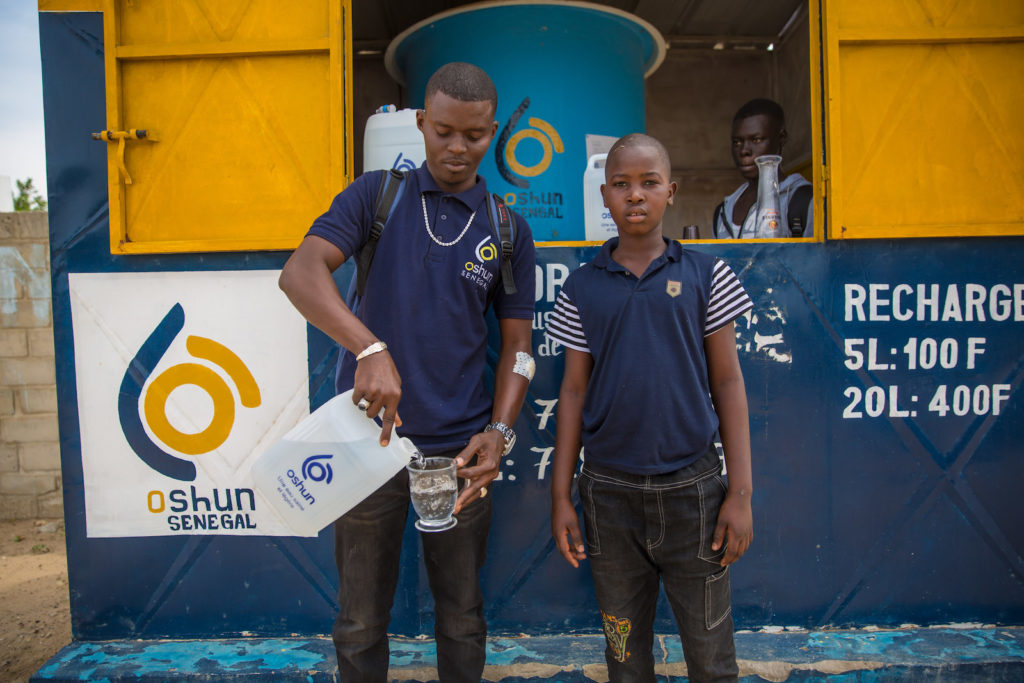
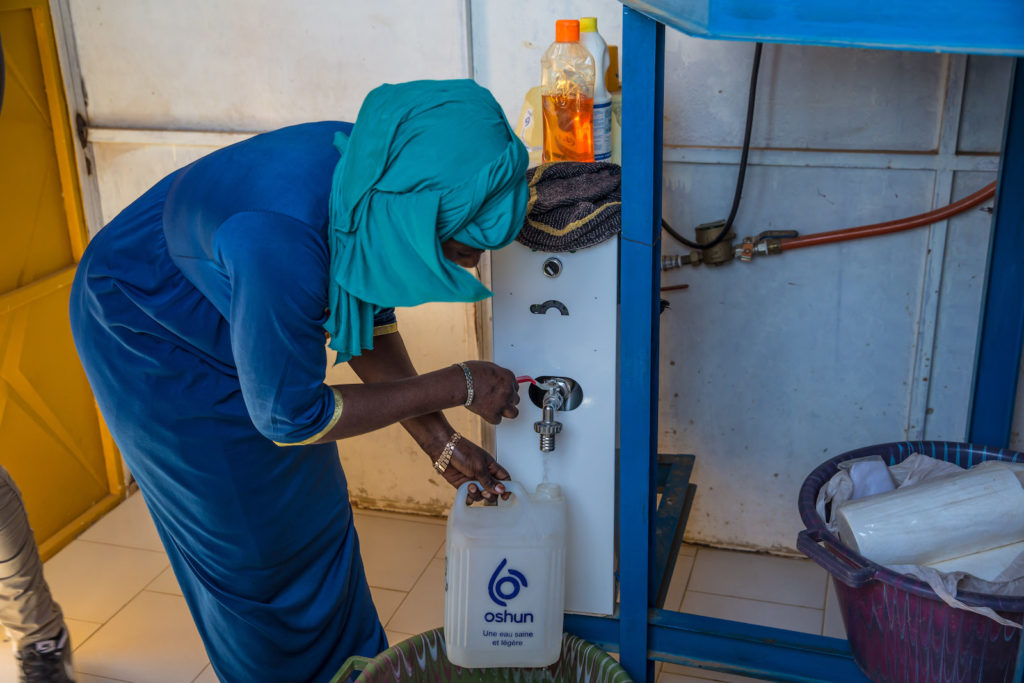
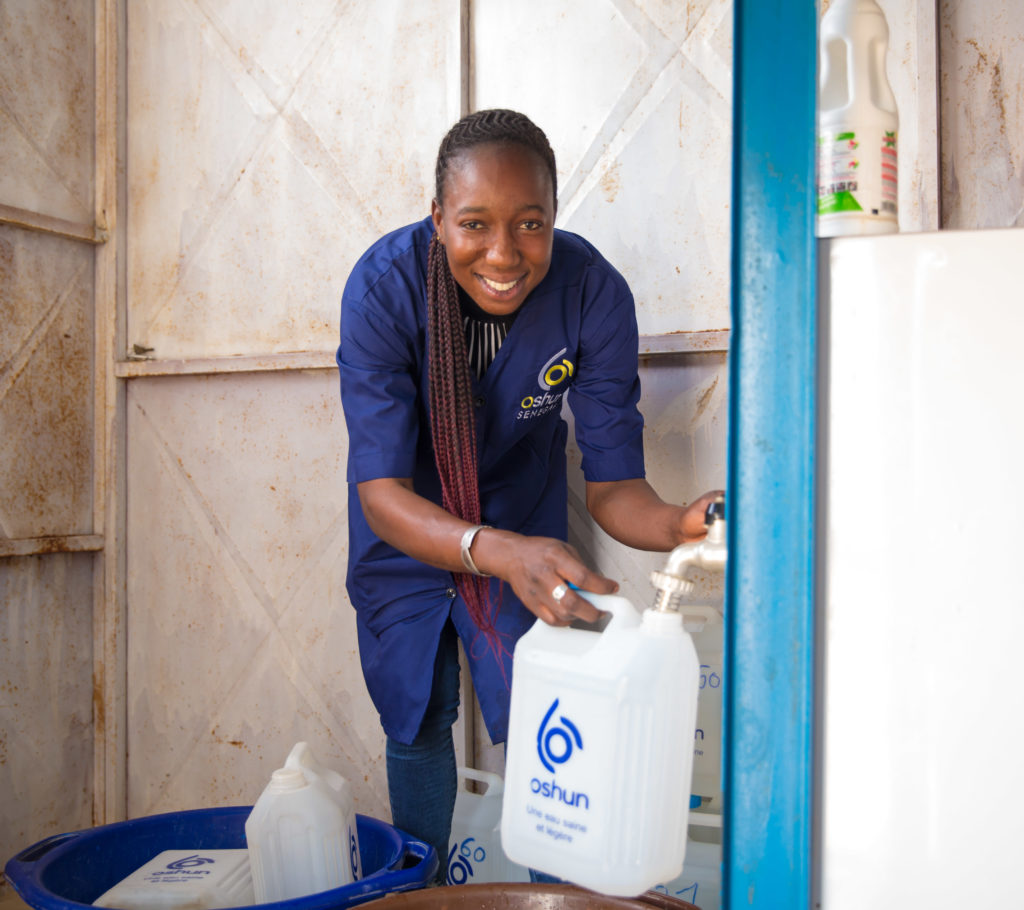
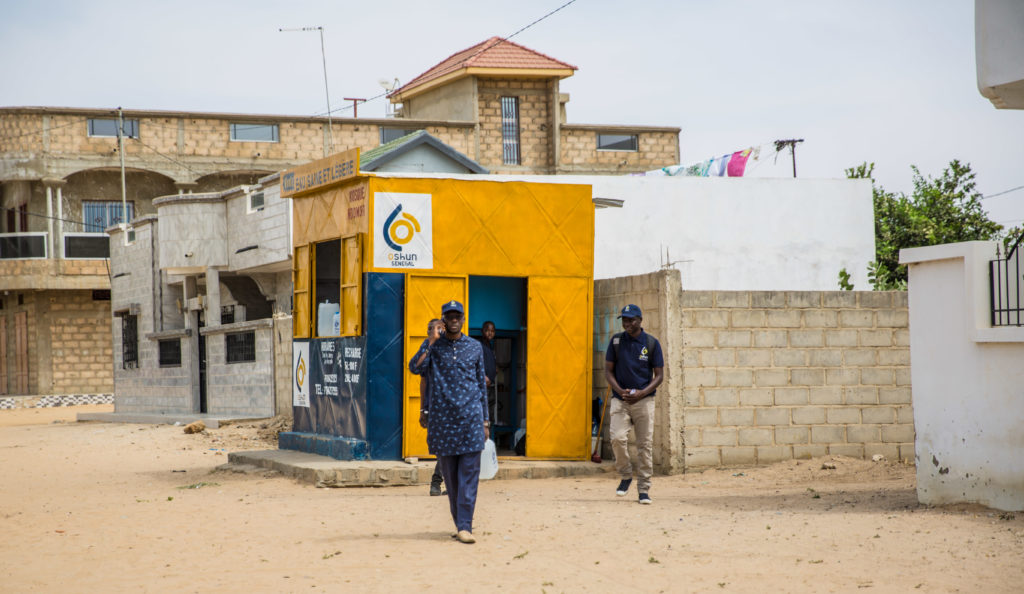
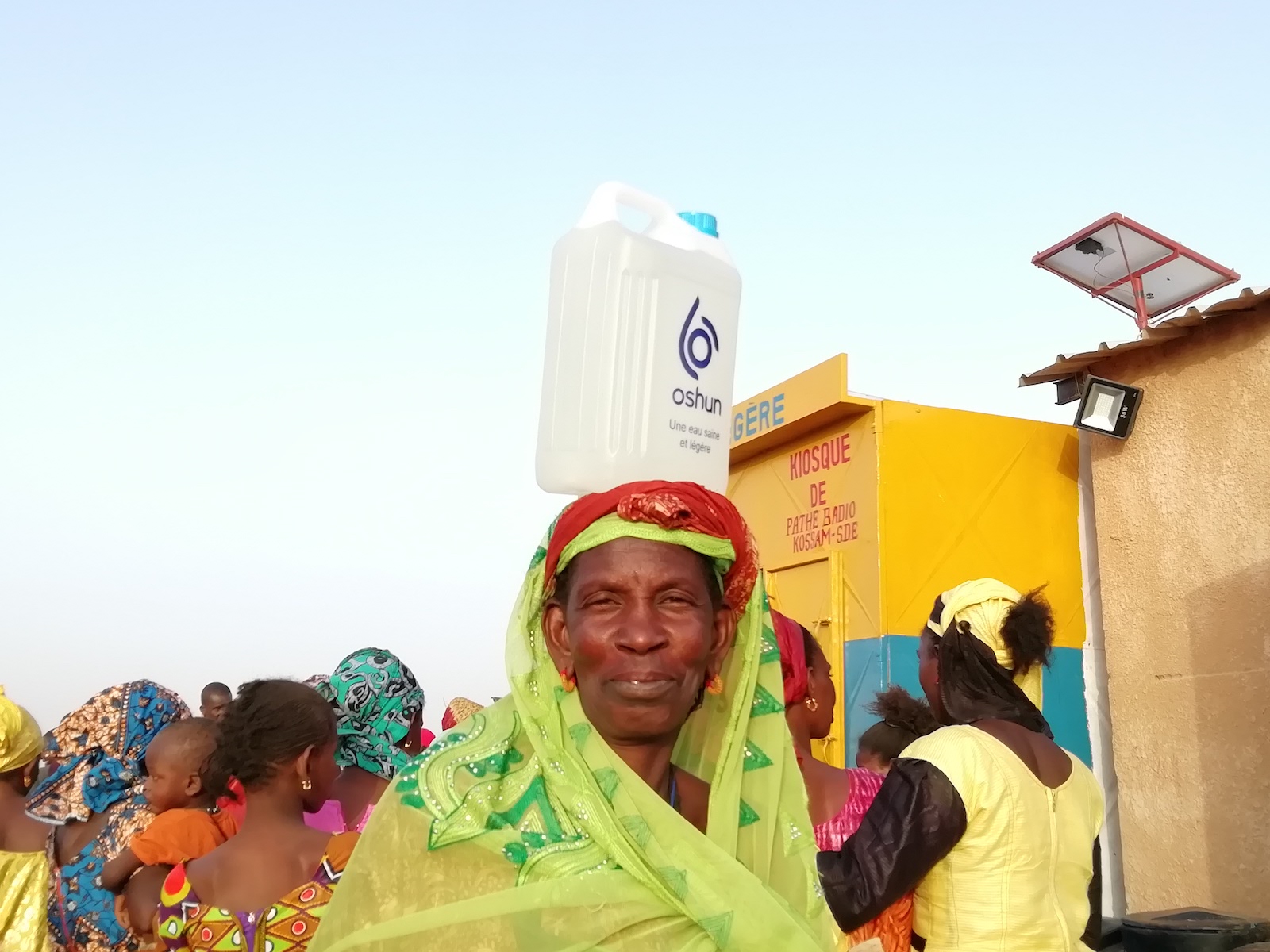
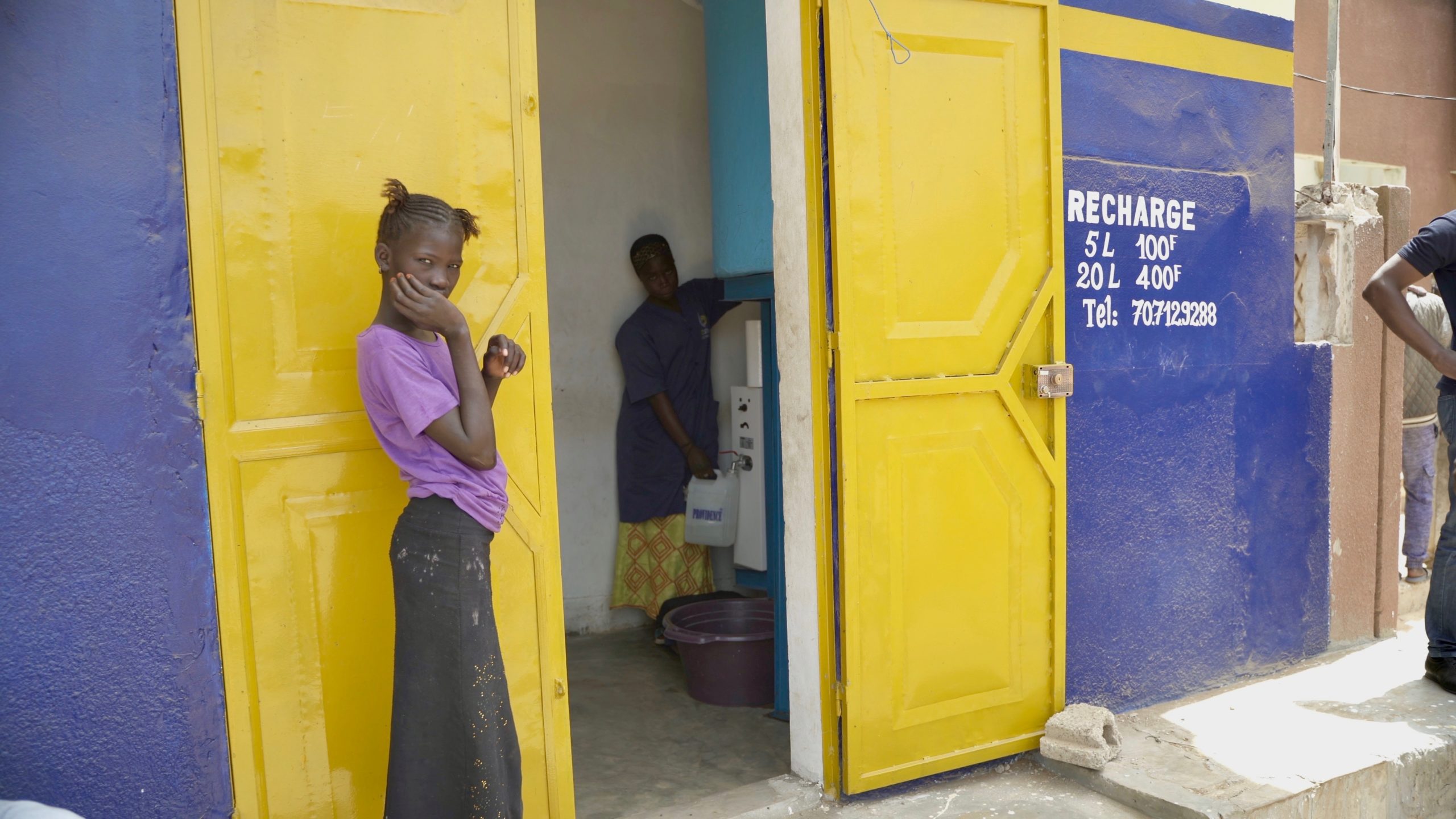
Oshun provides a small, easy-to-run and designed-in-house water treatment system that is installed in a kiosk, treating water from the nearby water drill. This kiosk is run by a local entrepreneur, usually female, who sells the water to local communities at an affordable price. They currently run 45 water kiosks equipped with a range of autonomous water treatments and plan to continue expanding in the Sahel.
2,7 million
liters of safe water sold in 2021
44
women employed + women direct investors through GIE
34
water kiosks
Aida
Kiosk Manager, Senegal
“When I was just a girl, I was dreaming about being a “business woman”. I was raised by a small-scale farmer in the village far from the busy Dakar and I was lucky to be able to go to school and work towards achieving my dreams. When Oshun came to my village, searching for entrepreneurs to run water kiosks, I knew this is what I imagined as a dream job. I was happy knowing that my daughter and the rest of the girls would not have to walk the same path as me collecting water and I became an entrepreneur. Today I am a real business woman.”