Categories
Success Story

1001fontaines

1001fontaines Cambodia & Vietnam: Empowering an Innovative Model for Access to Safe Drinking Water

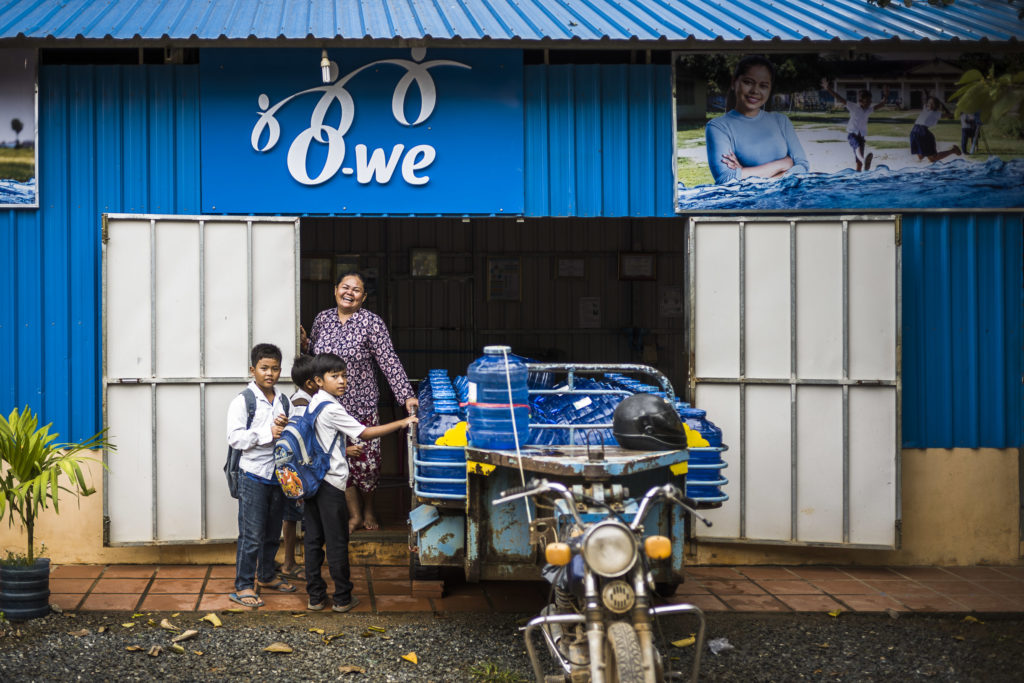
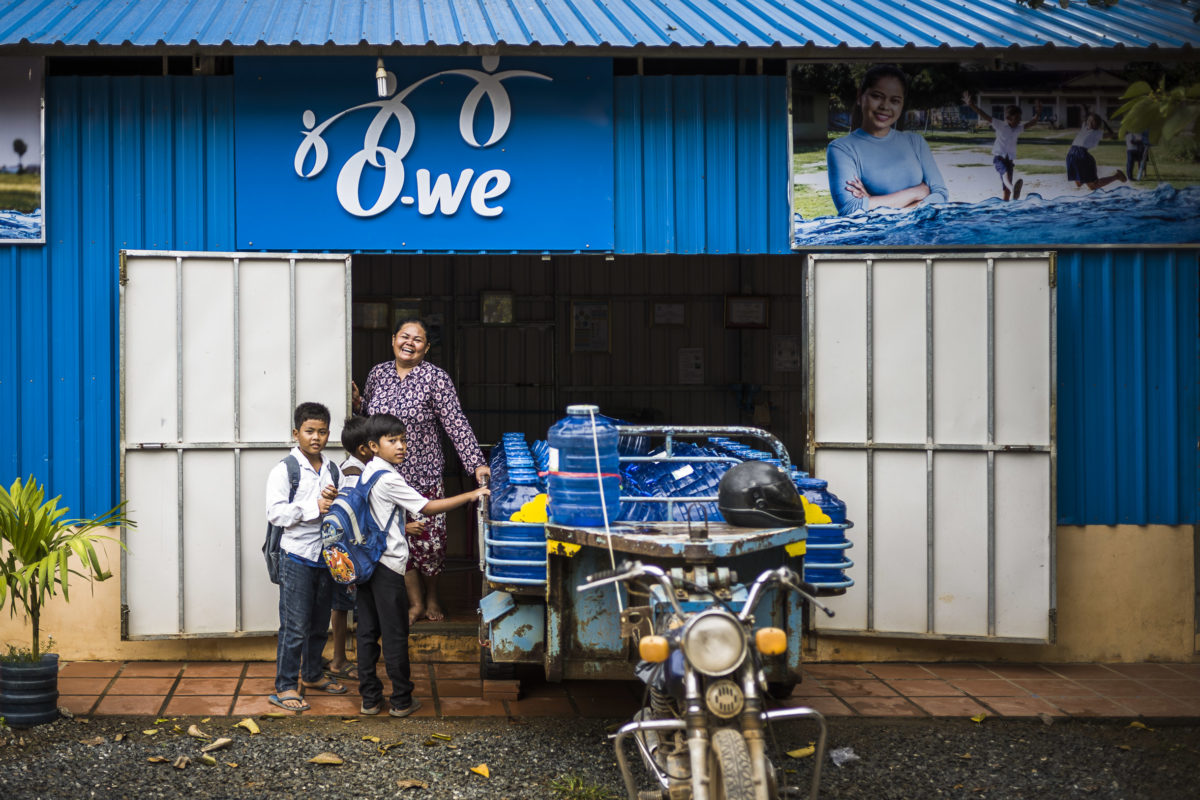
Since 2004, 1001fontaines has been developing a unique, innovative model to address a major challenge: improving the health of rural and vulnerable populations by providing access to quality drinking water at an affordable price and in a sustainable way. Their solution is based on the creation of “water kiosks” that are managed by local entrepreneurs who are trained and supported by the business.  

This model makes it possible to: 

  • Produce high-quality water locally using robust and controlled innovative purification technologies, with digital monitoring of quality and impact. 
  • Distribute water close to beneficiaries, in villages and schools, through a network of locally trained entrepreneurs. 
  • Ensure sustainability thanks to a replicable and adaptable water kiosk model and a viable economic model, where each station becomes financially autonomous. 
  • Raise community awareness about hygiene and health, especially through school programs. 
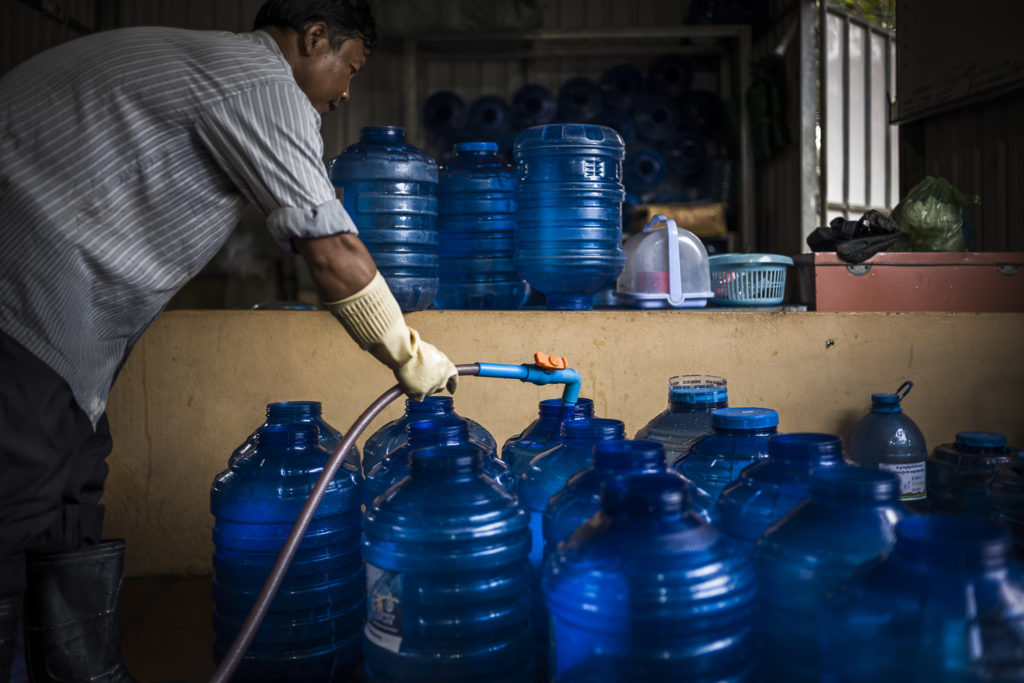
Danone Communities has supported 1001fontaines since 2008, convinced of the potential of their innovative model to improve the health of rural populations by giving them access to safe drinking water. This partnership has been built over time, with patient financial support and tailored guidance, mobilizing the expertise of Danone and its employees at every key stage of 1001fontaines’ development, with a strong social and economic impact: 

  • Health impact: with more than 1 million people reached, 1001fontaines has significantly reduced waterborne diseases, especially among children, by supplying millions of liters of drinking water each year to populations who previously had no access. 
  • Economic impact: More than 1,000 entrepreneurs and staff involved, and financial autonomy achieved for operations in Cambodia. 

A Positive Exit, True to the Danone Communities’ Mission 

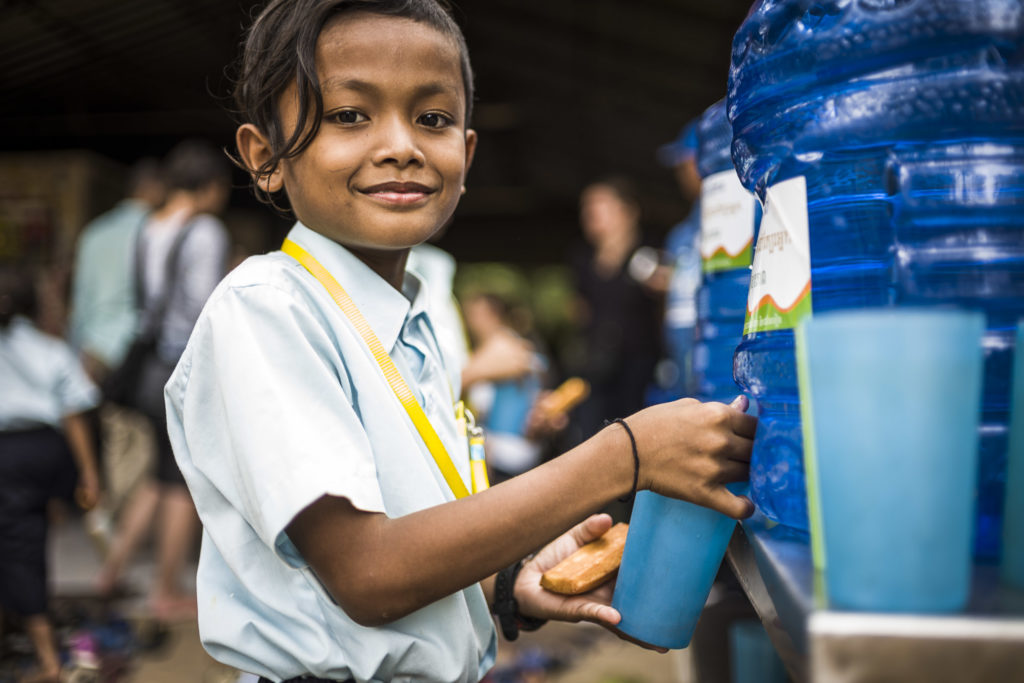
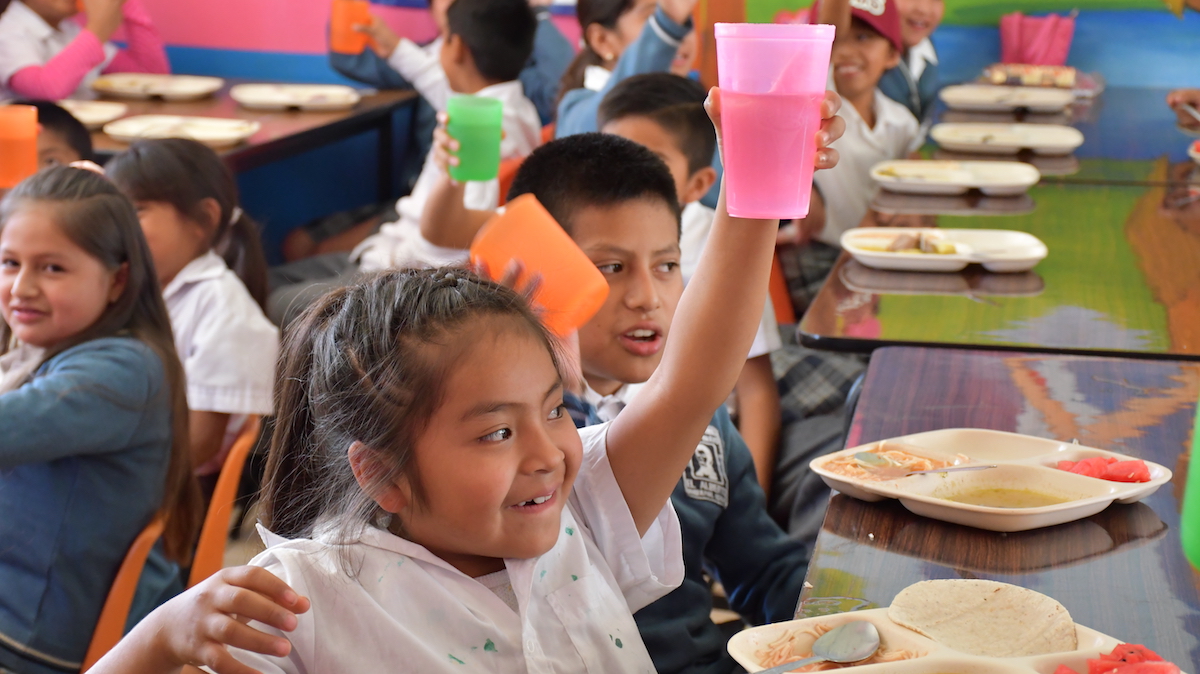
After 15 years of supporting the 1001fontaines project in Cambodia, Danone Communities is proud to have seen the local 1001fontaines organization, Teuk Saat 1001, reach national scale and financial sustainability in its operations. This success enables Danone Communities to exit the capital, in line with its mission: to support social enterprises until impact and economic viability are achieved, then reinvest in new high-potential projects. The Danone group continues its commitment in Cambodia by supporting the philanthropic “Water in School” program, which provides 350,000 children with free drinking water every school day. 

In 2025, Danone Communities will also exit the capital it invested in 1001fontaines Vietnam, after having supported the development of the model in a demanding urban context in Ho Chi Minh City. The Owe brand now continues its development in Vietnam independently, building on the knowledge and foundation provided by the initial support from Danone Communities. 
Social Innovation Catalyzed for Health Impact, in Service of the Danone Mission 

The story of 1001fontaines Cambodia and Vietnam demonstrates Danone Communities’ ability to catalyze innovative solutions, combining economic performance and health impact, and contributing to Danone’s mission to bring health through food and hydration to as many people as possible

Categories
Uncategorized

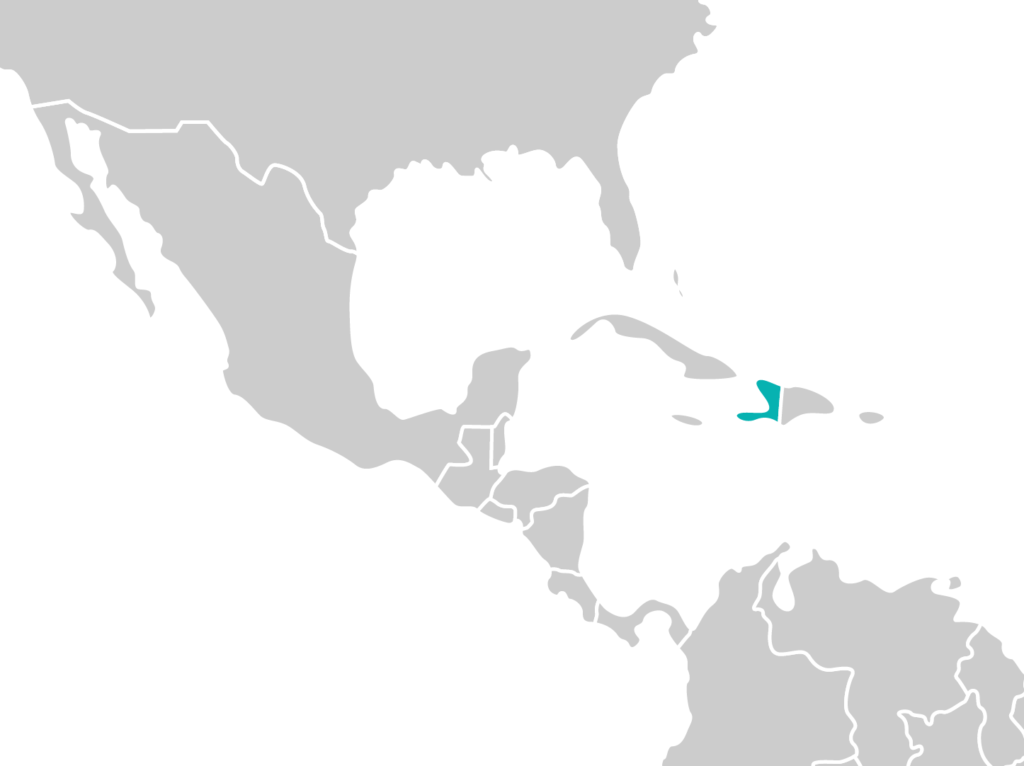
dloHaiti

Haiti

  • Inhabitants: 11,3 million
  • Annual income per capita: 1 870 USD
  • Between 1990 and 2015, share of the population with access to safe drinking water decreased from 62% to 52% (source)
Play video

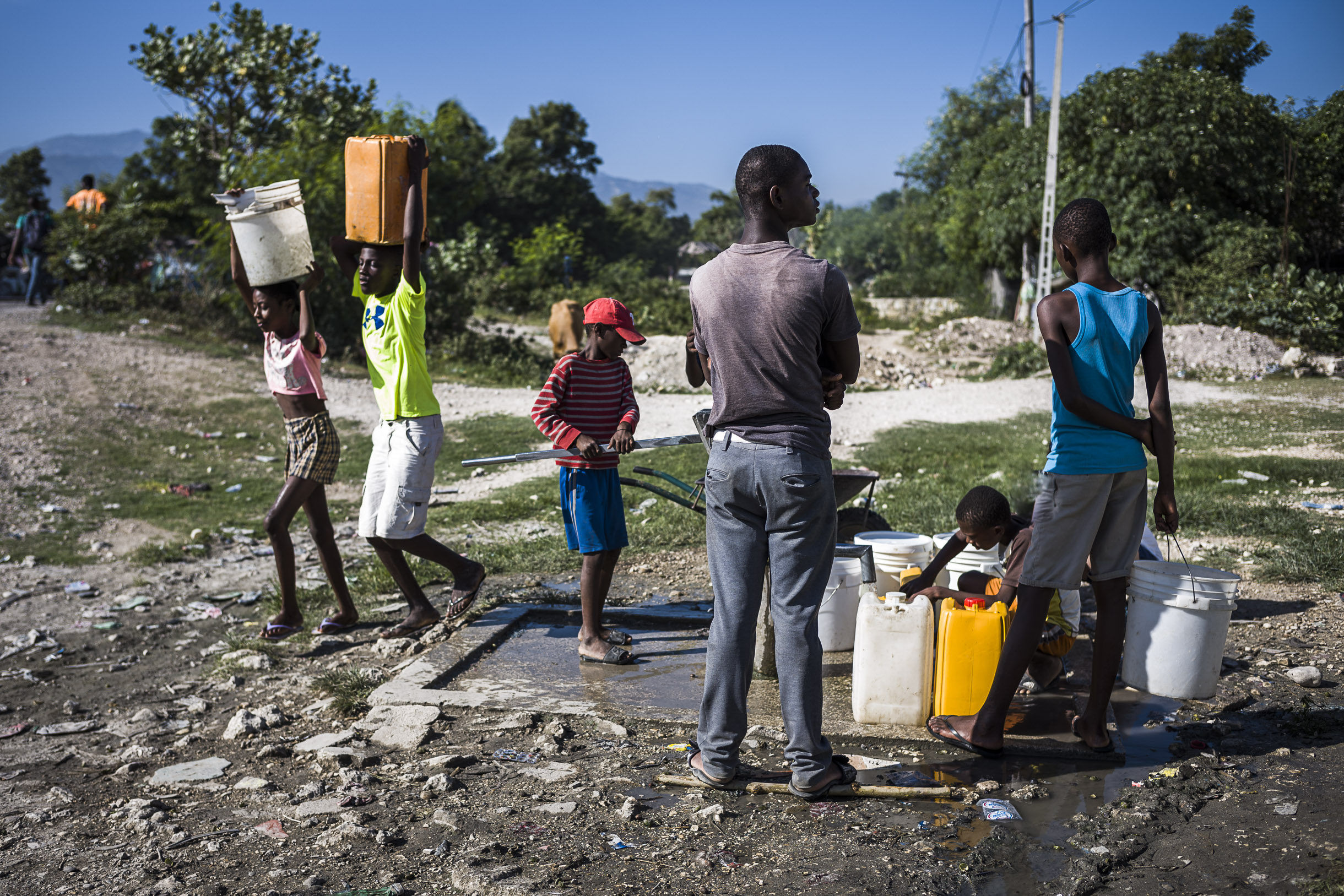
In 2010 Jim Chu, an American entrepreneur, came to Haiti after the earthquake as a volunteer. He discovered that safe water access was essential for the country to bounce back.

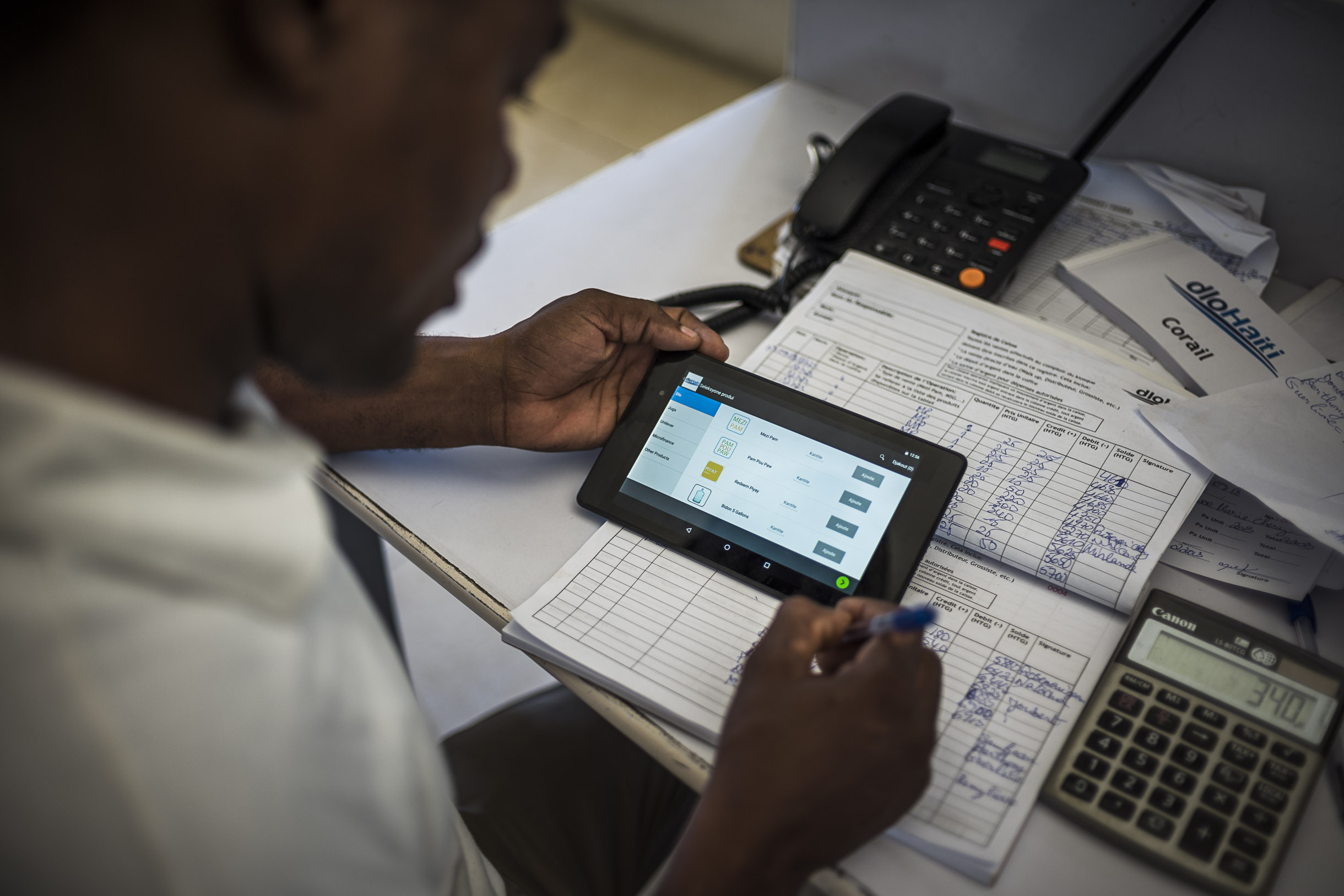
Jim’s background was in business, and he was drawn to designing a business-based solution that was IT powered and quality focused.

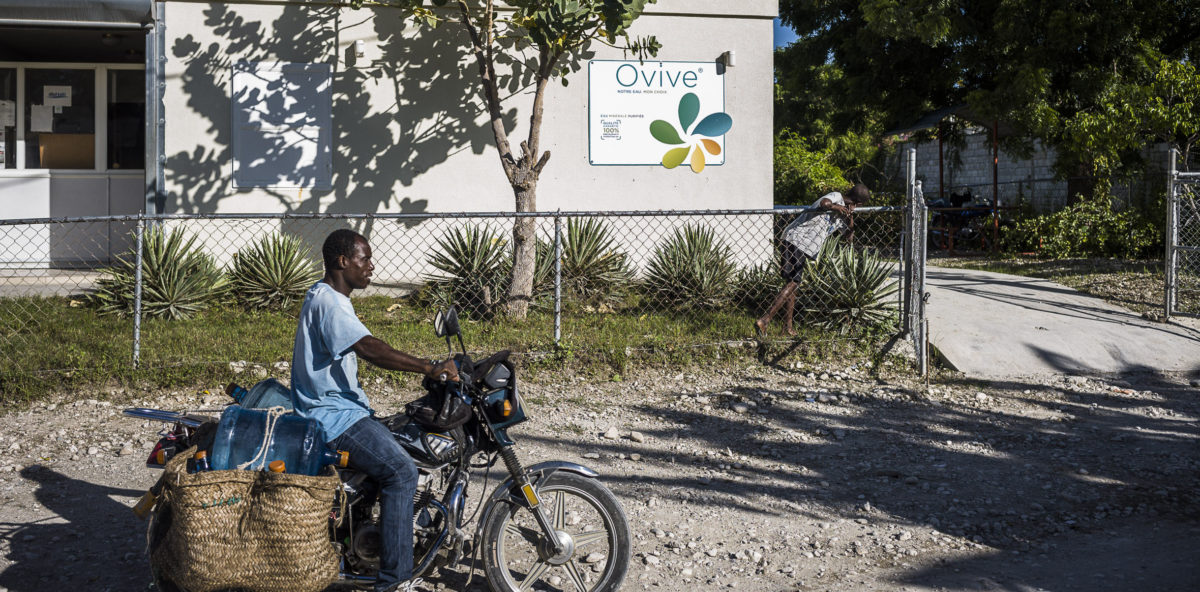
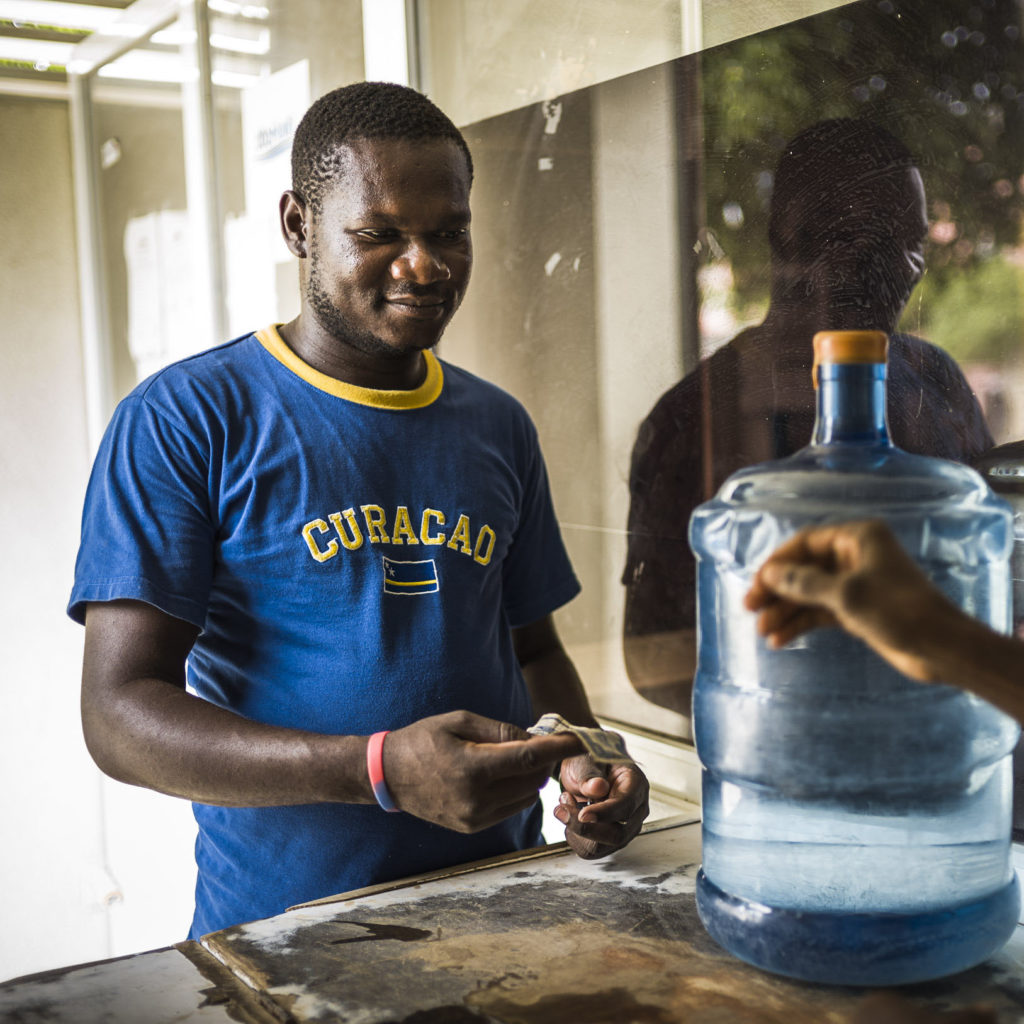
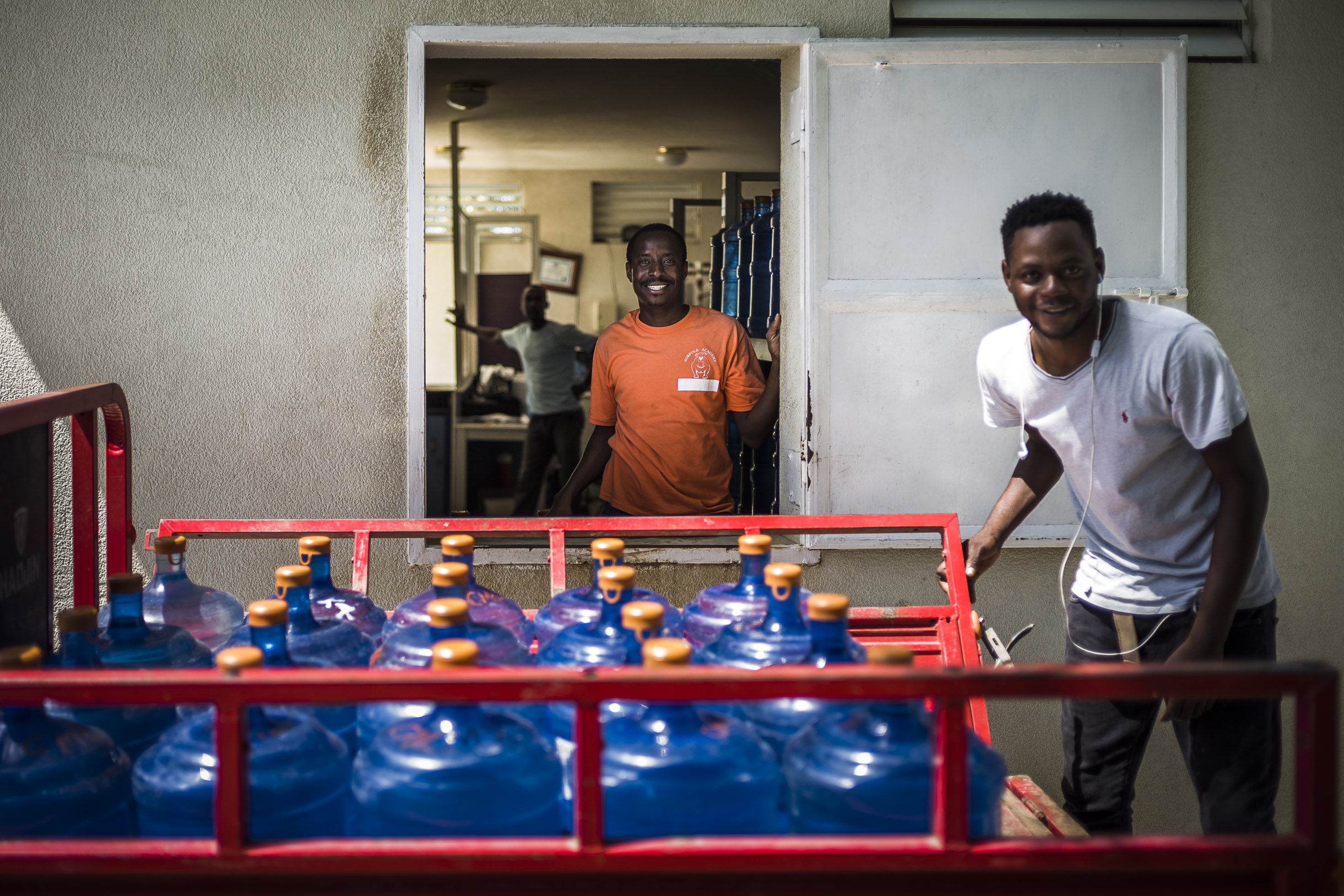
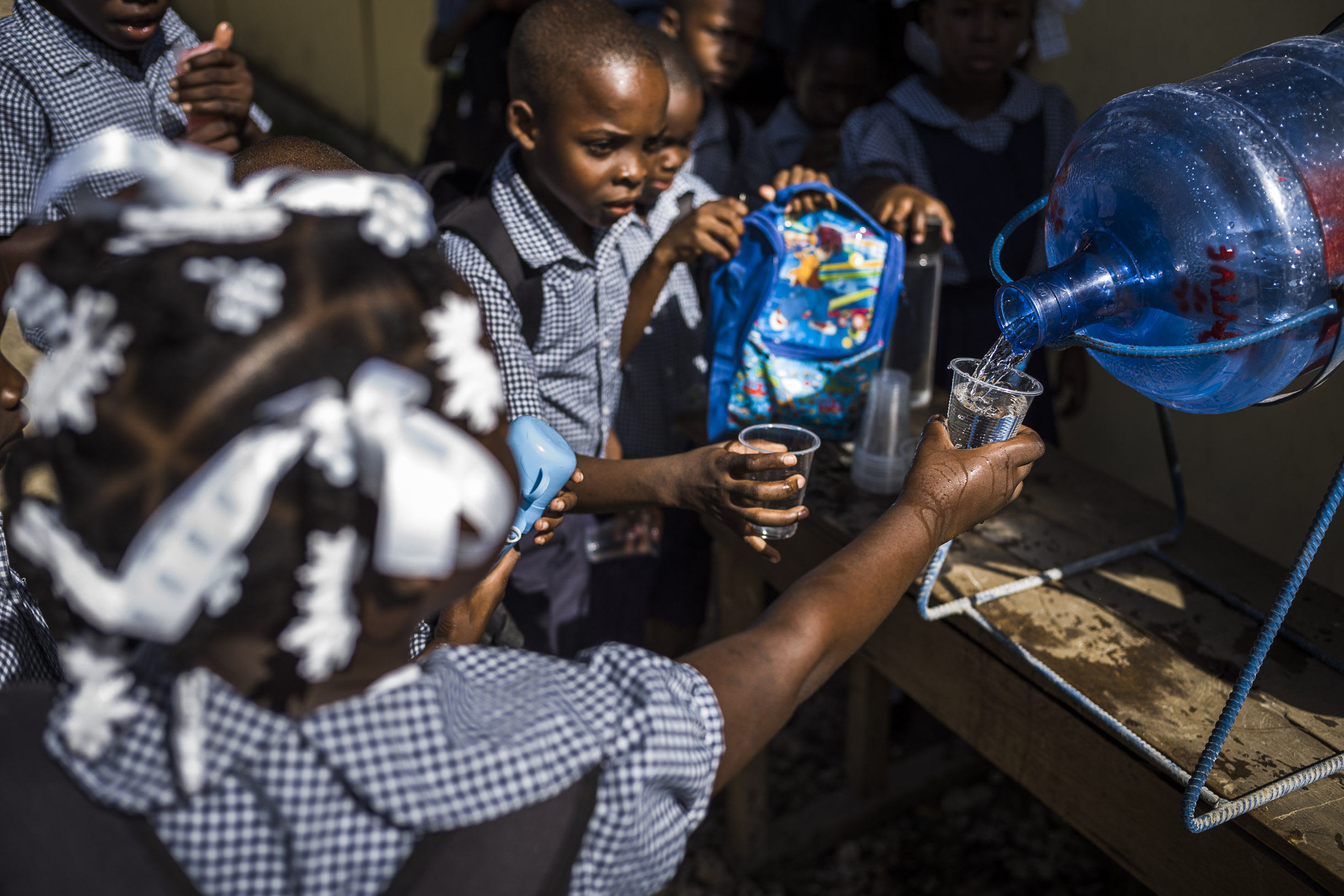
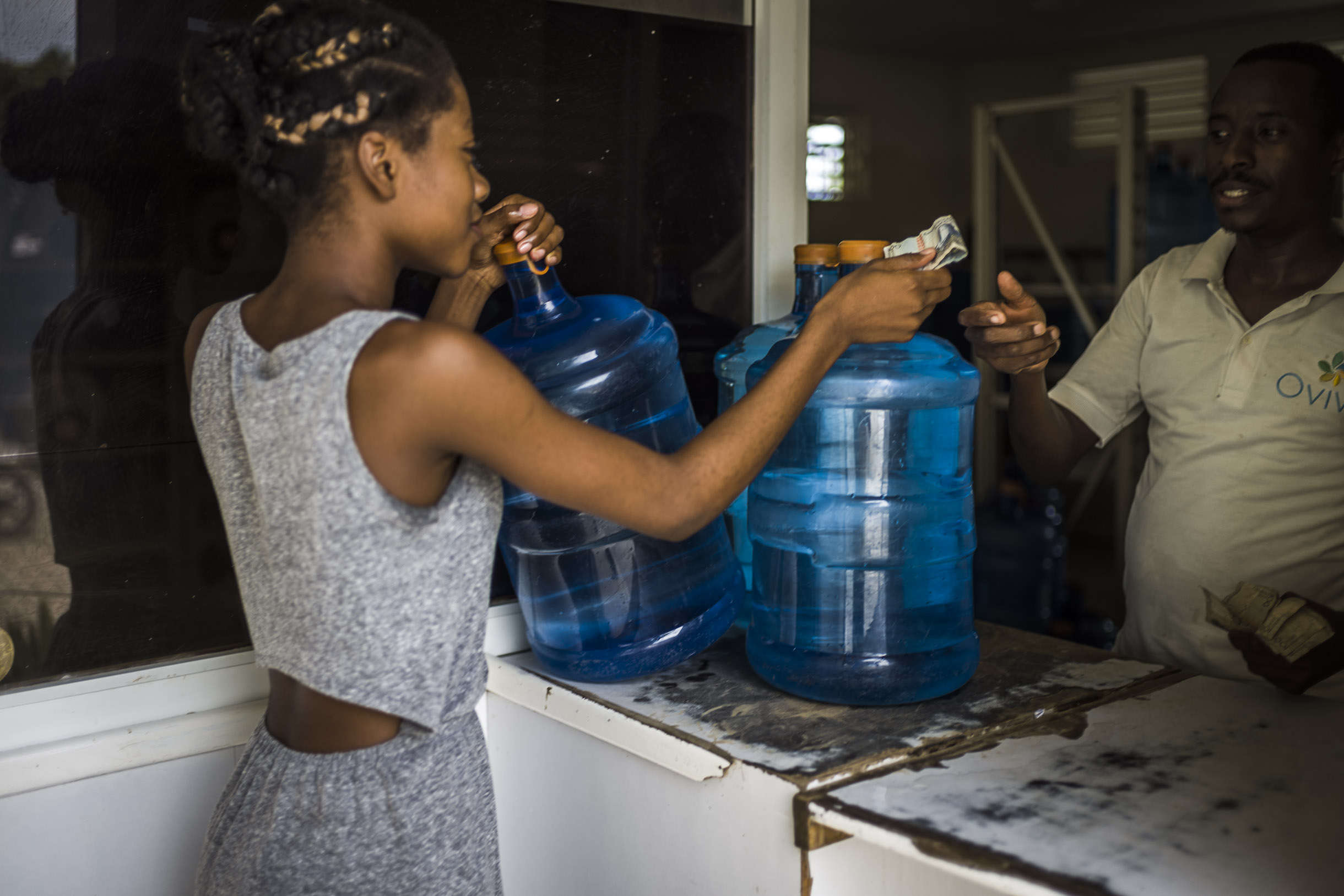
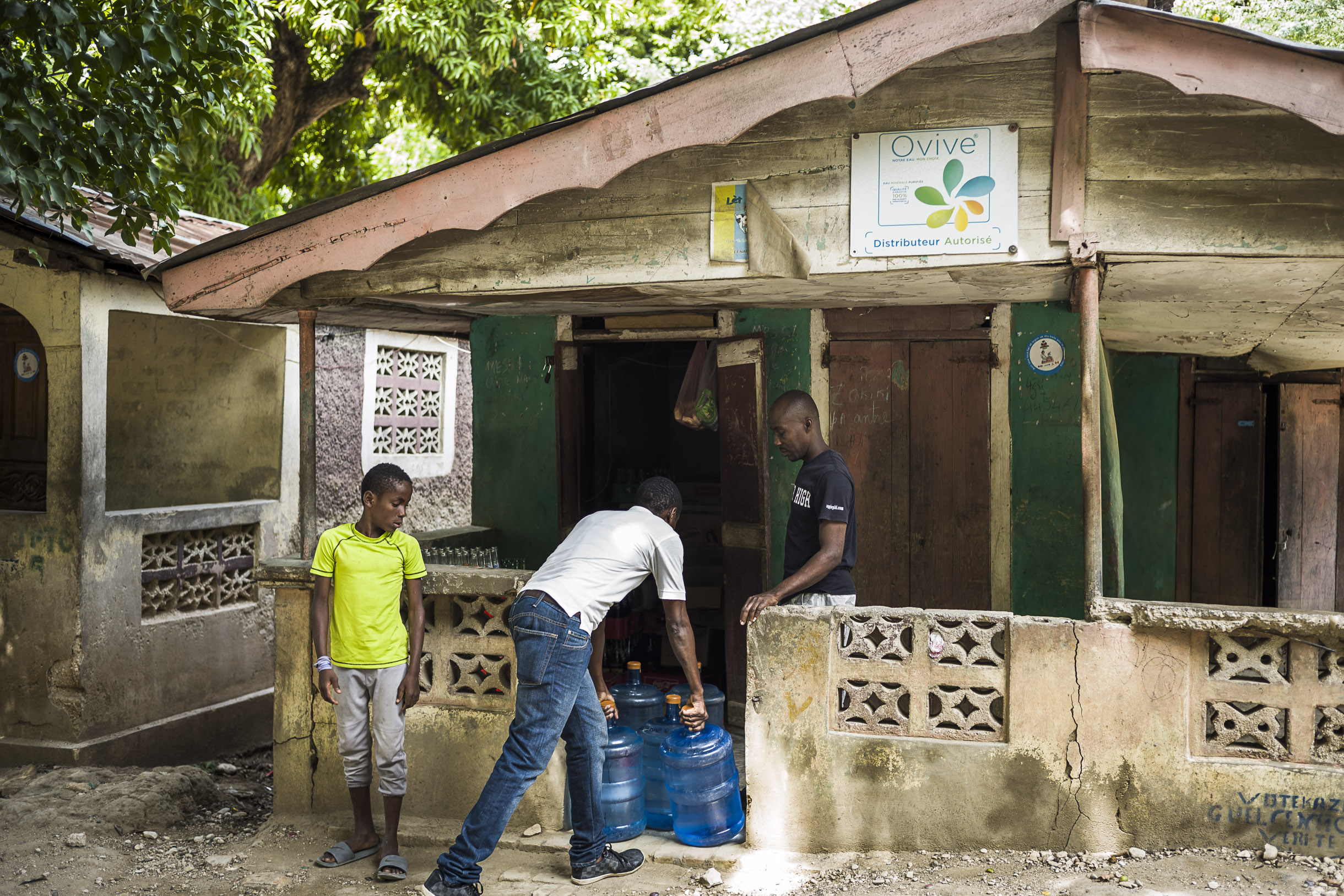
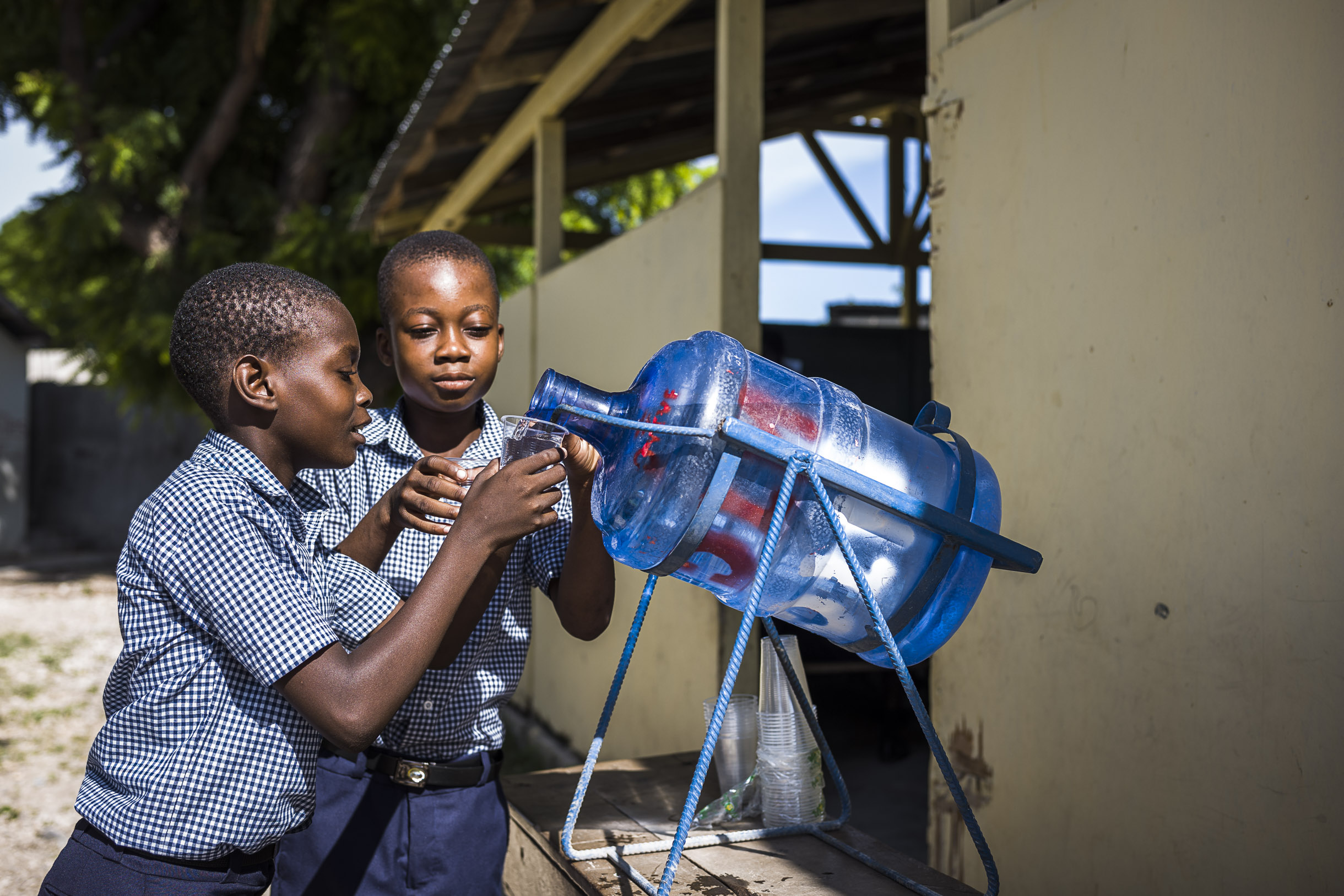
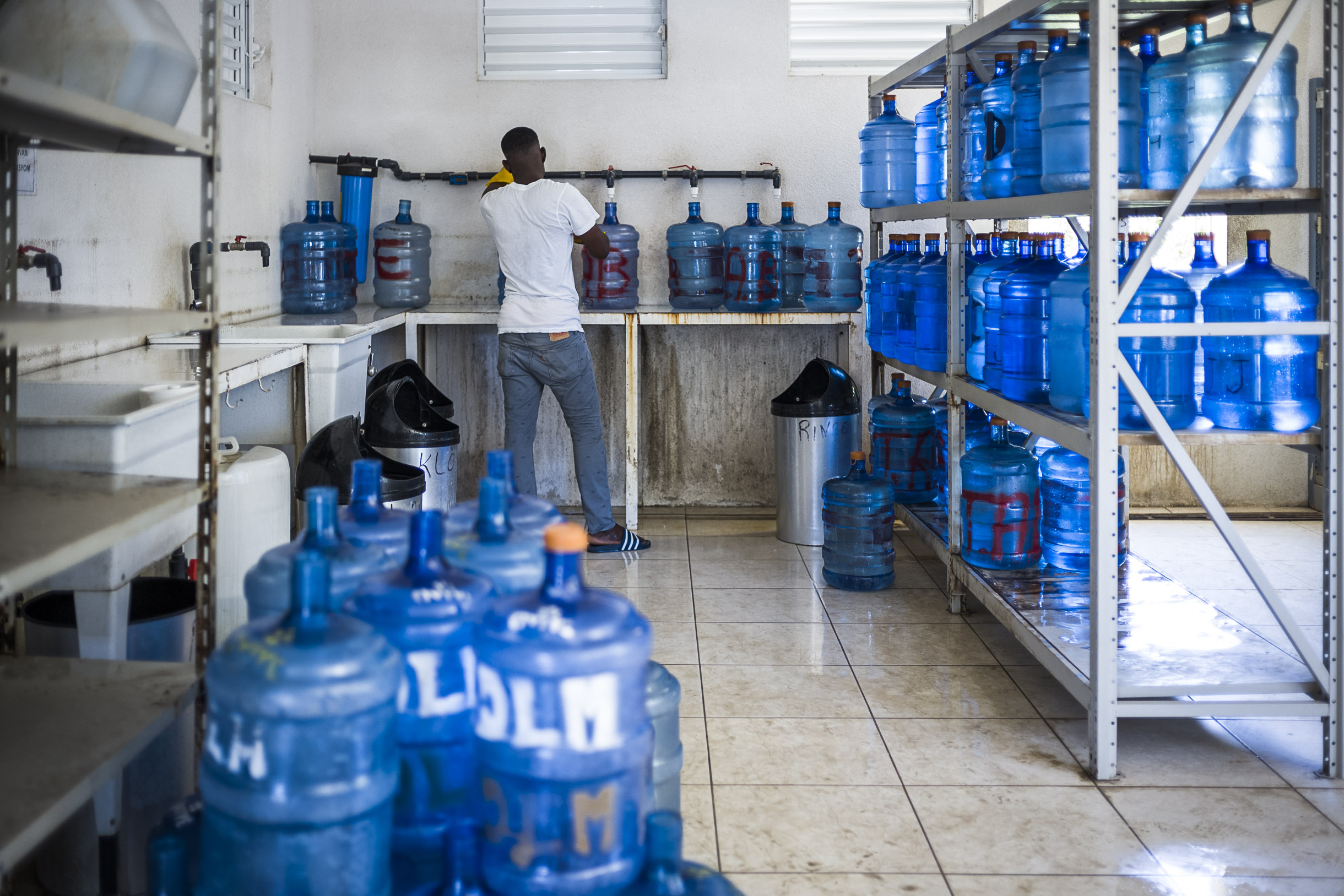
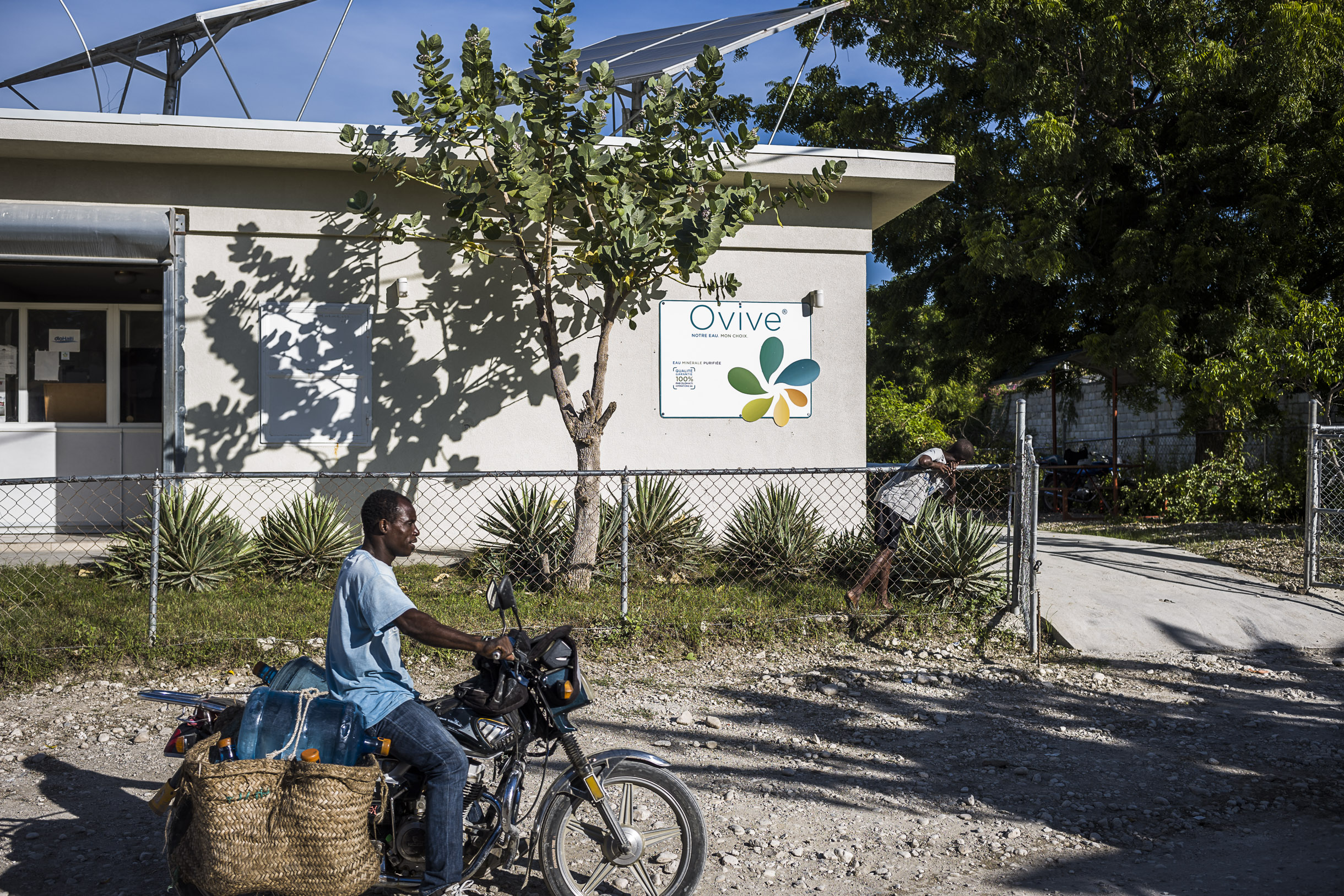
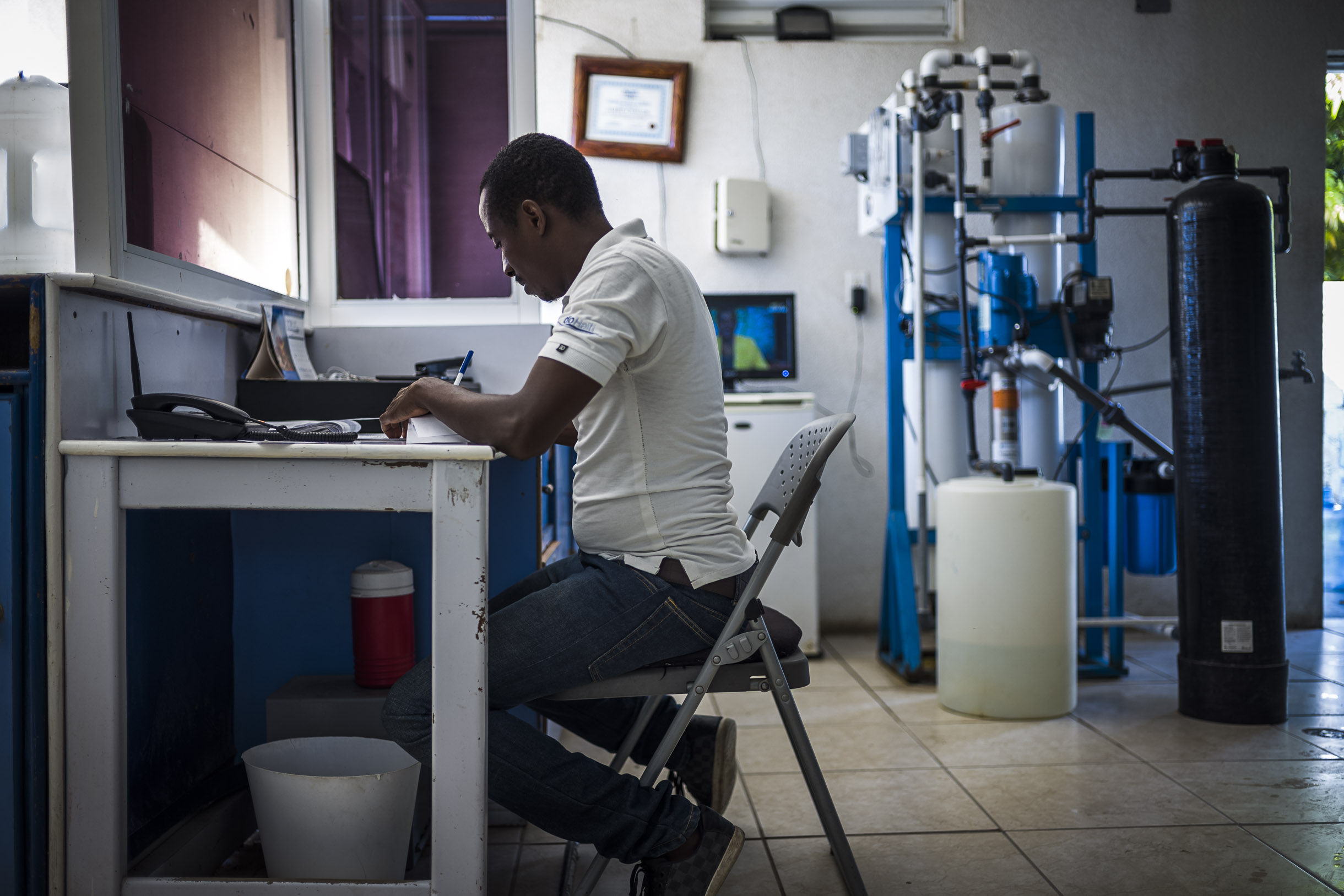
dloHaiti’s water kiosks deliver safe water jugs to more than 500 small retailers, where the local population buys most of what they need. Through this network of small retailers, dloHaiti serves more than 50.000 people daily.

dloHaiti has created over 100 jobs, and also delivers safe water for free in schools, to over 32 277 students.

9,950 million

liters sold: Liters (2021)

14 000

kids in school program

526

kiosks and retailers

Jerome

Shop owner, Cabaret, Haiti

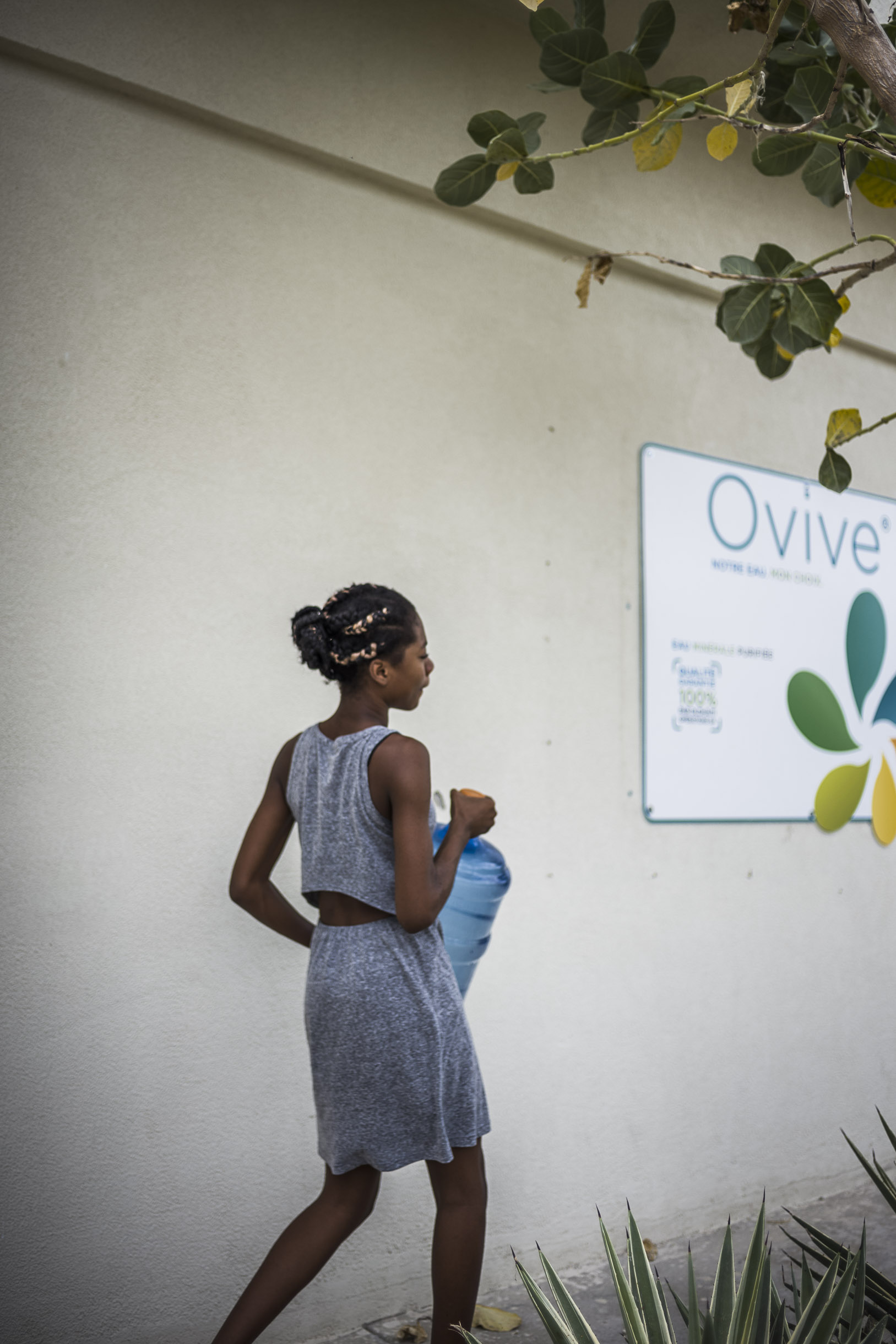
I am a small shop owner, an entrepreneur. I live with my wife and two young boys in Cabaret, a town few hours’ drive from Port-au-Prince. Growing up in this town, I’m well aware of the water crisis. After the devastating earthquake in 2010 the water scarcity became much worse and the waterborne diseases were common among my friends and family. Due to lack of water in my town I was buying it from a water truck, carrying water from the capital. The quality of the water was not always good and sometimes the trucks simply did not come.

When my neighbour Thomas started to manage dloHaiti water kiosk next door to my family house, I visited and learned more about the new venture. Today I am a regular consumer and I’m happy to be able to have access to safe drinking water so close to my home.” 

Categories
Nutrition

Grameen Danone Foods Ltd

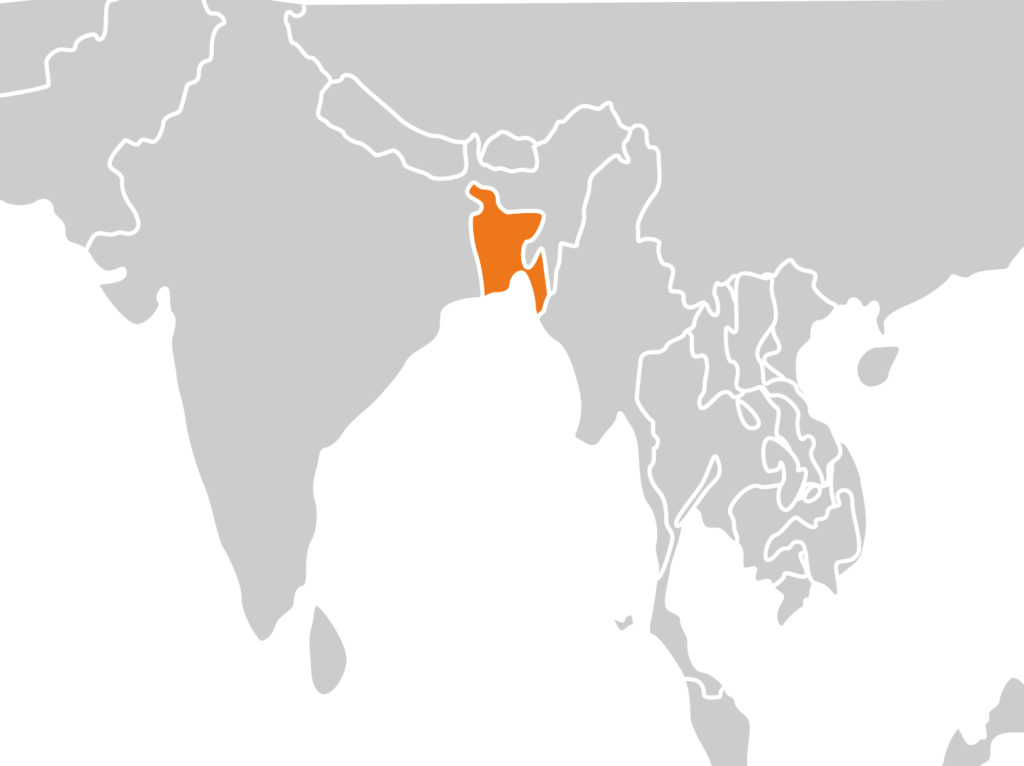
Bangladesh

  • Inhabitants: 163 million
  • Annual income per capita: 4 560 USD
  • 40% of kids under 5 years are suffering from anemia (WHO – 2016)
  • 22% of preschool-age also have Vitamin-A deficiency (WHO – 2016)
  • Moderate and severe underweight prevalence is 22.6 % in 2019. Similarly, moderate and severe stunting rate is 28% in 2019. (UNICEF-2019)
Play video

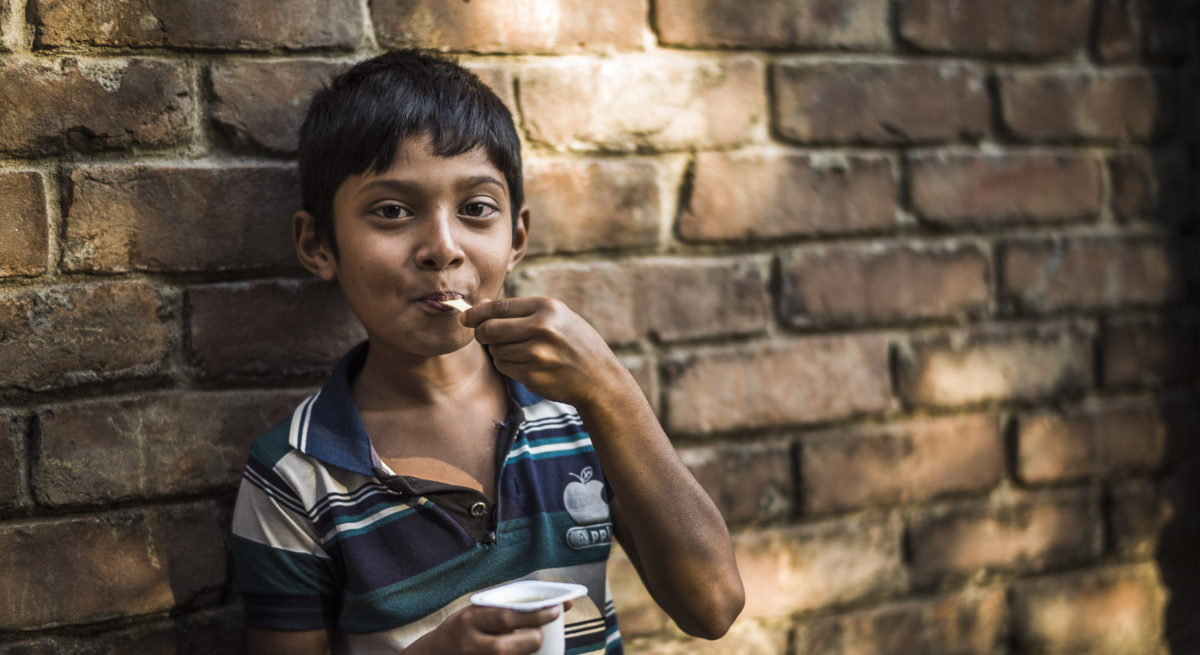
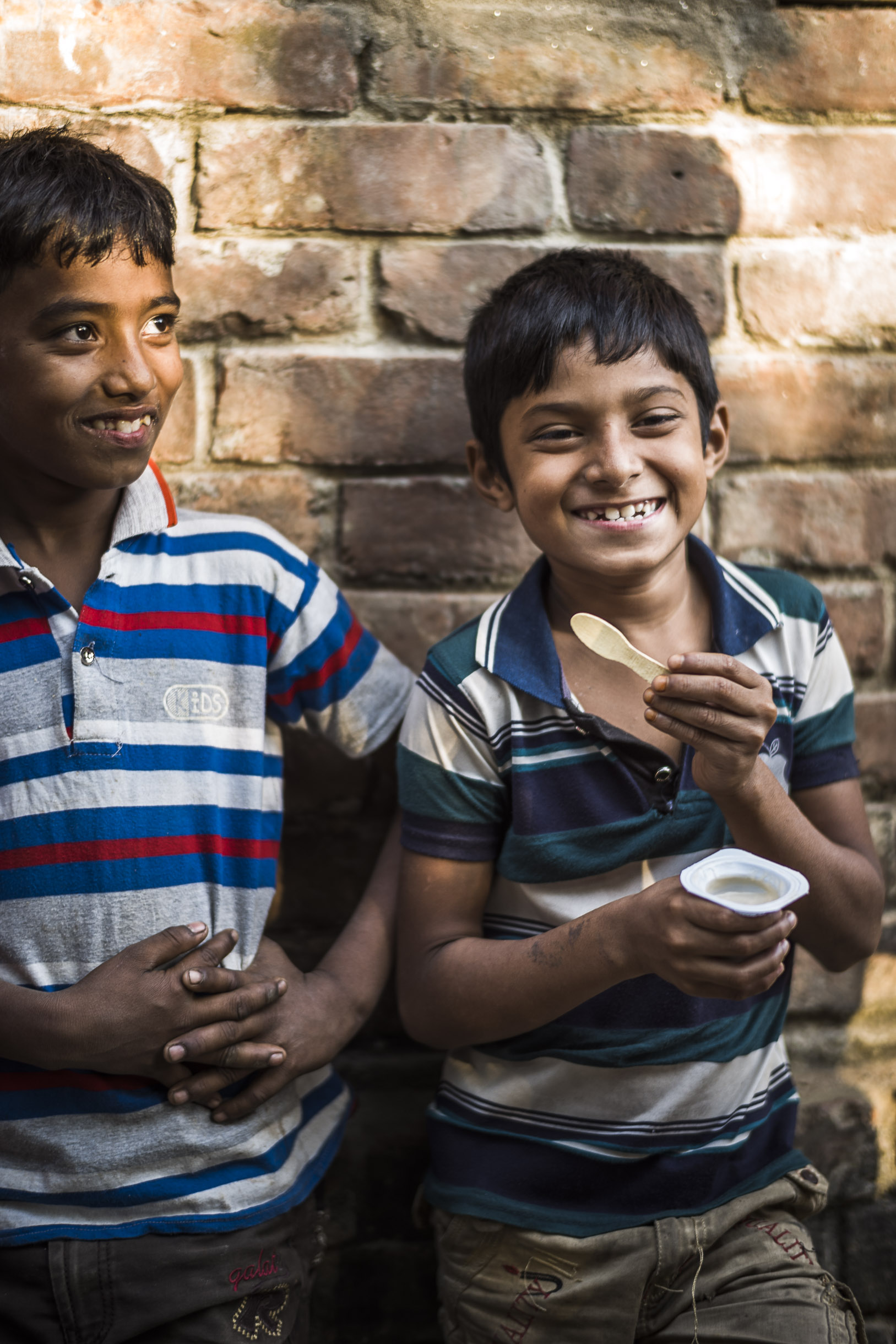
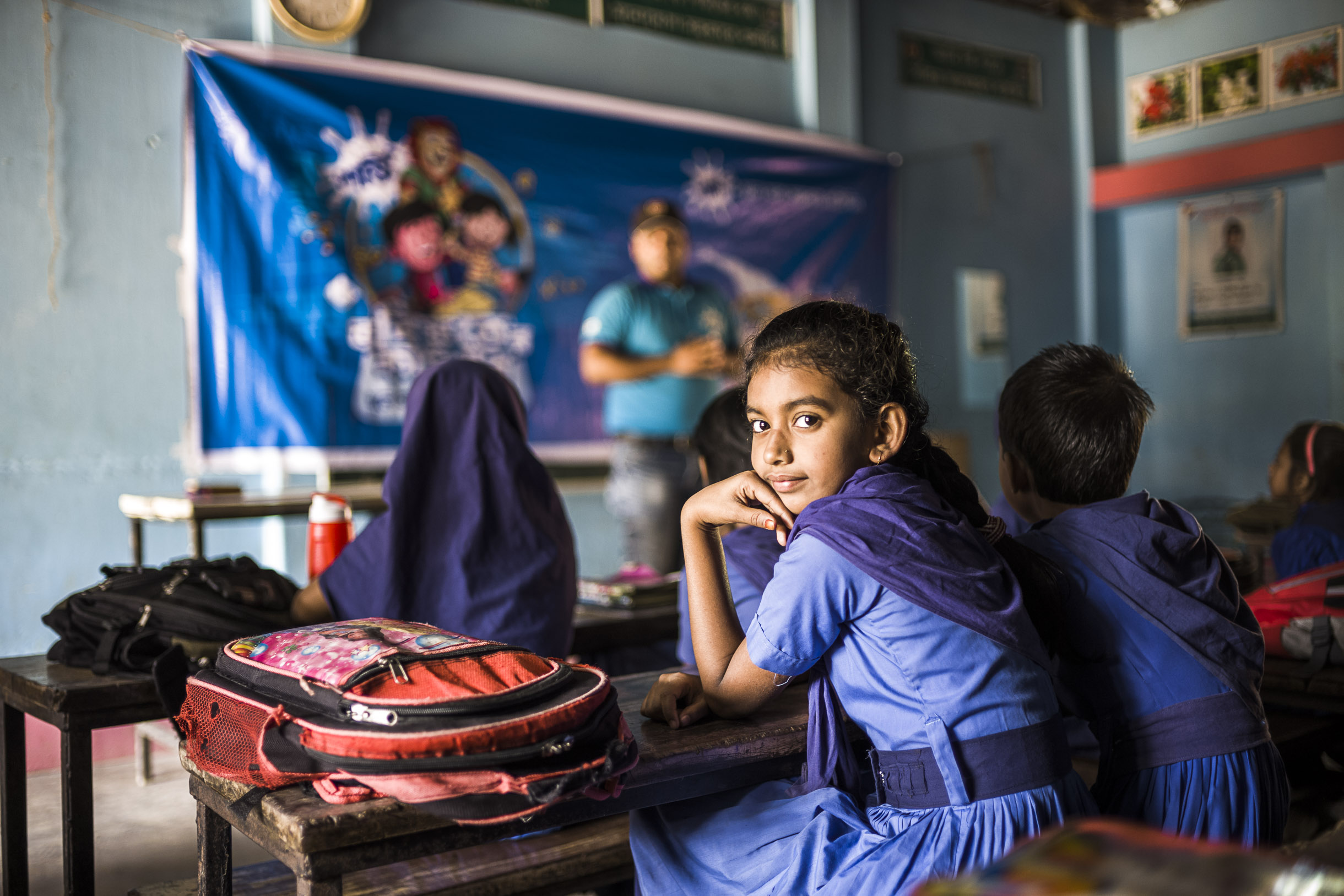
In Bangladesh, one out of two children suffer from malnutrition, so it’s very hard for them to reach their full physical and mental potential. Eating well enables children to grow, develop good memory and maximize their learning at school, which prepares them for a bright future – for themselves and for their country.

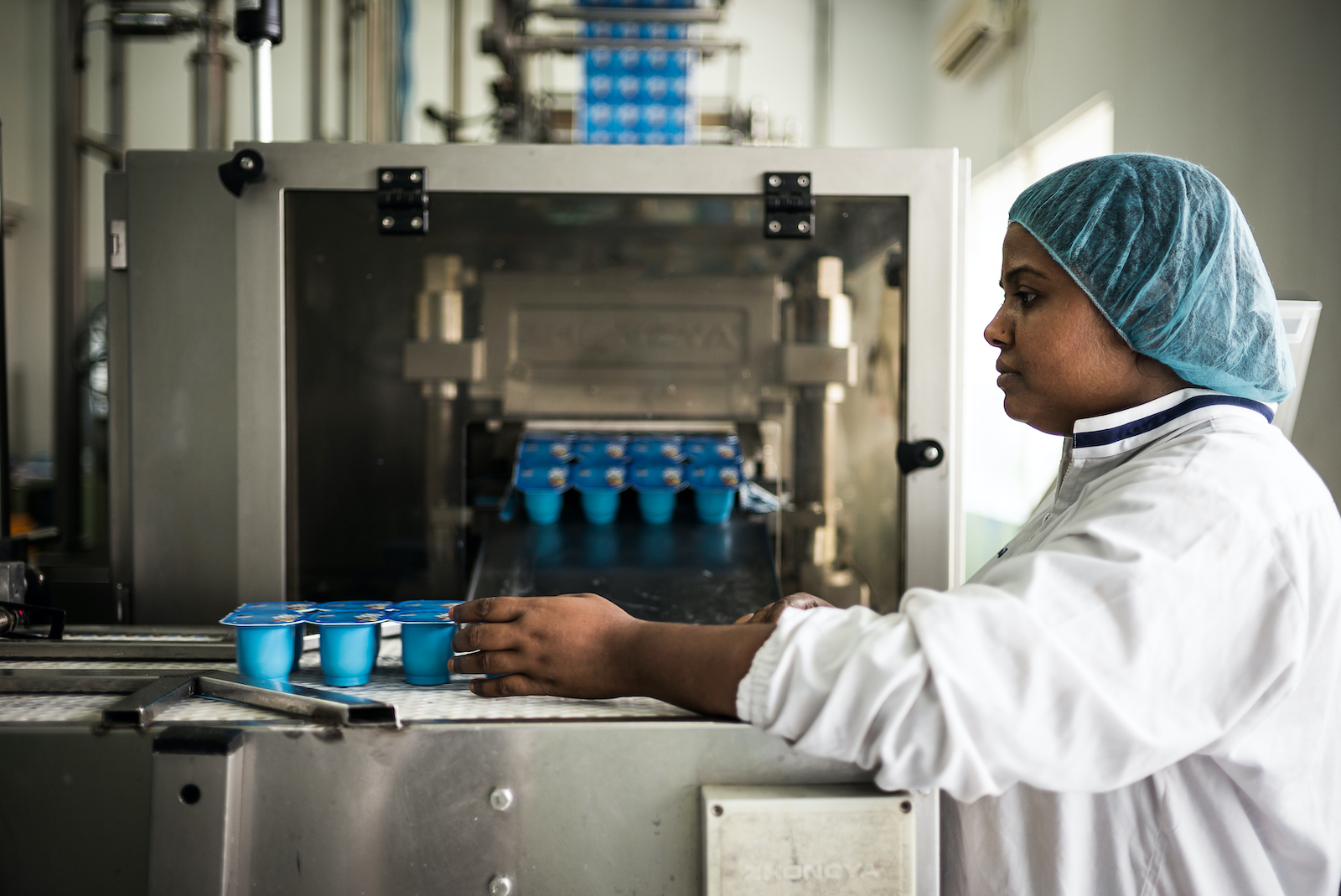
That’s why the Grameen Danone Foods team developed Shokti +, a yoghurt enriched with micronutrients (iron, Iodine, zinc, vitamin-A) that helps to fulfil the children’s nutritional needs.

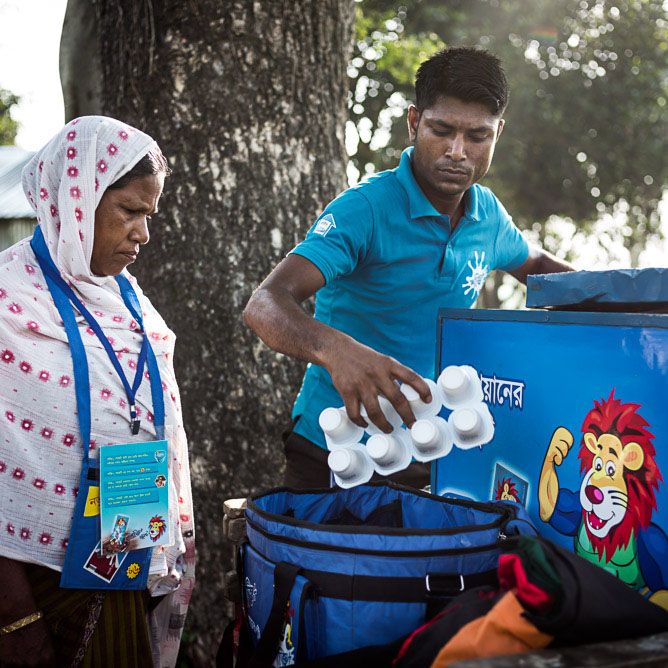
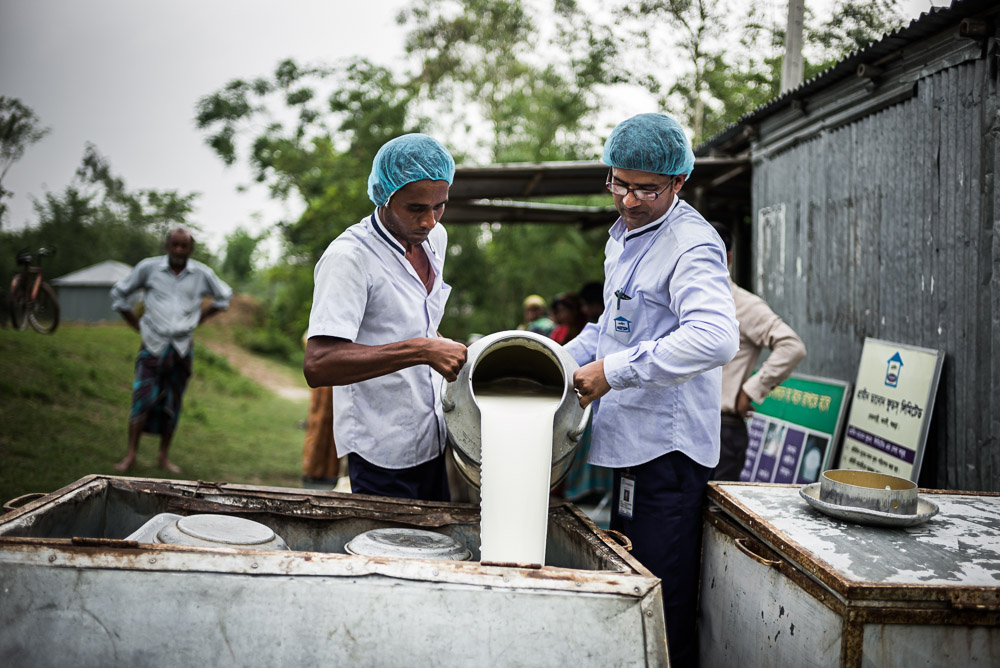
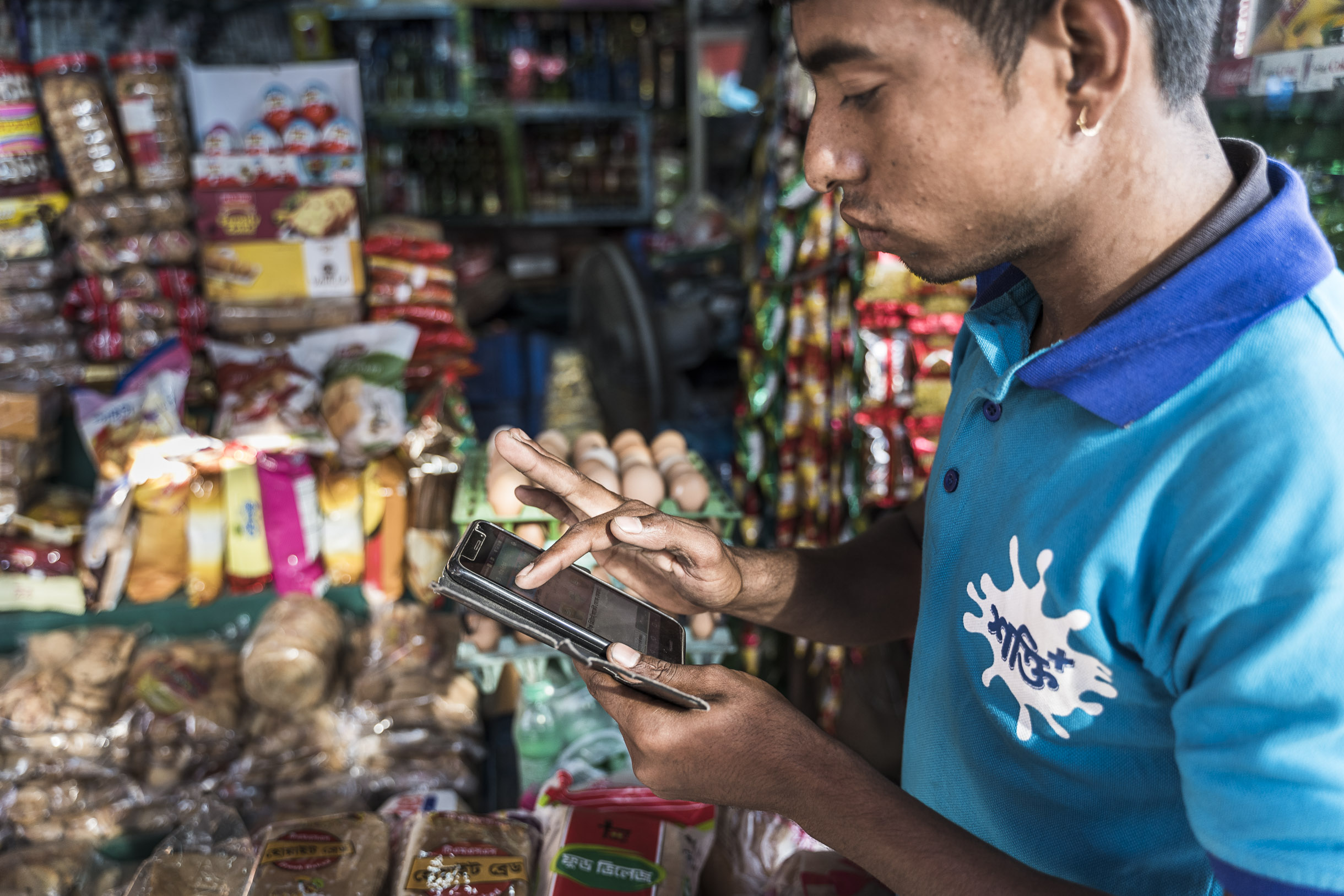
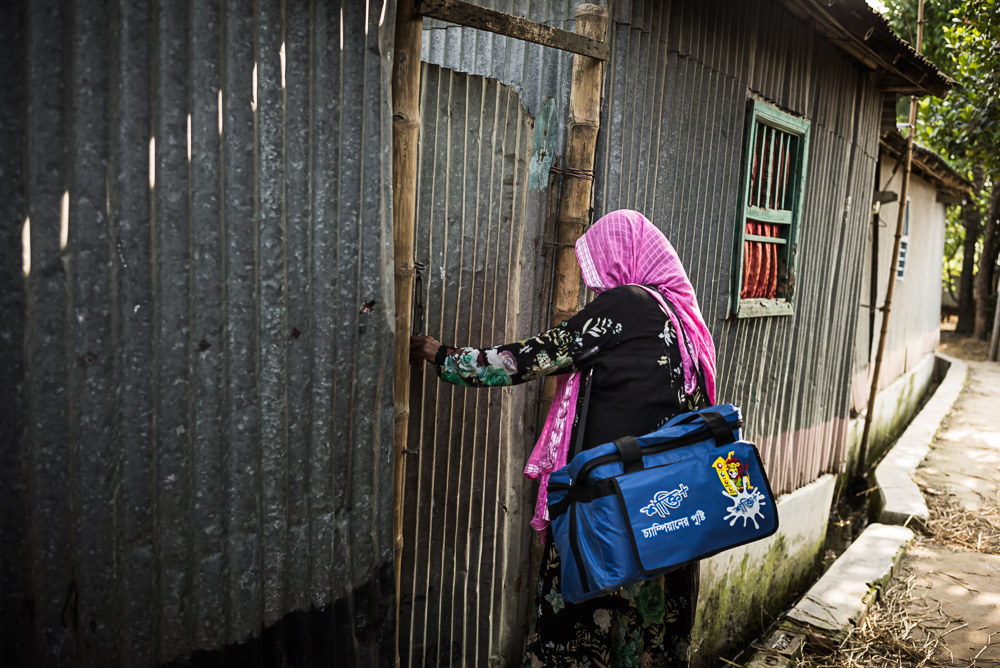
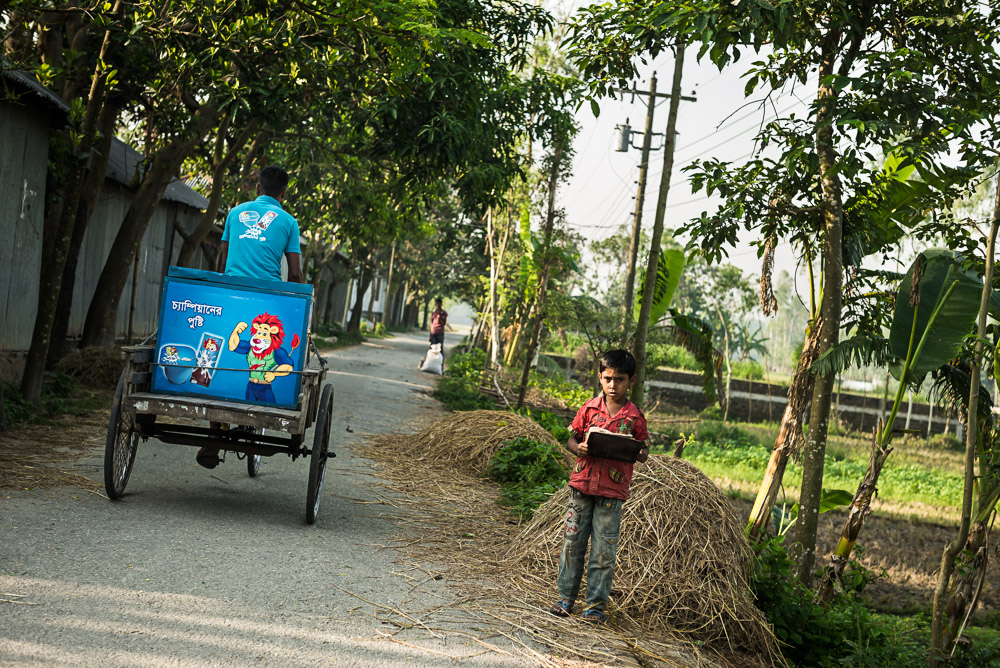
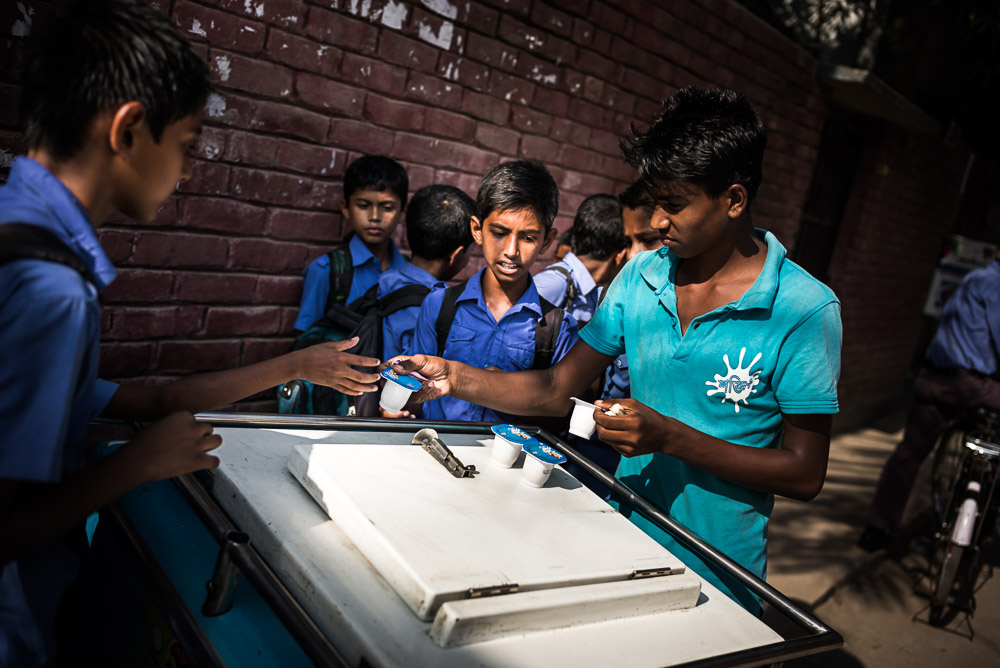
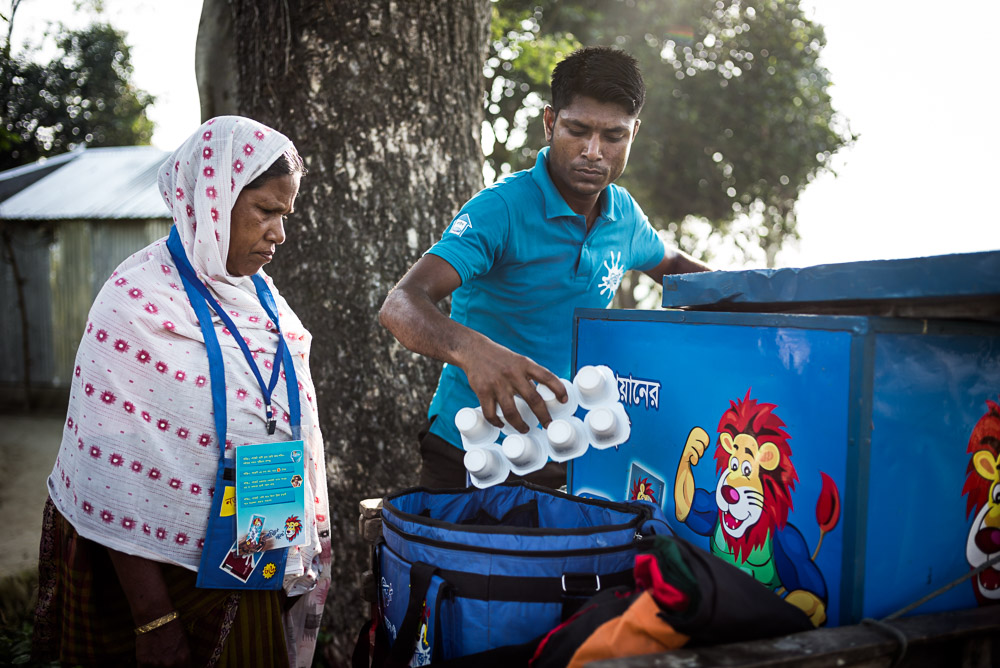
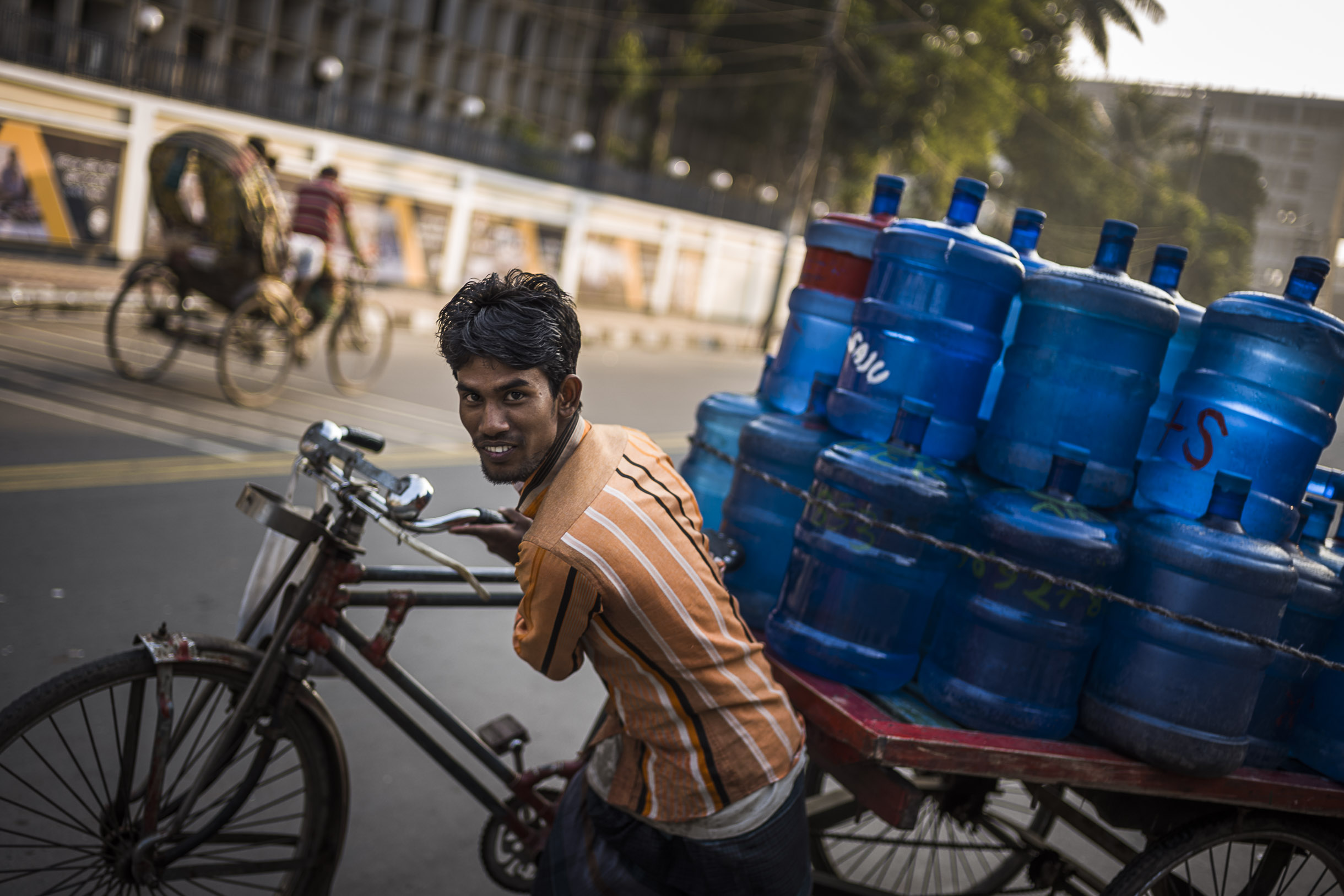
Grameen Danone Foods is also a source of income for the inhabitants of surrounding villages: the small farmers sell their milk to the company and women with no resources earn an income by selling the yogurts door-to-door. Grameen Danone Foods also supports 100 van pullers by giving them insurance, sales training, and revenue stability.

300,000

beneficiaries

500

farmers living better by selling their milk to Grameen Danone

350+

jobs created

Nafisa

Shokti+ Lady, Entrepreneur, Bogra, Bangladesh

When the roosters start to announce the first light Nafisa already finished preparing roti and eggs for her family. She lives in the Northern Bangladeshi village, in a small tiny house together with her husband, their son, his wife and a lovely Rahim, her grandson. Today is a special day, as Rahim is going to school for the first time. She has arranged a special treat for him – Shokti+ yoghurt – for Rahim to grow up healthy.

After all the family leaves home, Nafisa takes her bag and walks to the village crossroad to meet Asadul, the rickshaw van driver who delivers a fresh batch of Shokti+ for Nafisa to sell in the neighbourhood villages. This is a unique opportunity for Nafisa to gain some income and help to support her family. She knows Asadul since he was very small boy and she is happy that he found a regular job in Grameen Danone. Before, he was living on a daily wage, and it was difficult for him to support his family.

She takes a fresh batch of yoghurt, spares one in the corner of the bag, for Rahim, and goes to sell it in the villages. She really enjoys meeting people and seeing happy faces of children eating Shokti+.

Categories
Water

Drinkwell

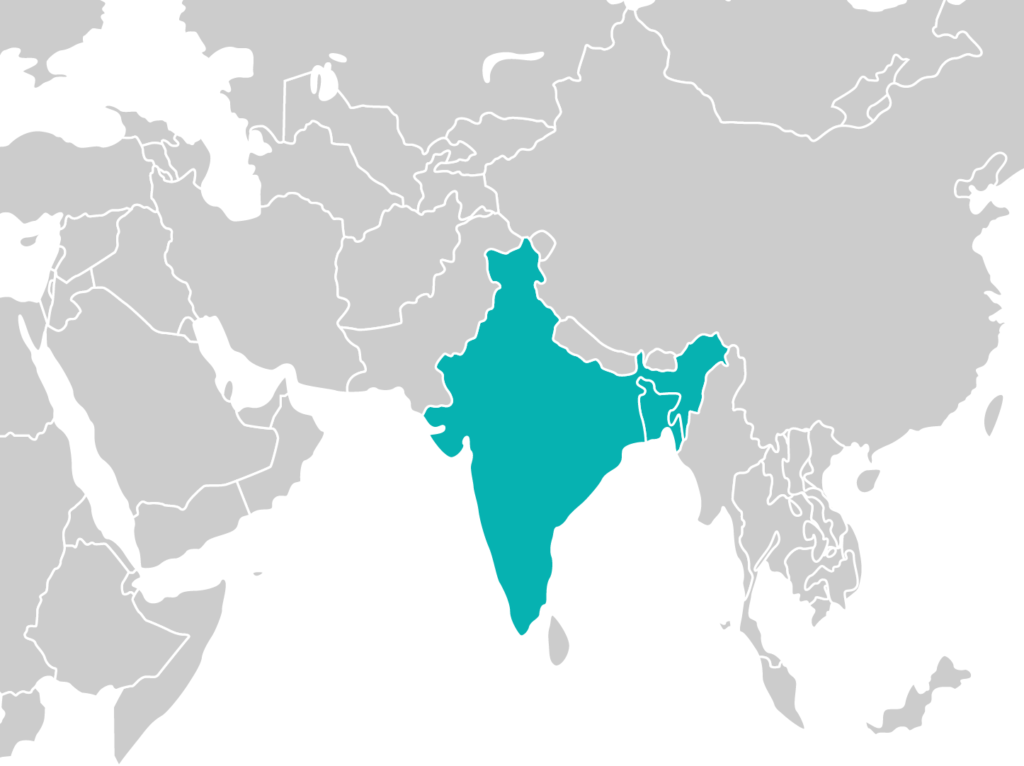
India and Bangladesh

  • Population: 1.464 billion for India, 176 million for Bangladesh 
  • Population living below the poverty line of $4.20 per person per day: India: 22.96% in 2022; Bangladesh: 20.46% in 2022 (The World bank) 
  • In Bangladesh, 68.3 million people do not have access to safely managed drinking water at home (source), and it is estimated that more than 20 million people are at risk of drinking water contaminated with arsenic (source). 41% of all water sources in Bangladesh are contaminated with E. Coli bacteria (source
  • In India, according to the public think tank NITI Aayog, 75% of households do not have access to drinking water at home, and the supply is intermittent in all cities. Groundwater is highly contaminated with fluoride, arsenic, nitrates, and iron. (source

Drinkwell is also operating in India

Play video

This video was filmed in 2019, the figures have changed since then.

Drinkwell: Innovation for Arsenic-Free Drinking Water 

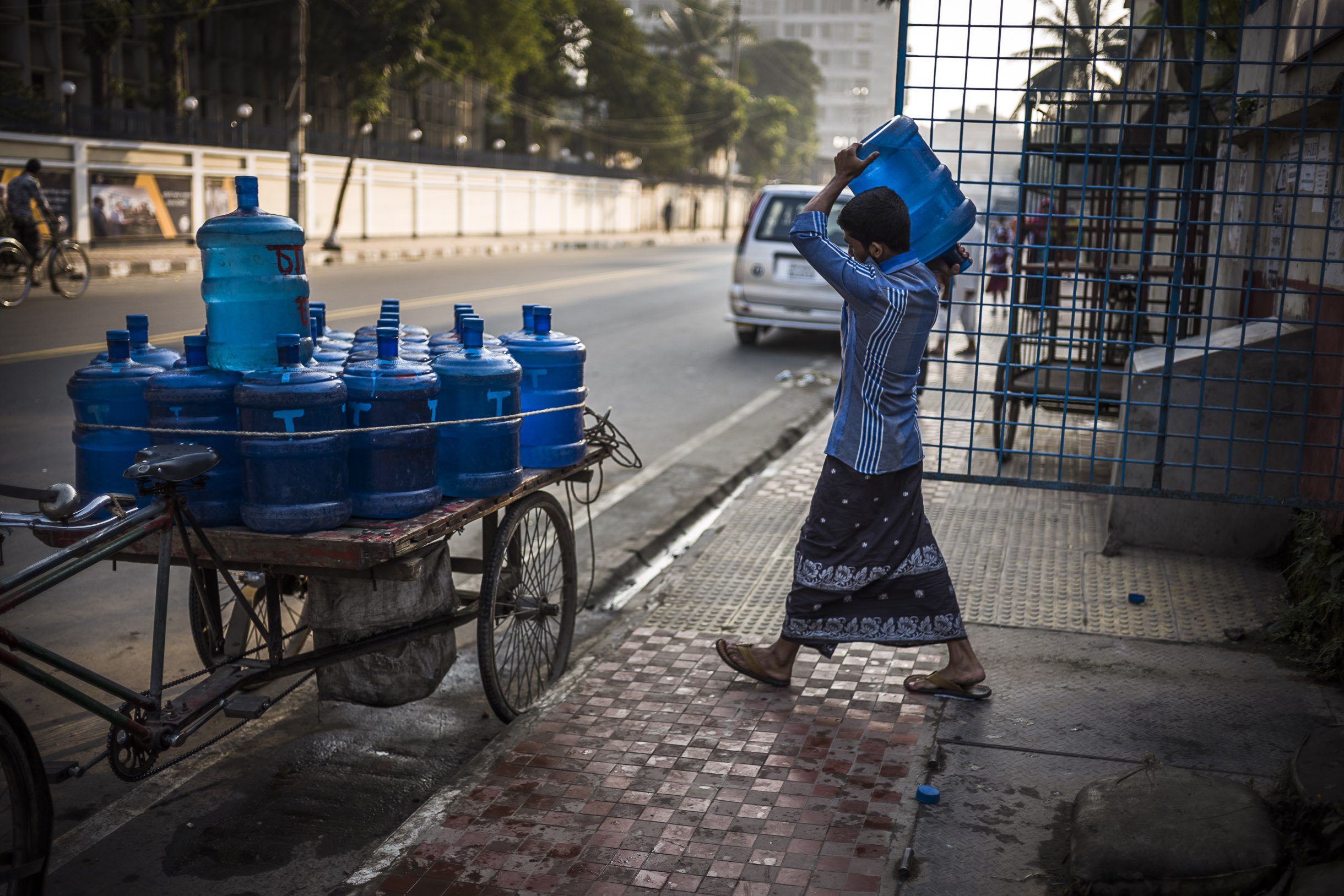
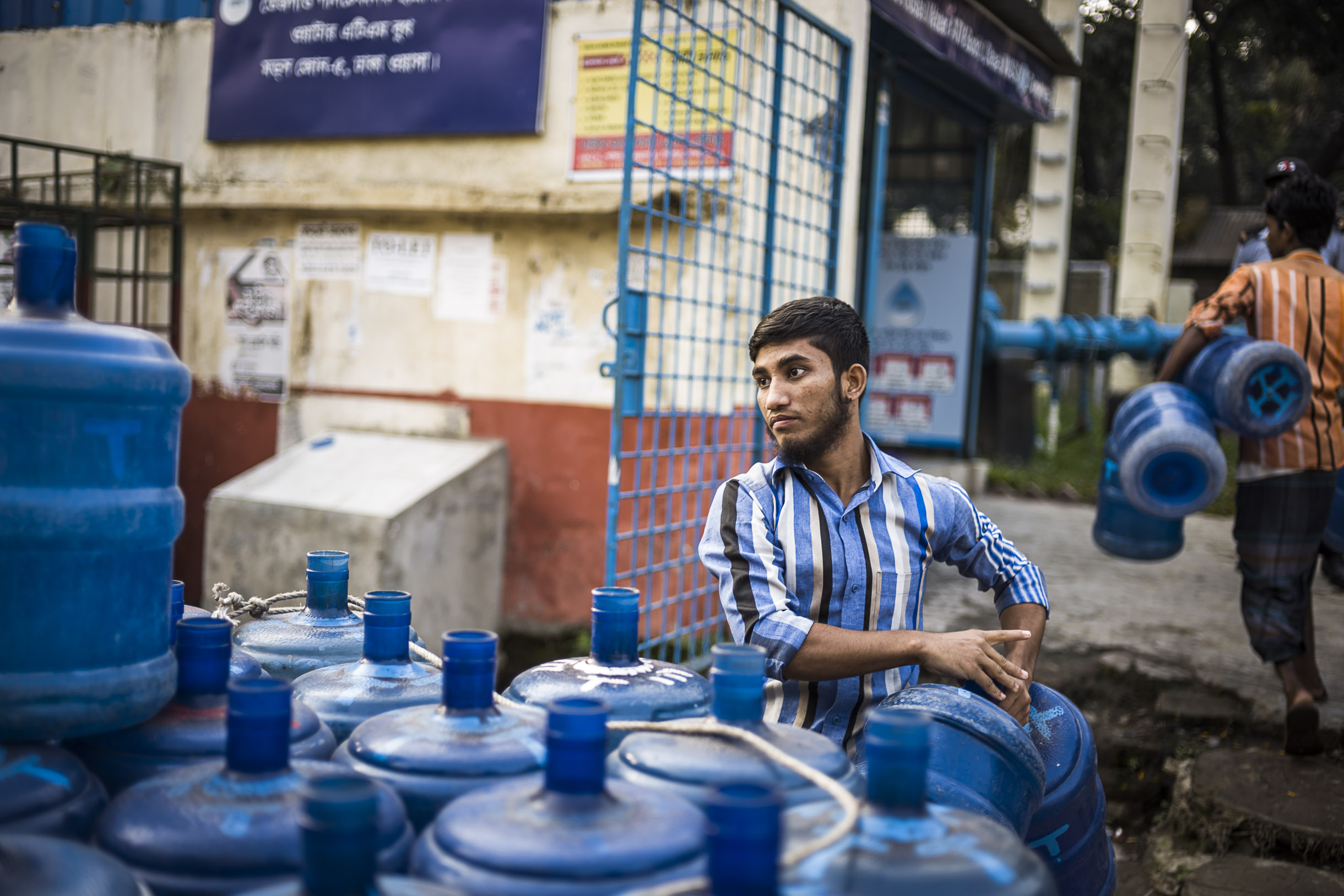
In Bangladesh and India, millions of people are exposed to water contaminated with arsenic, iron, or bacteria. In poor urban areas, this water pollution poses a major health risk, especially for children and pregnant women. 

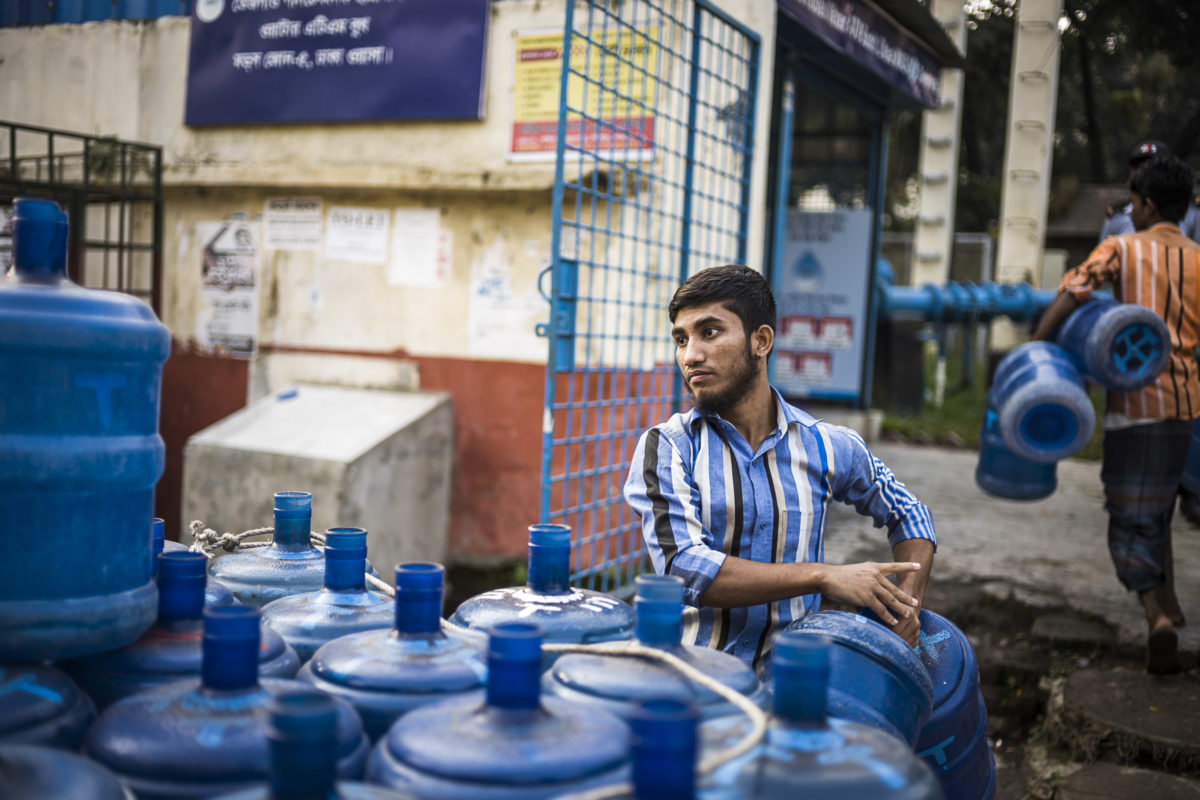
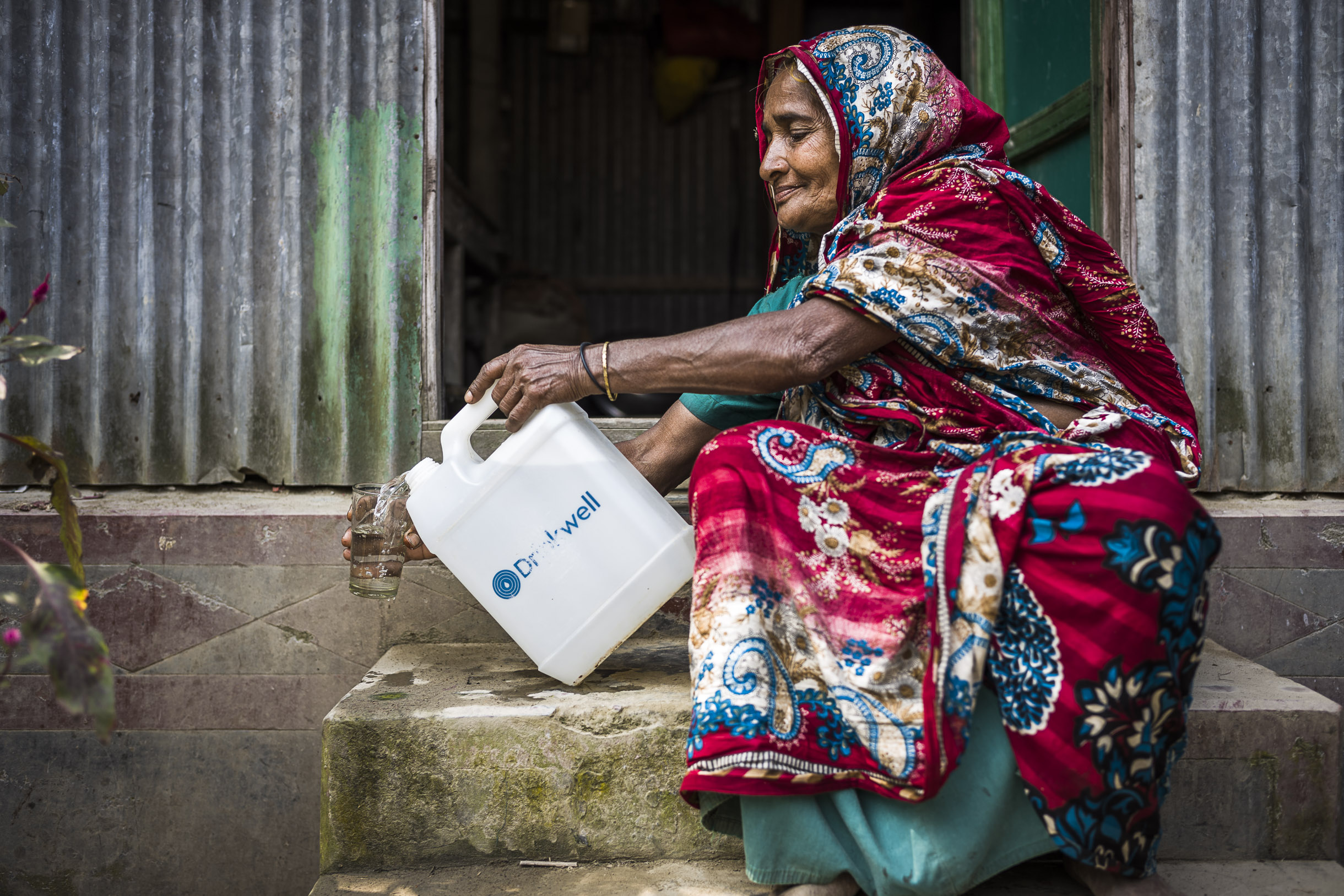
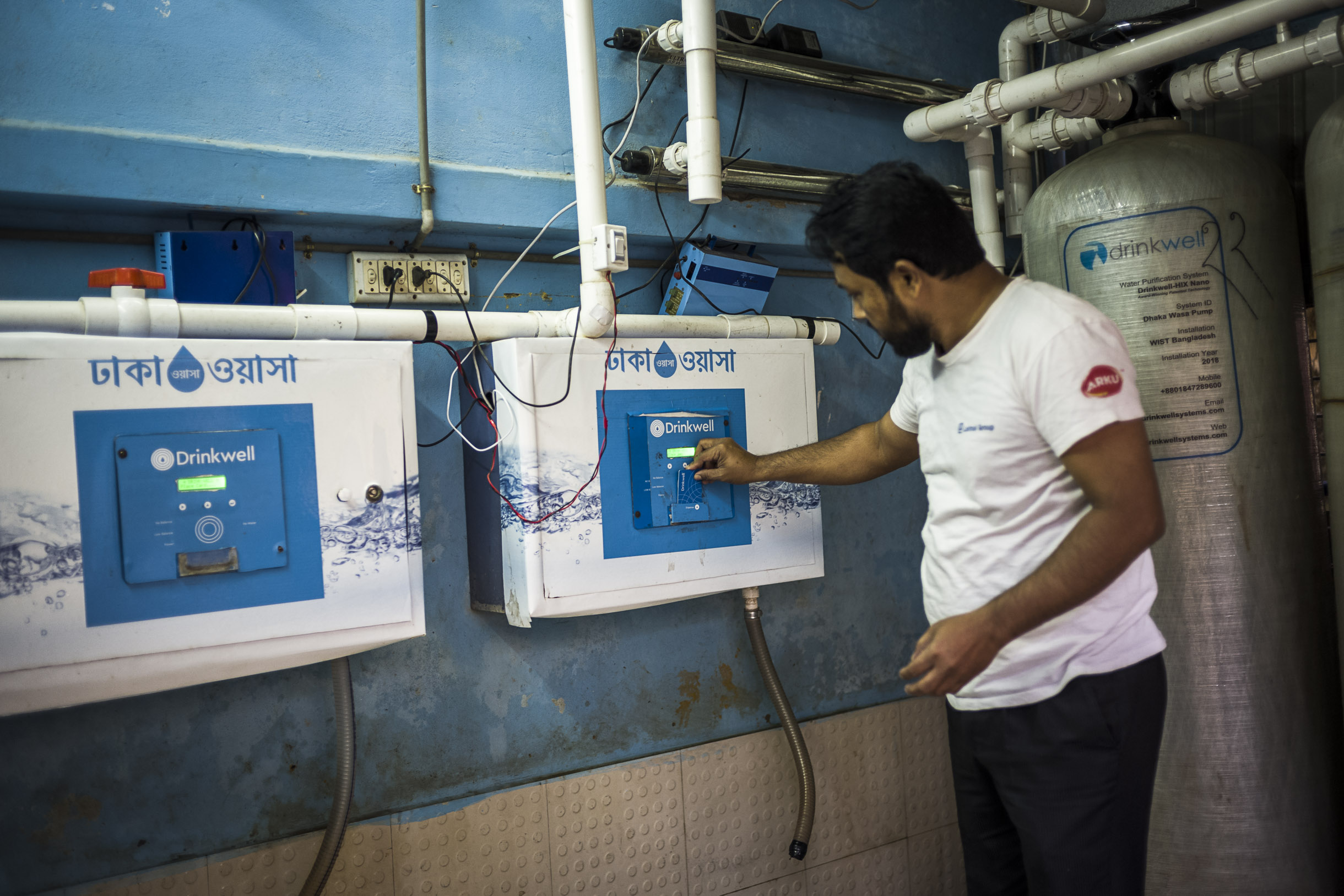
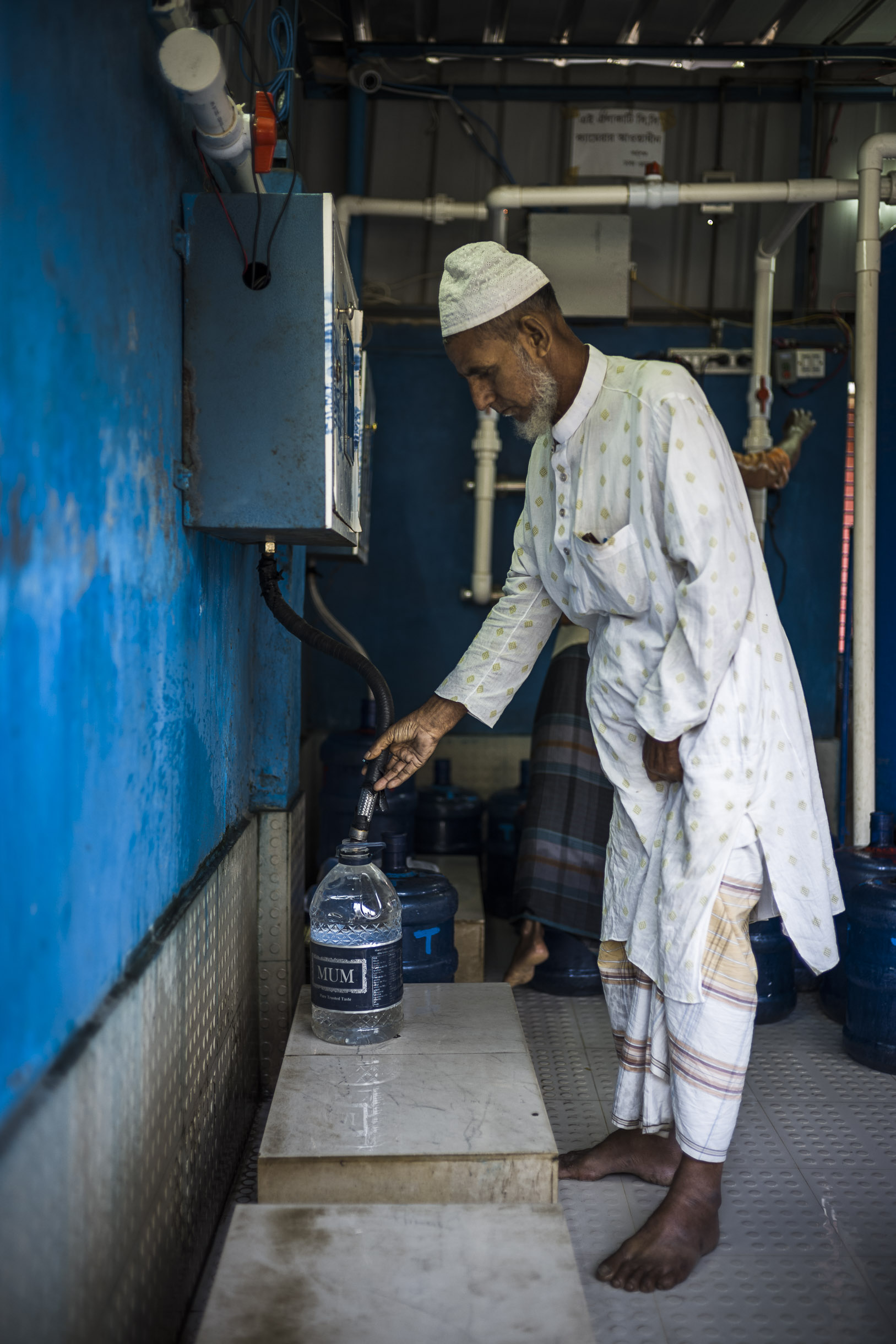
Drinkwell has developed an innovative solution using its patented HIX-Nano resins, which removes heavy metals (arsenic, fluoride, iron, etc.) from water. This technology has a lifespan of 10 years and recovers 99% of water. Water kiosks and piped water systems are equipped with this filtration system, making water safe to drink and sold at a low price to vulnerable populations. Thanks to an ATM system, water is available 24/7. 

A technological and inclusive solution 

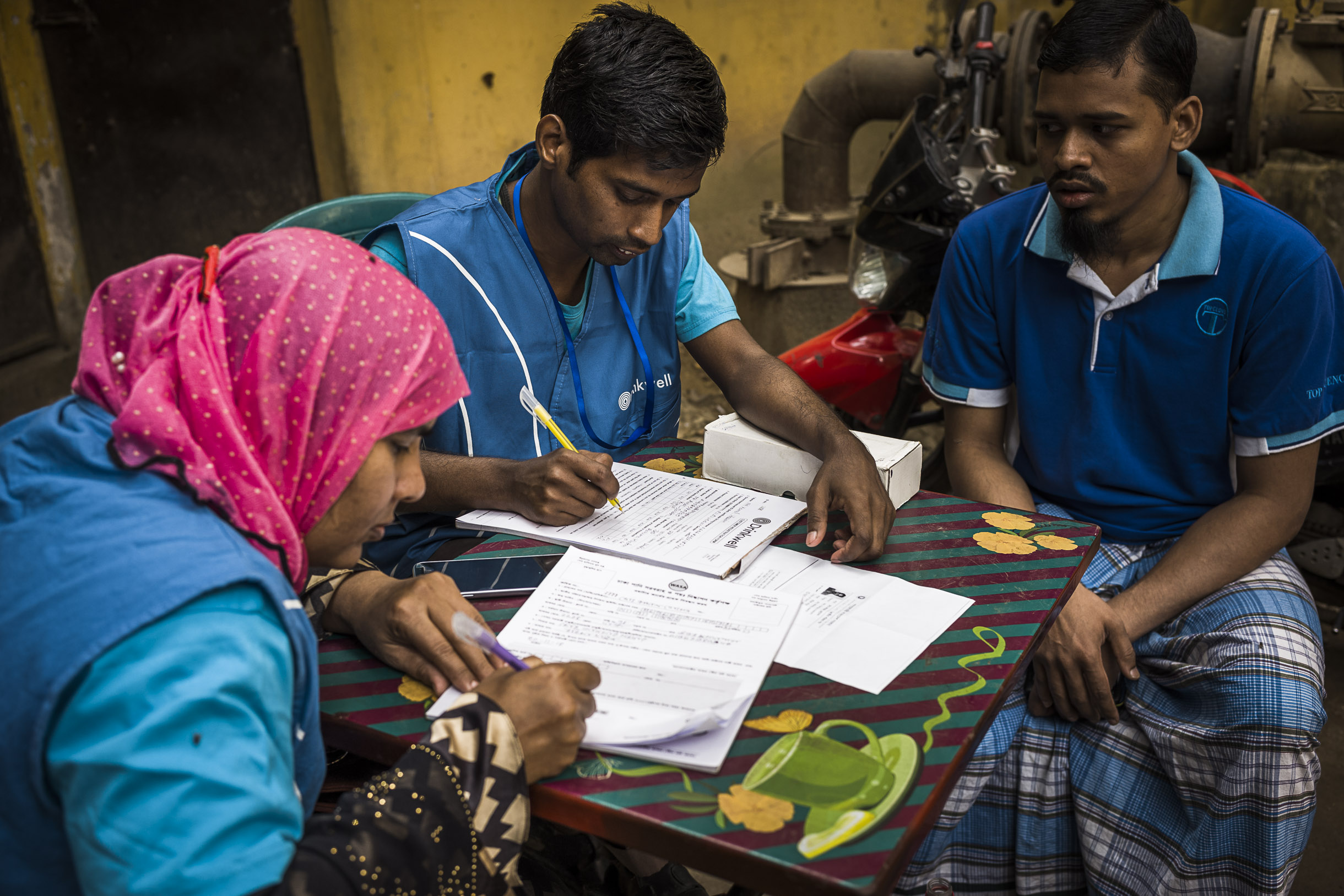
Founded in 2013 by Minhaj Chowdhury, Drinkwell now operates in Bangladesh with a public-private partnership model, working with Dhaka Wasa, and in India by responding to government tenders. 

In 2025, Drinkwell inaugurated new kiosks in Narayanganj (Bangladesh), in partnership with Asian Development Bank and Narayanganj City Corporation. Drinkwell also inaugurated new kiosks in Khulna (Bangladesh), in partnership with UNICEF, Khulna WASA, and the Khulna City Corporation, serving over 2,785 low-income households, including 100 ultra-poor families who receive water for free.  

In India, Drinkwell installs both kiosks and piped water schemes equipped with HIX-Nano resins , providing safe drinking water to communities. The multi-village piped water systems are funded by “State Public Health Engineering Departments” allowing even more households to access safe water. 

To date, Drinkwell has deployed more than 400 systems in 6 Indian states. 

Drinkwell’s impact on health 

Danone Communities supports Drinkwell to accelerate access to safe drinking water in vulnerable urban and rural areas, in line with our health mission and commitment to impact-driven business. The results are tangible: 

  • 317 kiosks installed in Bangladesh; and 333 in India 
  • 1,060,000 people have access to safe water every day 
  • Significant reduction in waterborne diseases such as dysentery, cholera, and hepatitis A 

>>> To learn more: https://drinkwellsystems.com/ 

How Danone Communities actively supports Drinkwell—some concrete examples: 

  • Patient financial support: Danone Communities has invested in Drinkwell to strengthen its business model and support its scale-up. 
  • Technical assistance: Our teams have supported Drinkwell in optimizing its model. 
  • Visibility and advocacy: Drinkwell is regularly featured in our events and publications as a high-impact Safe Water Enterprise example. 

By supporting Drinkwell, Danone Communities helps provide access to safe drinking water for vulnerable populations and takes concrete action to positively impact health globally, as part of Danone’s mission. 

1,060,000

People impacted in 2024

650

Water kiosks

*Impact figures from the Danone Communities report as of the end of 2024

Asma

Garment worker, Dhaka, Bangladesh

Just one day after my wedding, my husband and I packed our belongings into a small bag and left everything. Our destination in search for a better future was Dhaka, the capital city. I found a job in a garment’s factory, and my husband as a rickshaw puller. As our incomes are not regular nor high enough to afford to rent an apartment, together with our two beautiful children we live in the slum. 

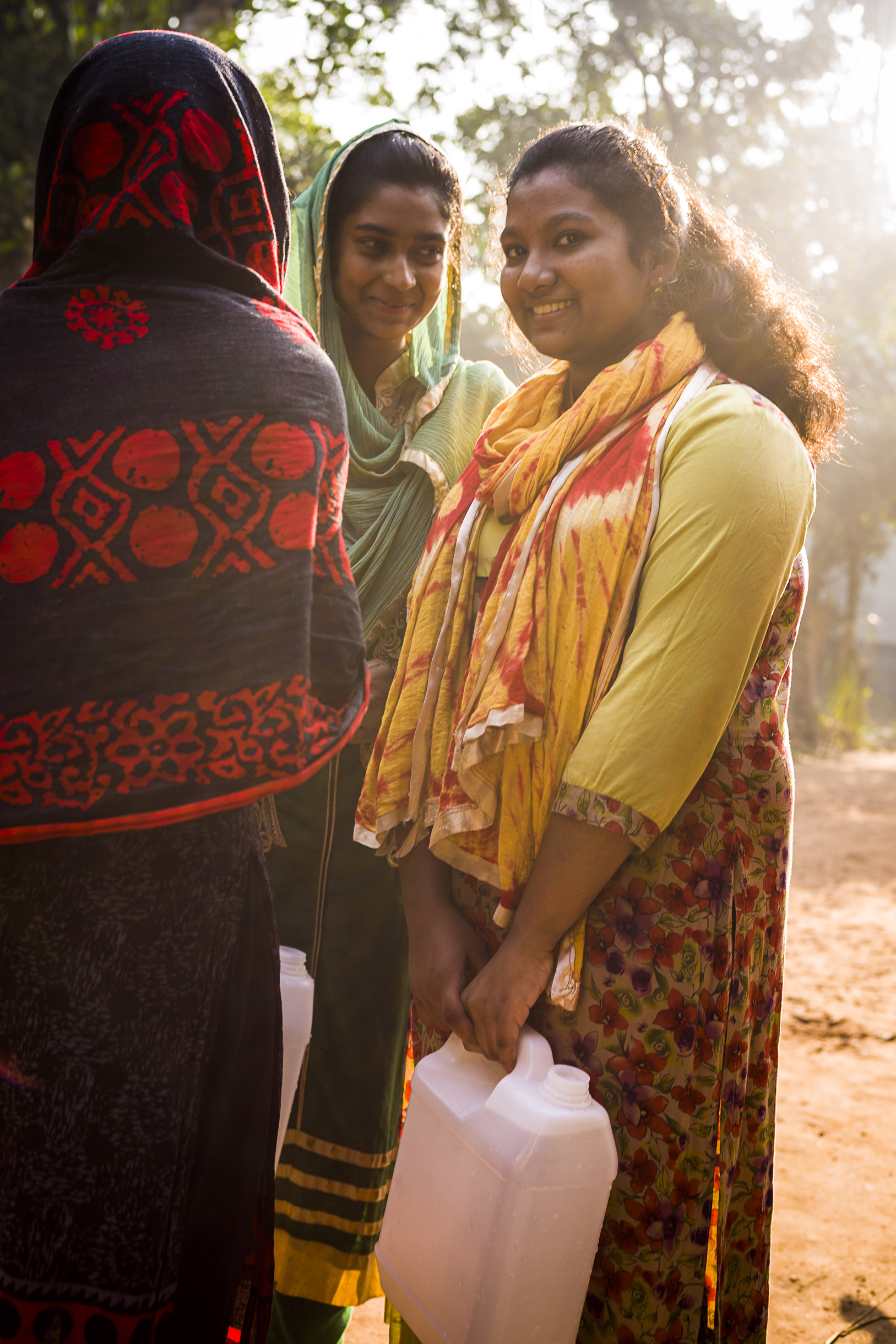
In the centre of the slum is a water pump where some of the residents get water for everyday needs, like drinking, cooking and washing. But this water is not suitable for drinking, there’s bacteria and iron in the water, which is a big problem in Bangladesh. I am not using water from the slum anymore, since there is safe drinking water available near the community. Every morning I go to the DrinkWell water kiosk to collect safe drinking water. 

I know that this water is safe and the price is acceptable, even for our budget. The change is really big for our health. My kids do not miss school anymore and with my husband we can work more regularly. I see a huge impact that access to safe water has on our daily lives.”  

Categories
Water

EcoAlberto

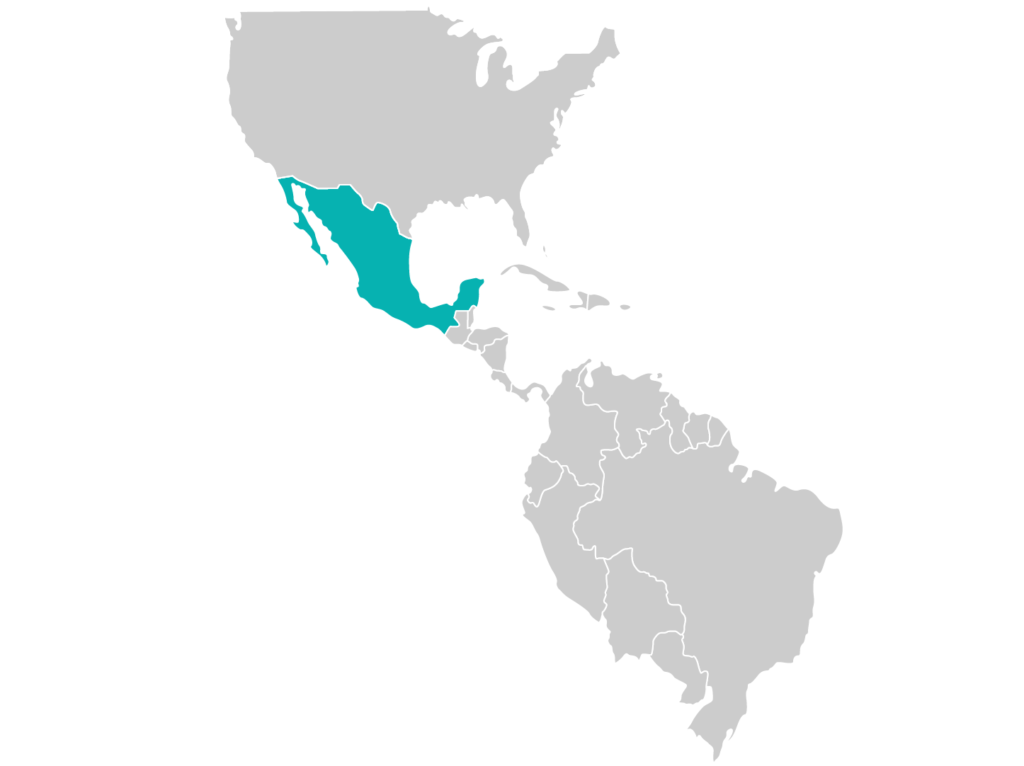
Mexico

  • Inhabitants: 127,6 million
  • Annual income per capita: 19 440 USD
  • In rural areas, thousands of isolated villages account for 5 million people who do not have access to water. (source)

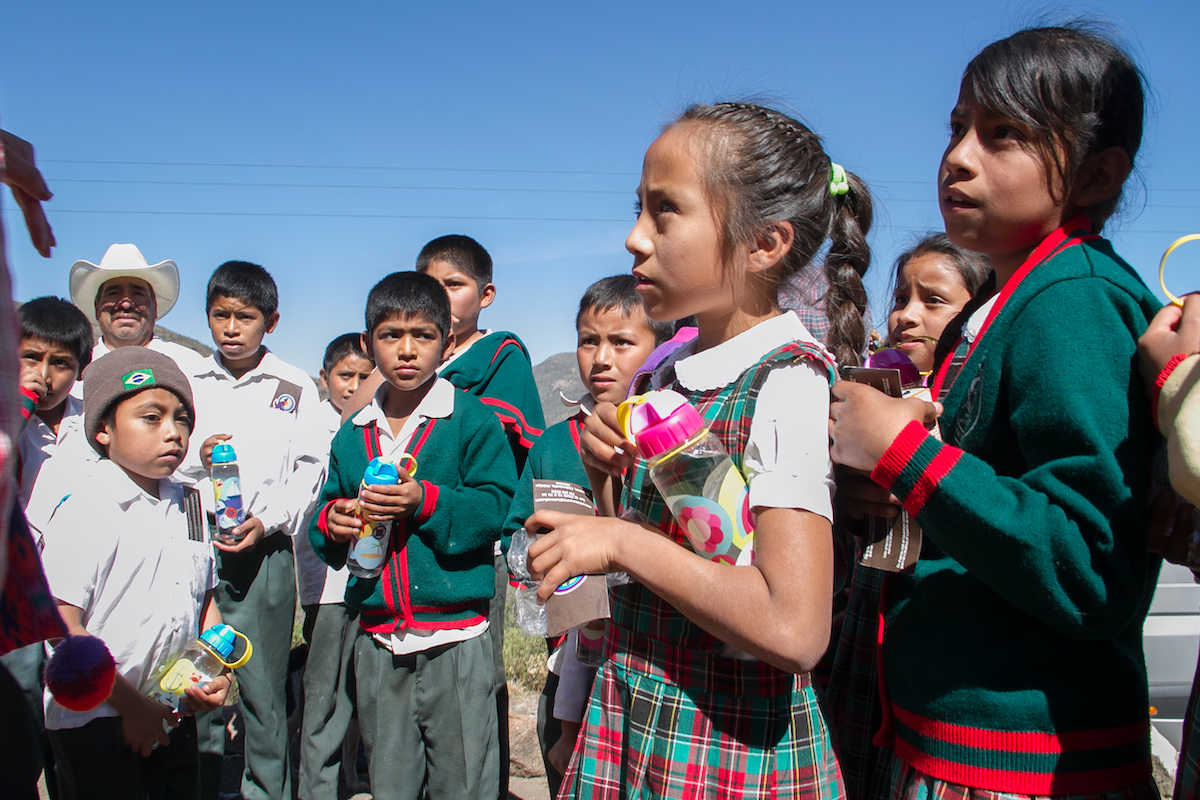
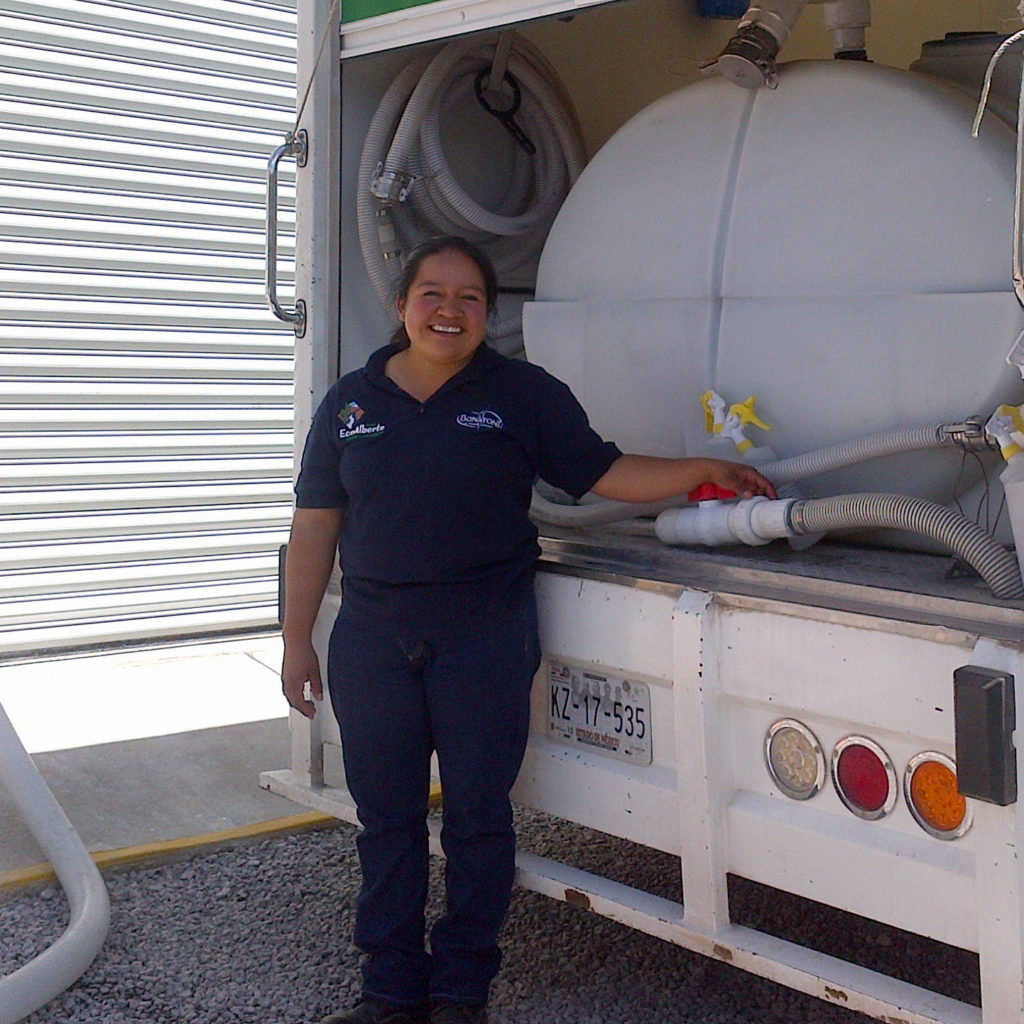
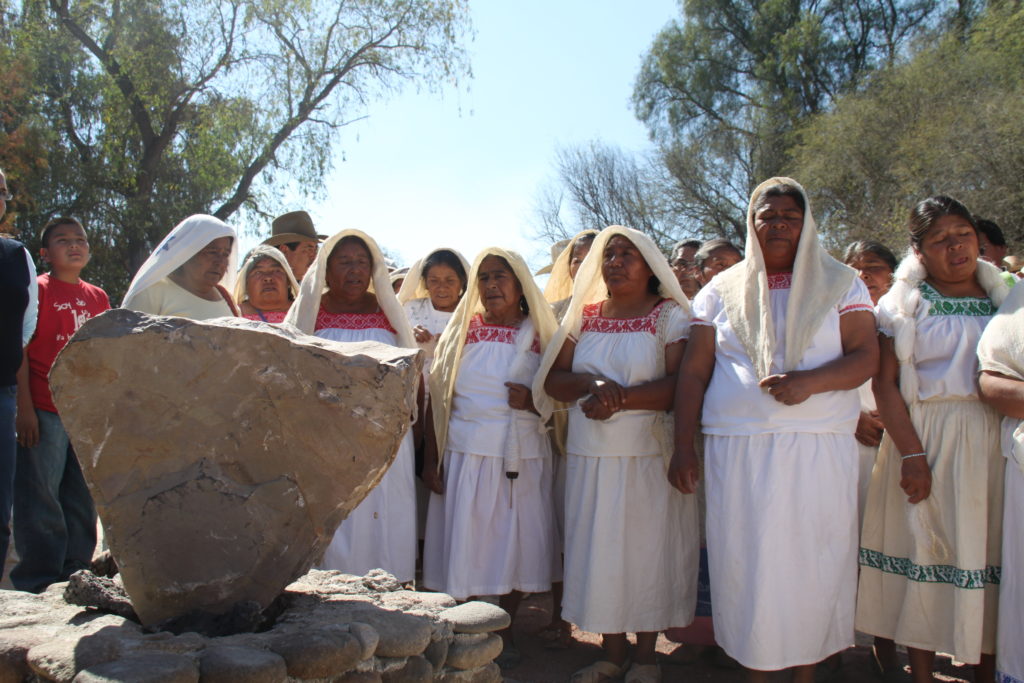
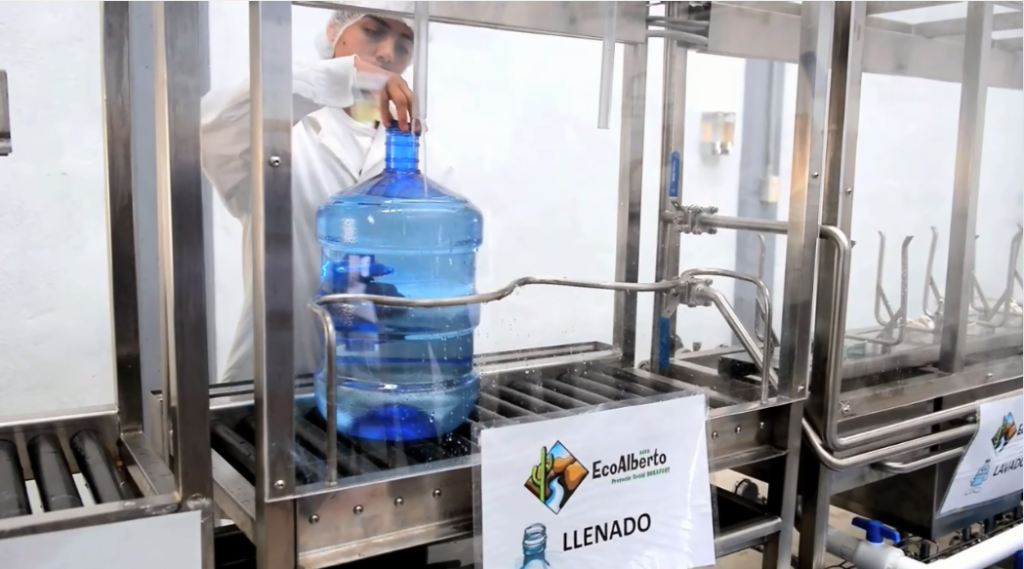
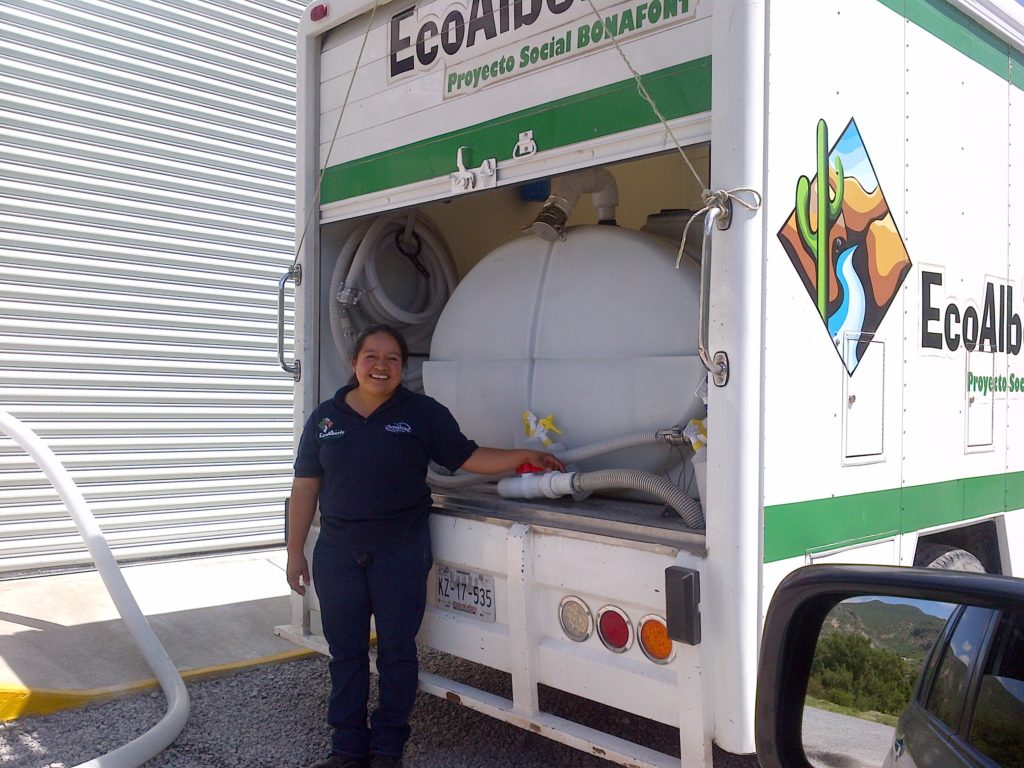
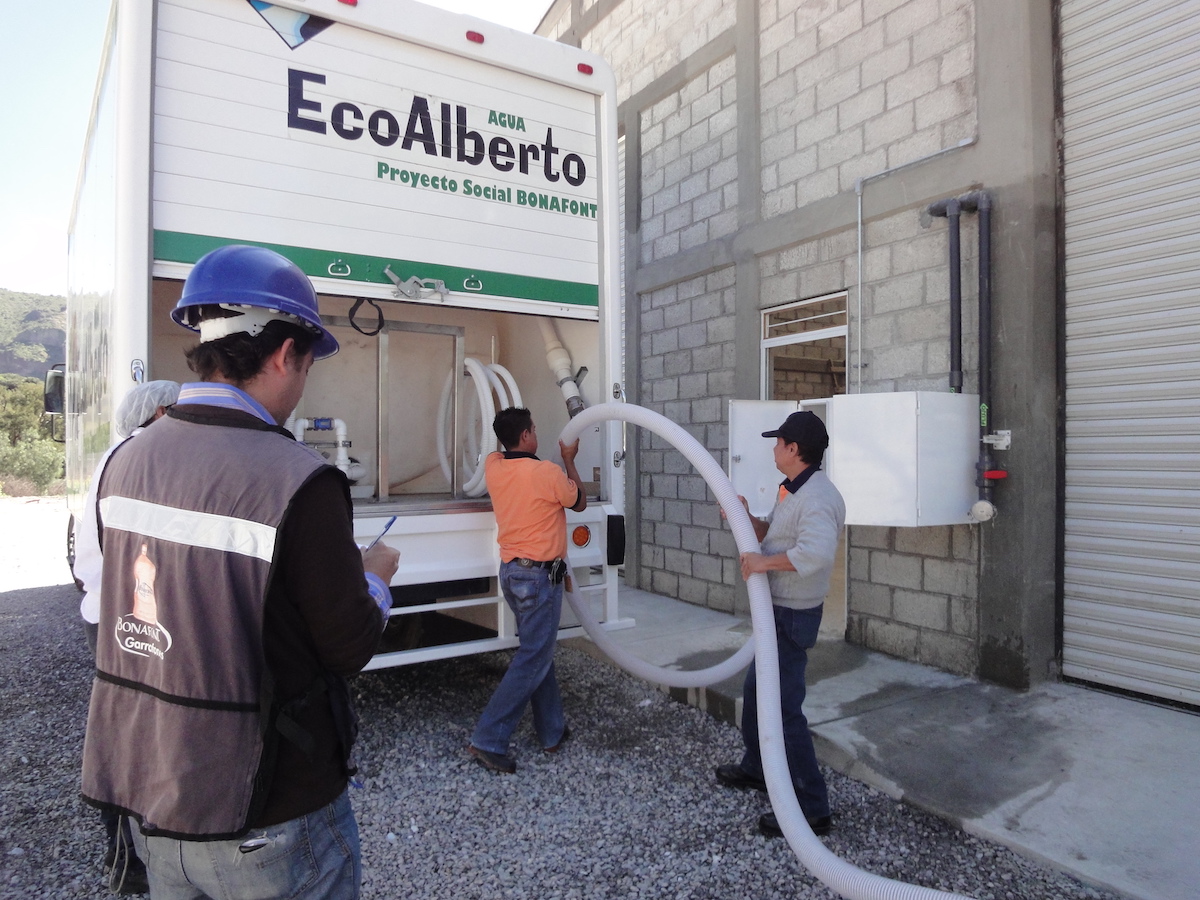
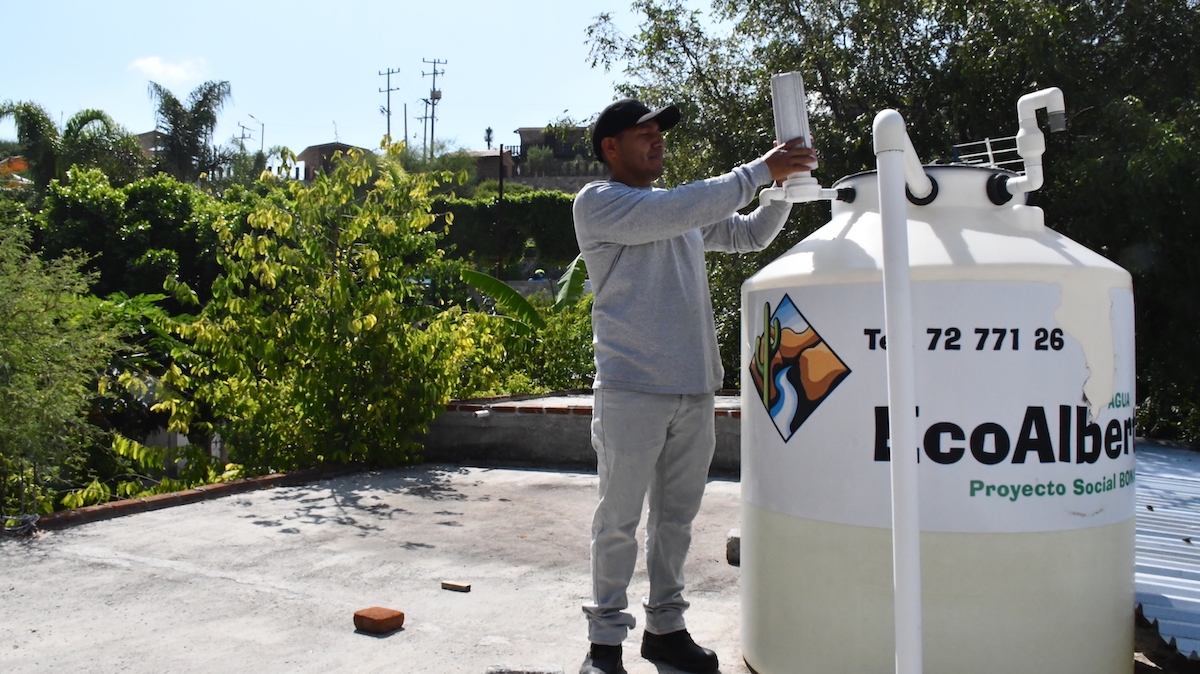
Located in the centre of the country, Hidalgo is known because of its water scarcity. When EcoAlberto was born in 2011, the communities depended on small sources which most of the time were polluted and located far away from their homes.

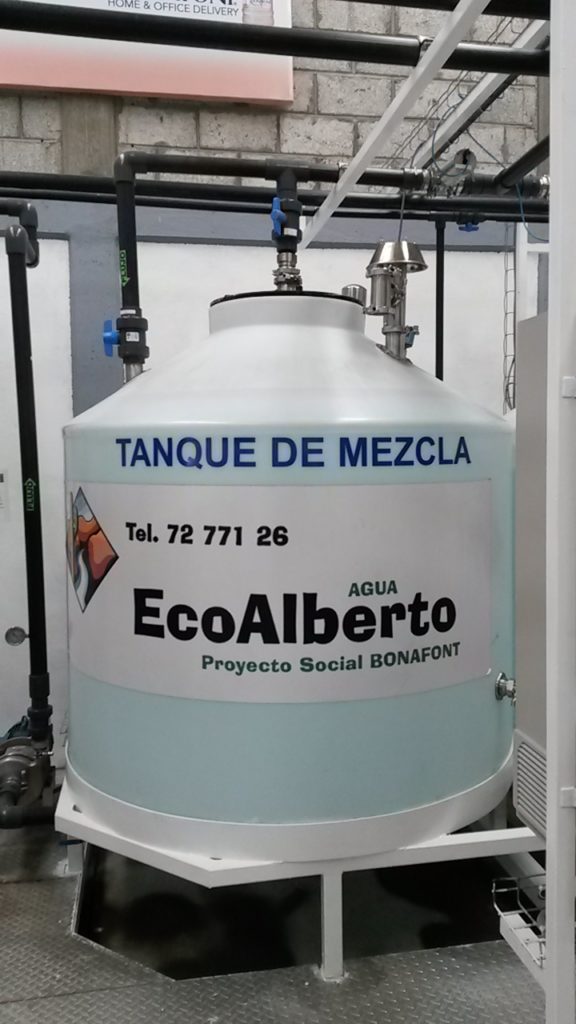
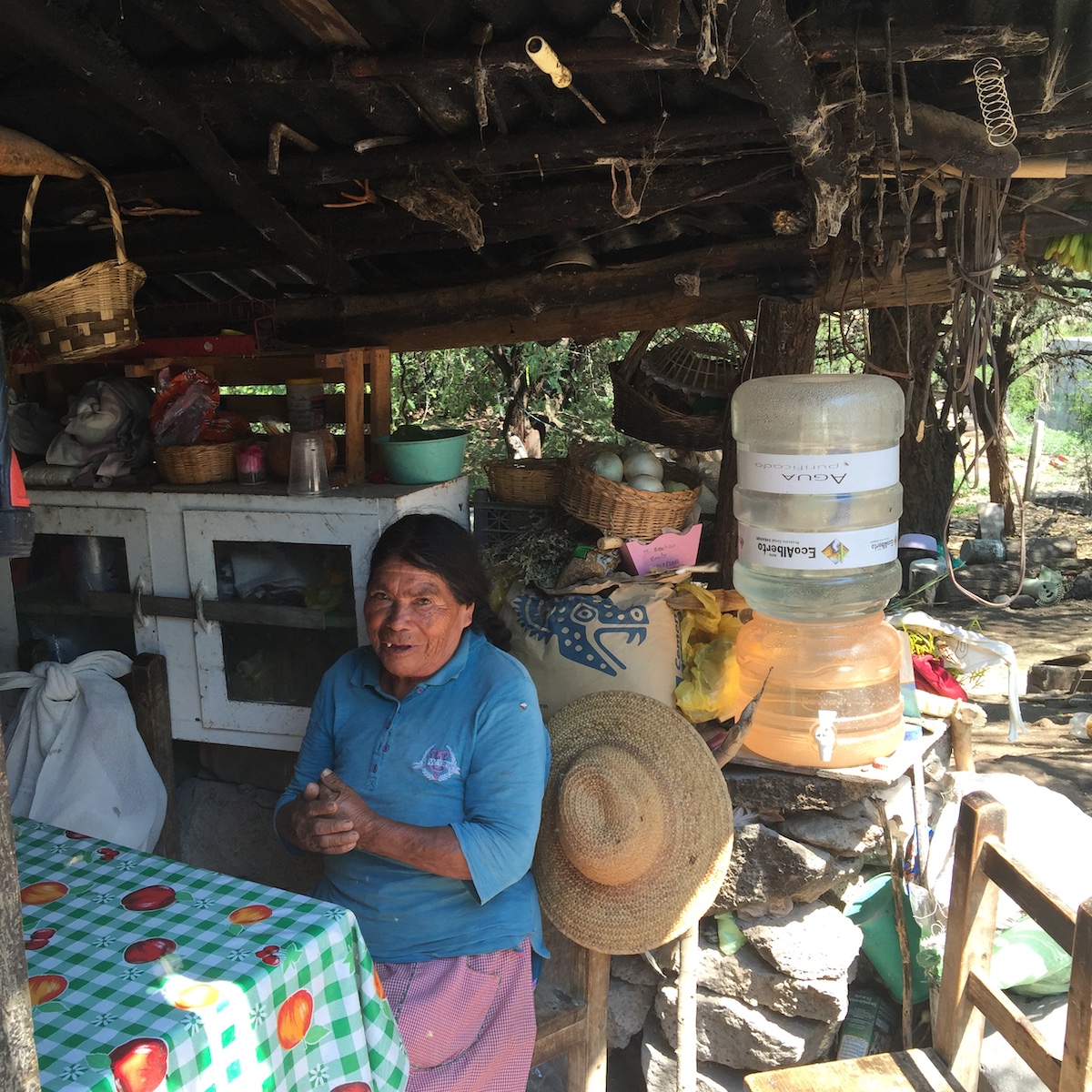
The company EcoAlberto was created in this area to provide access to safe drinking water. Nowadays it has benefited more than 30,000 people in 78  indigenous communities. The water is delivered in big tanks to fill the smaller tanks of shops and schools, the meeting points where indigenous women sell this safe water to increase their income and promote healthy water and healthier hydration practices.

15,763

People with access to safe drinking water

3.257 million

of liters sold (2021)

*Impact figures from the Danone Communities report as of the end of 2024

Xochilt

Hidalgo, Mexico

I had to carry the water in buckets all the way to the community. It used to take me more than 3 hours a day, to go and bring back water home. It was a difficult and tiresome task, taking away a lot of my time.

Now I own a small shop where I sell Eco Alberto’s safe drinking water to my community. I’m happy to be able to help my community have easy access to safe drinking water. This also is empowering for women around me: now they don’t have to collect water anymore and they can work and earn a living.” 

Categories
Success Story

La Laiterie du Berger

La Laiterie du Berger: a success story at the heart of the Danone Communities model

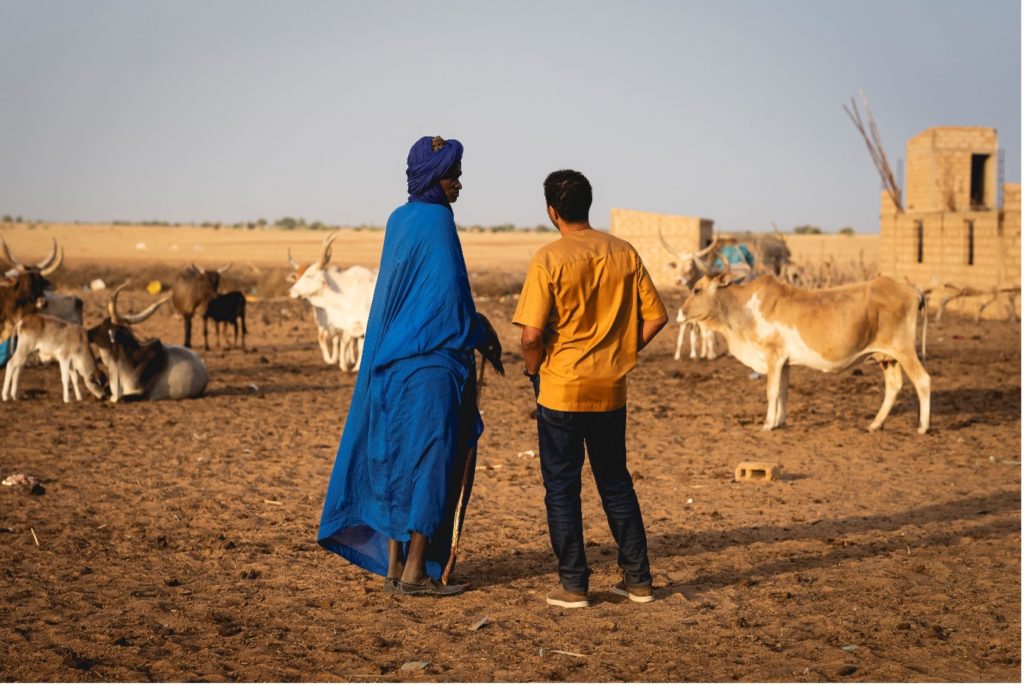
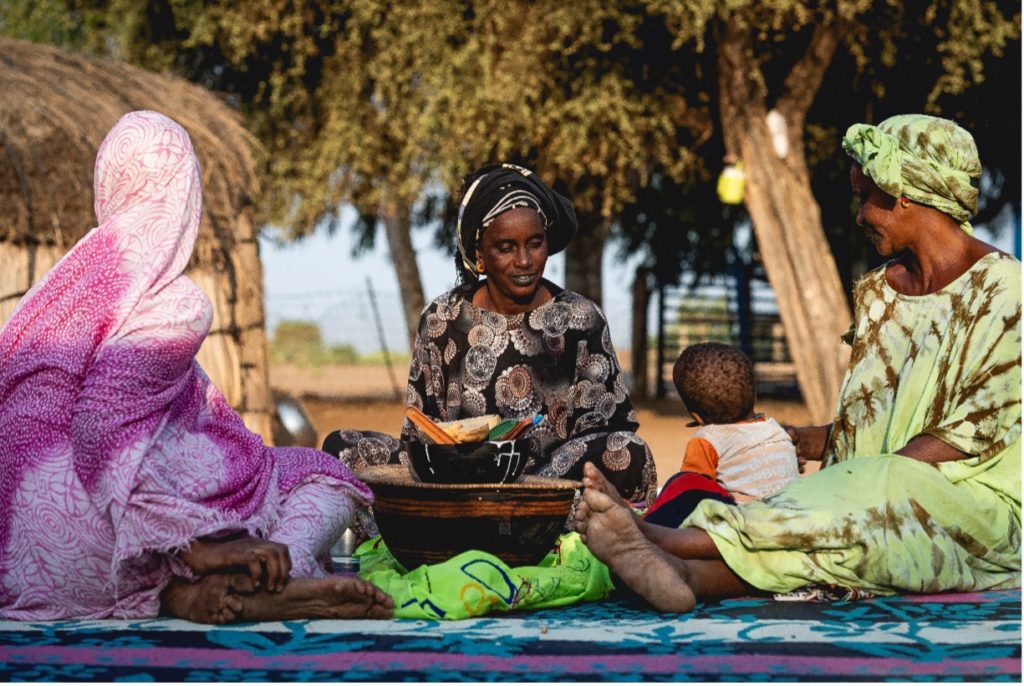
In 2007, Bagoré Bathily, a Franco-Senegalese veterinarian, founded La Laiterie du Berger with an ambitious goal: enable Fulani herders in Senegal to make a decent living from their activity by promoting the production of local milk. At the time, nearly 90% of the milk consumed in Senegal was imported, even though 30% of the population depended on livestock farming. 

Danone Communities got involved as early as 2008 alongside Bagoré and his team, providing patient financing as well as unique business support: Danone volunteers shared their expertise in brand development, industrial management, management control, HR, and operations. This mobilization led to the construction of a solid business model and enabled the company to grow by 30 to 40%. 

A major economic and social impact 

Today, La Laiterie du Berger: 

  • Works with over 3,500 herders to collect fresh local milk. 
  • Markets its products under the Dolima brand, now a staple across Senegal. 
  • Generated over 5,420 direct and indirect jobs
  • Trained 1,522 women’s groups in entrepreneurship. 
  • Impacts 32,000 local stakeholders across the value chain. 
  • Sells its products in 35,000 points of sale in Senegal and Gambia. 

A successful exit, true to our mission 

In 2023, La Laiterie du Berger reached a sufficient level of maturity, both financially and in terms of social impact. Danone Communities then decided to exit the capital it had invested, in line with its mission to support social businesses until they achieve considerable impact and financial balance. 

The two shareholders, Danone Communities and Phitrust, then made way for a partnership between Concert Bathily and Danone to support a new phase of growth. 

This exit allows Danone Communities to continue investing in new businesses that provide access to safe drinking water and quality food for vulnerable populations. 

An inspiring model that serves Danone’s mission 

La Laiterie du Berger fully embodies Danone’s mission: to bring health through food to as many people as possible. By promoting locally produced milk, building an inclusive supply chain, and developing accessible, nutritious products, the company has addressed public health challenges while strengthening the local economy. 
This project demonstrates that it is possible to reconcile social impact and economic performance, relying on innovative business solutions to sustainably improve living conditions for vulnerable populations. 

The successful capital exit of Danone Communities from La Laiterie du Berger perfectly illustrates our approach: supporting social businessesuntil they reach a sufficient level of maturity to continue their mission, in line with Danone’s values and commitments. 

Categories
Nutrition

Malin

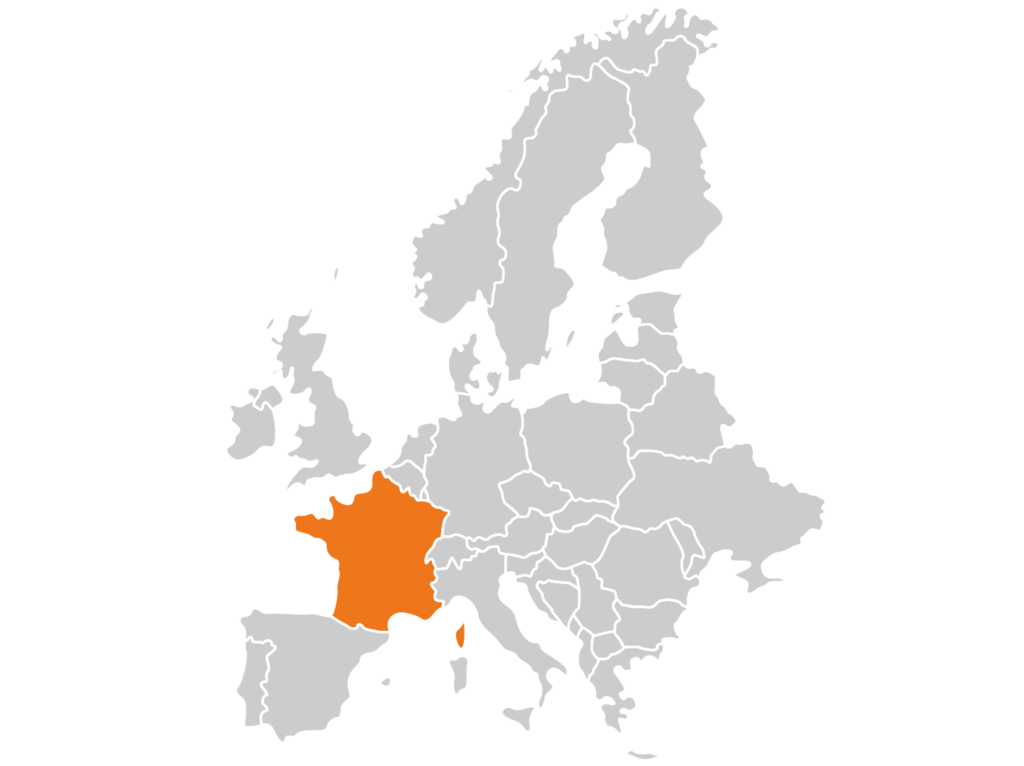
France

  • Inhabitants: 65,1 million
  • Annual income per capita: 46 900 USD
  • 160 000 babies are born every year in families living below the poverty threshold

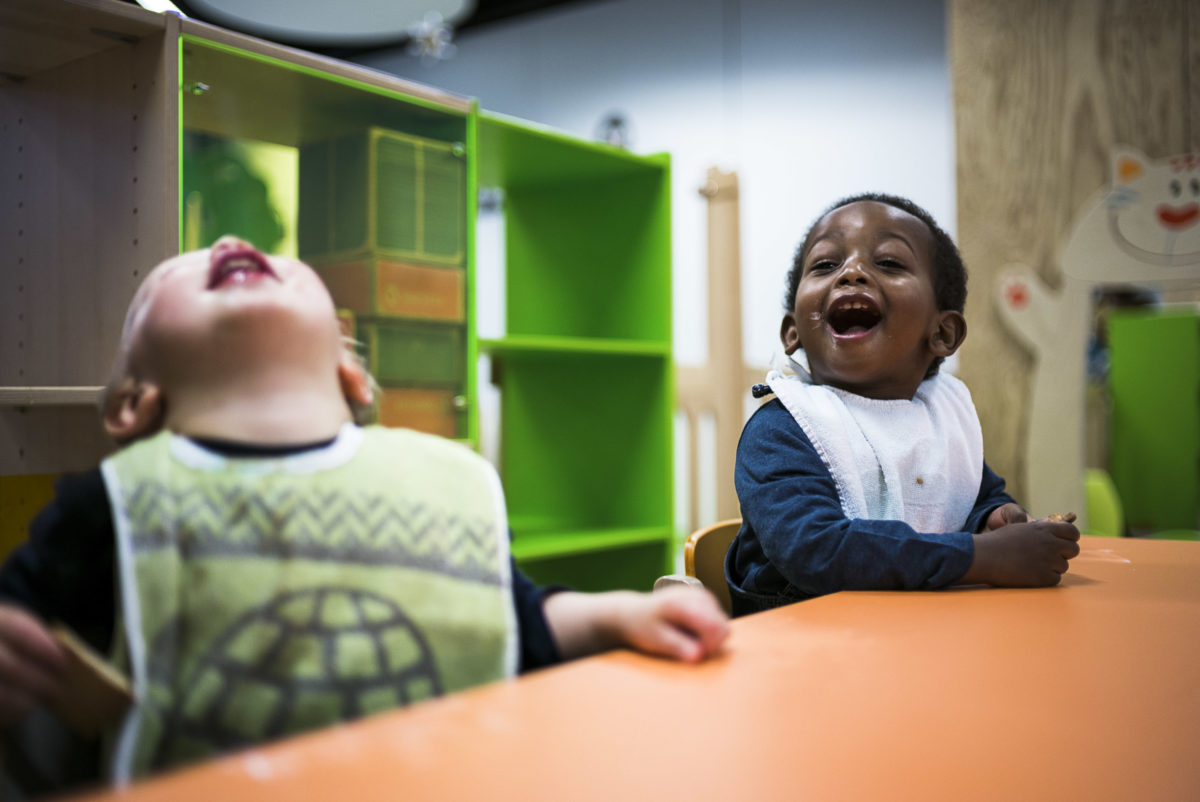
In France, 160 000 babies are born every year in families living below the poverty threshold; that is one child out of five.
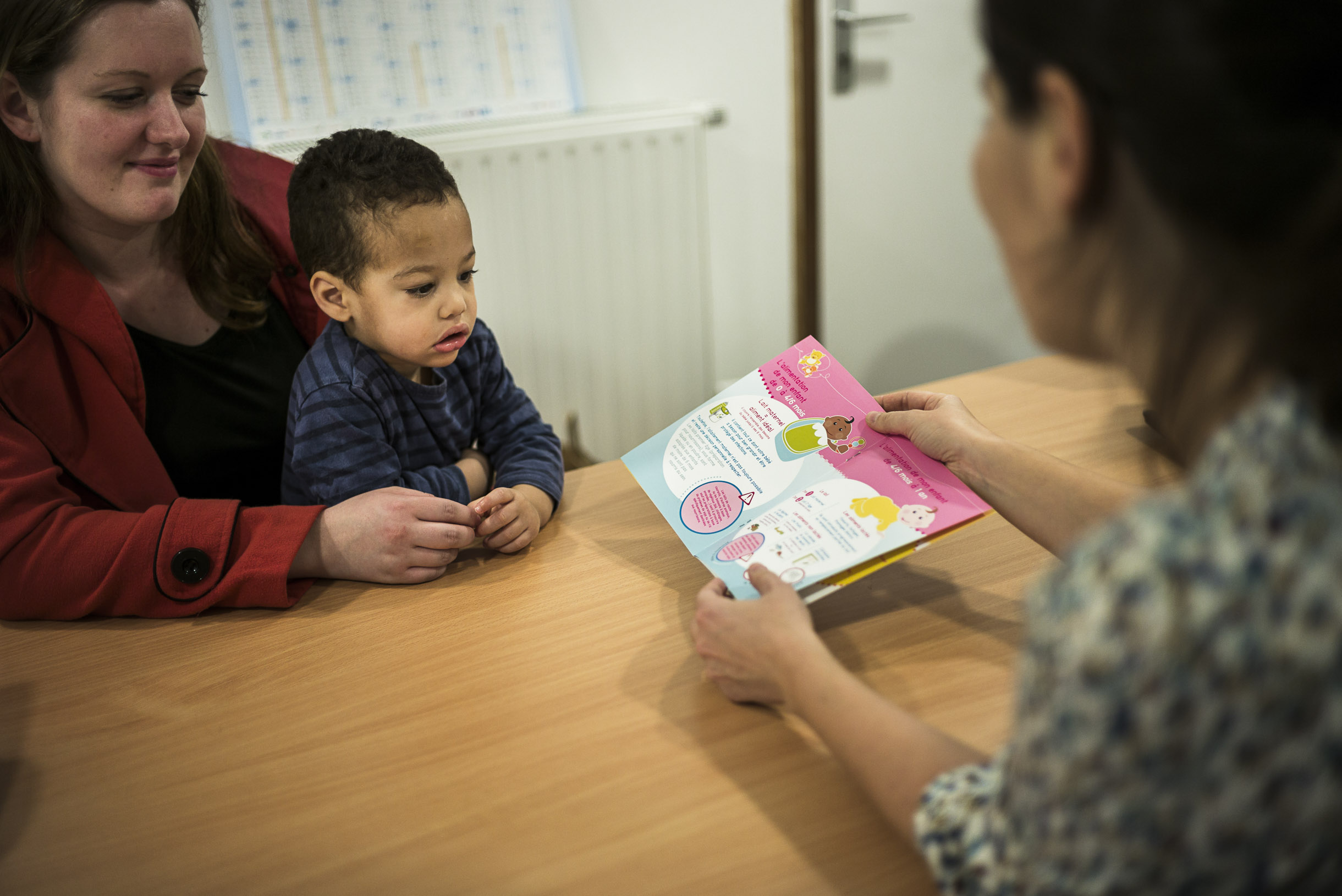
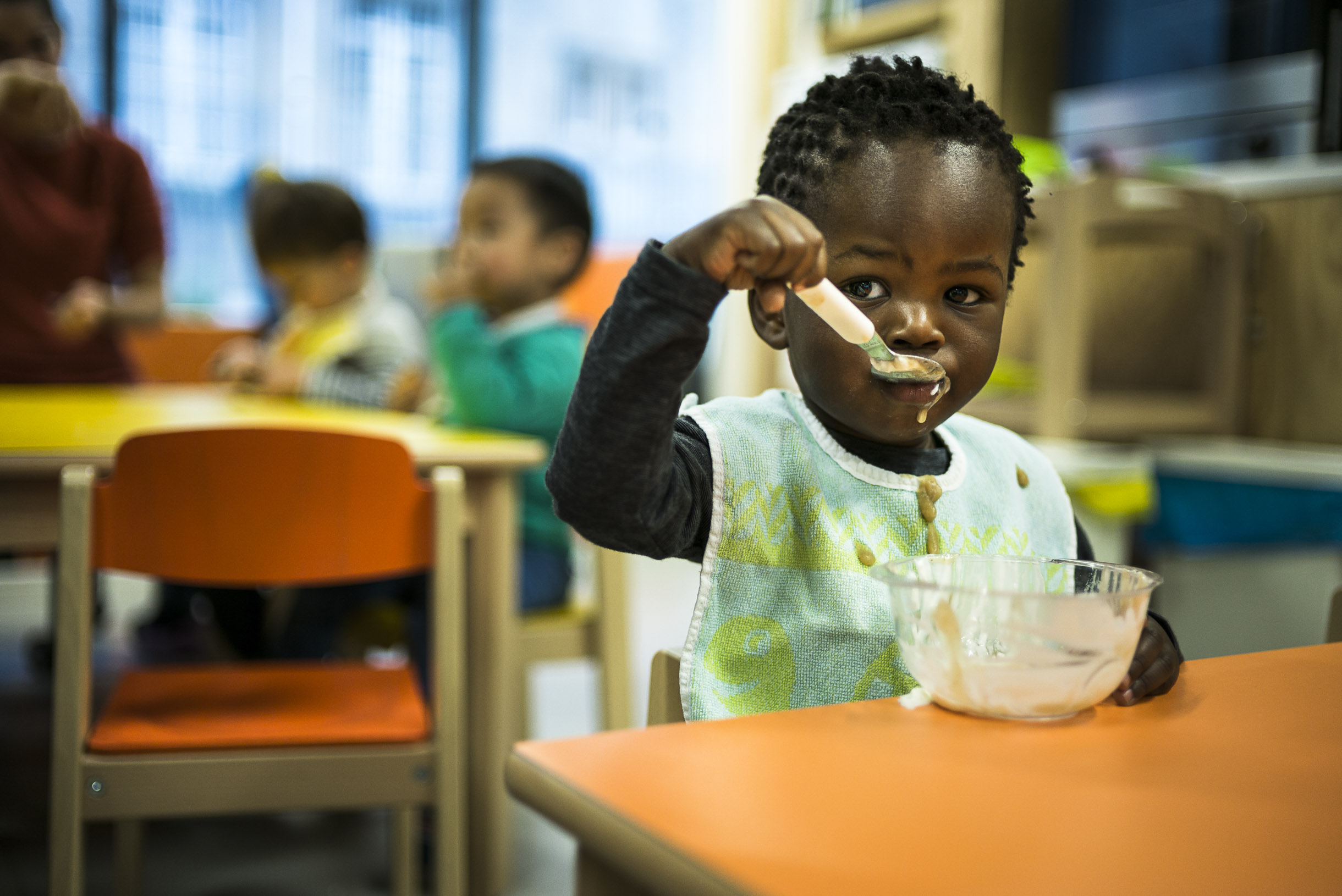
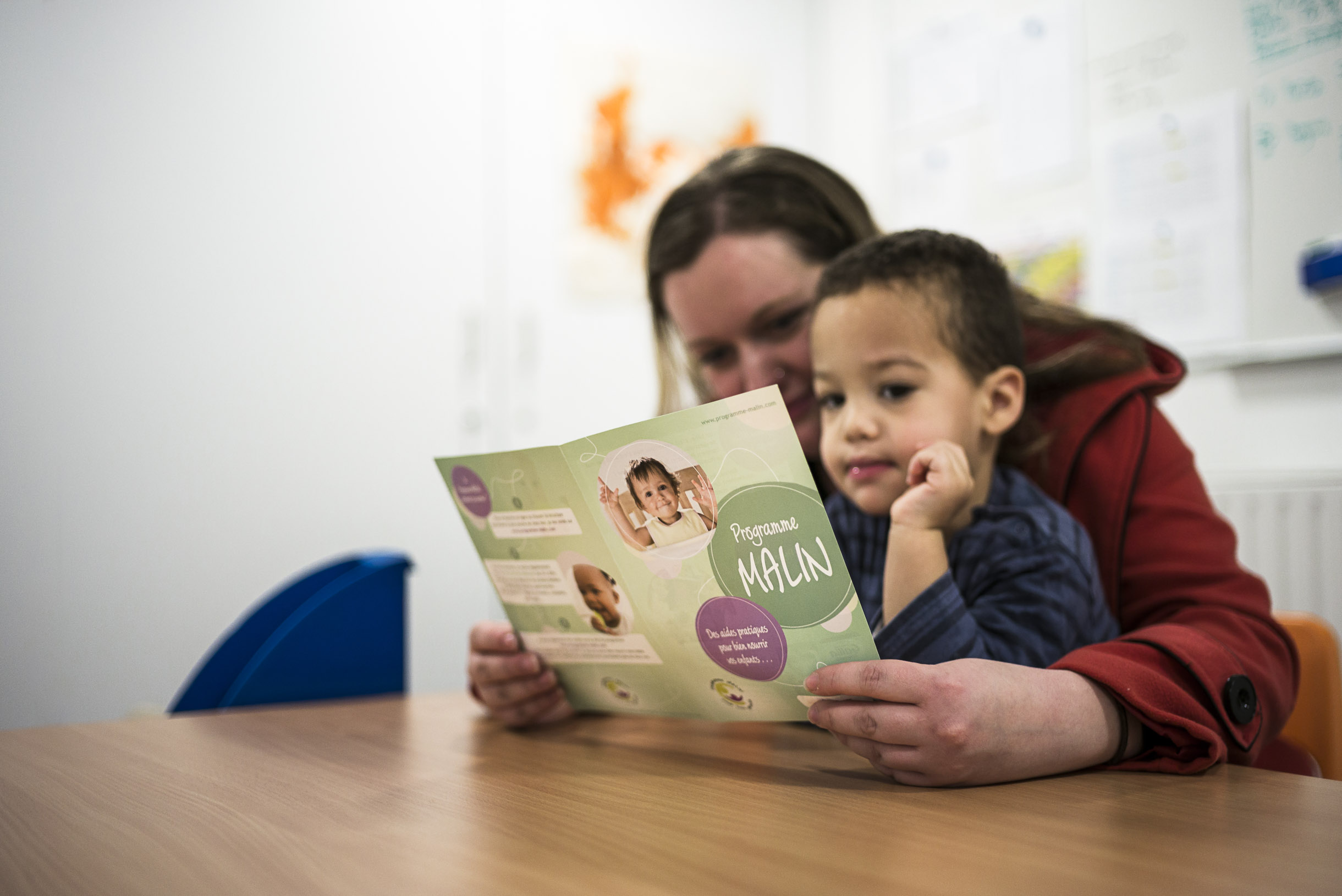
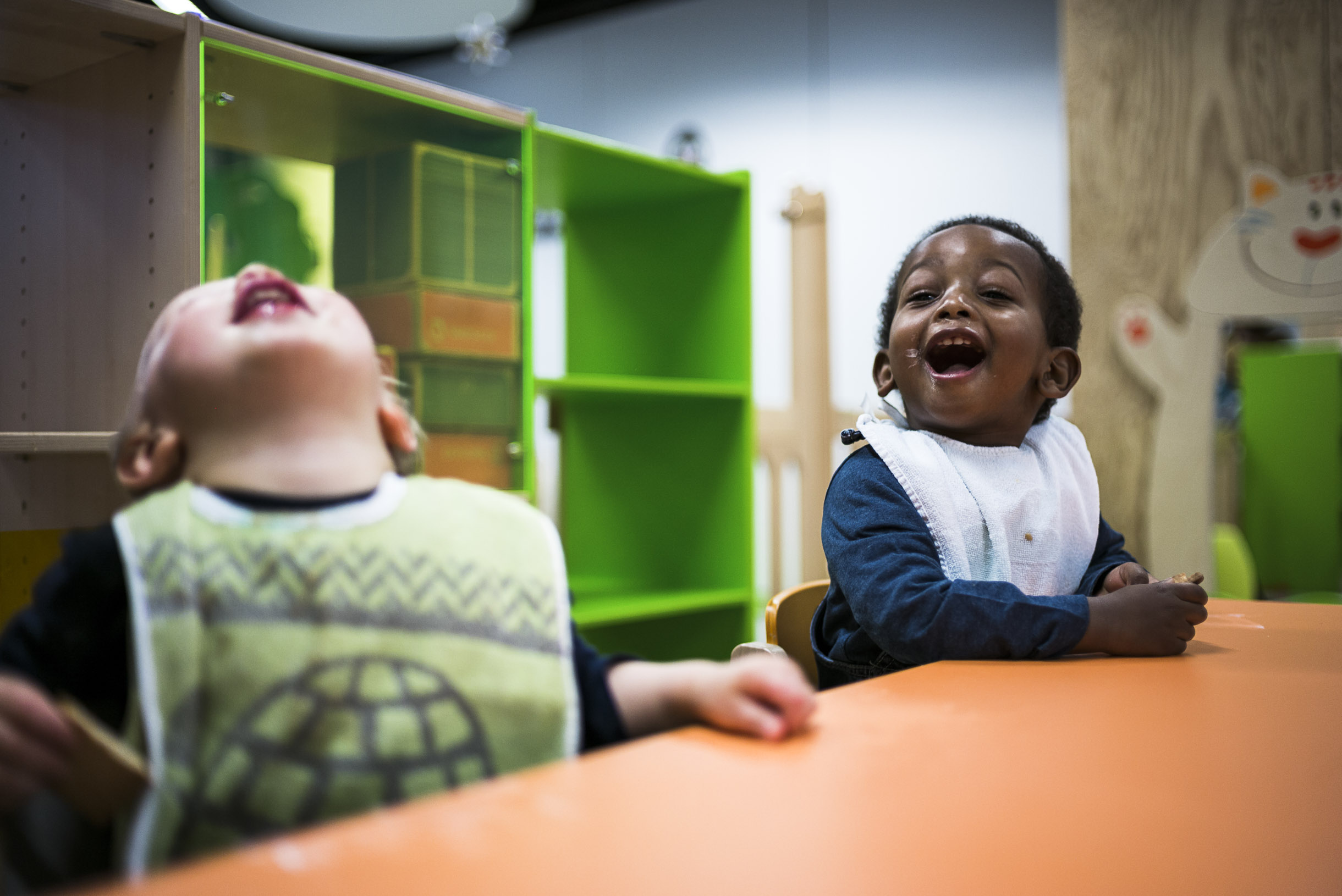
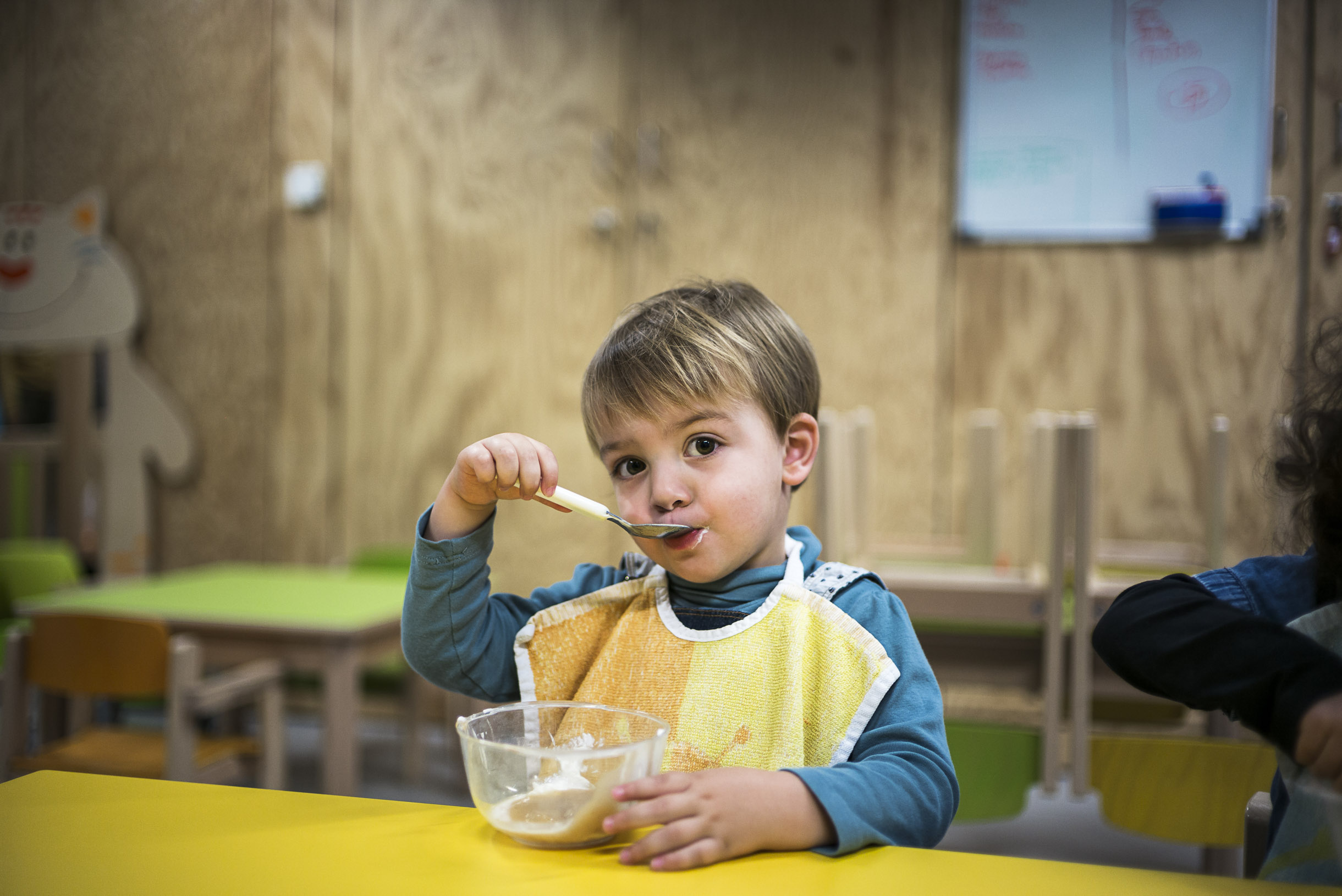
These families face two issues: expert advice are sometimes difficult to implement and adapted food for children is expensive. Social and economic vulnerability are obstacles to adopting healthy eating practices. For a child, nutrition during the first 1000 days is essential to his future health.
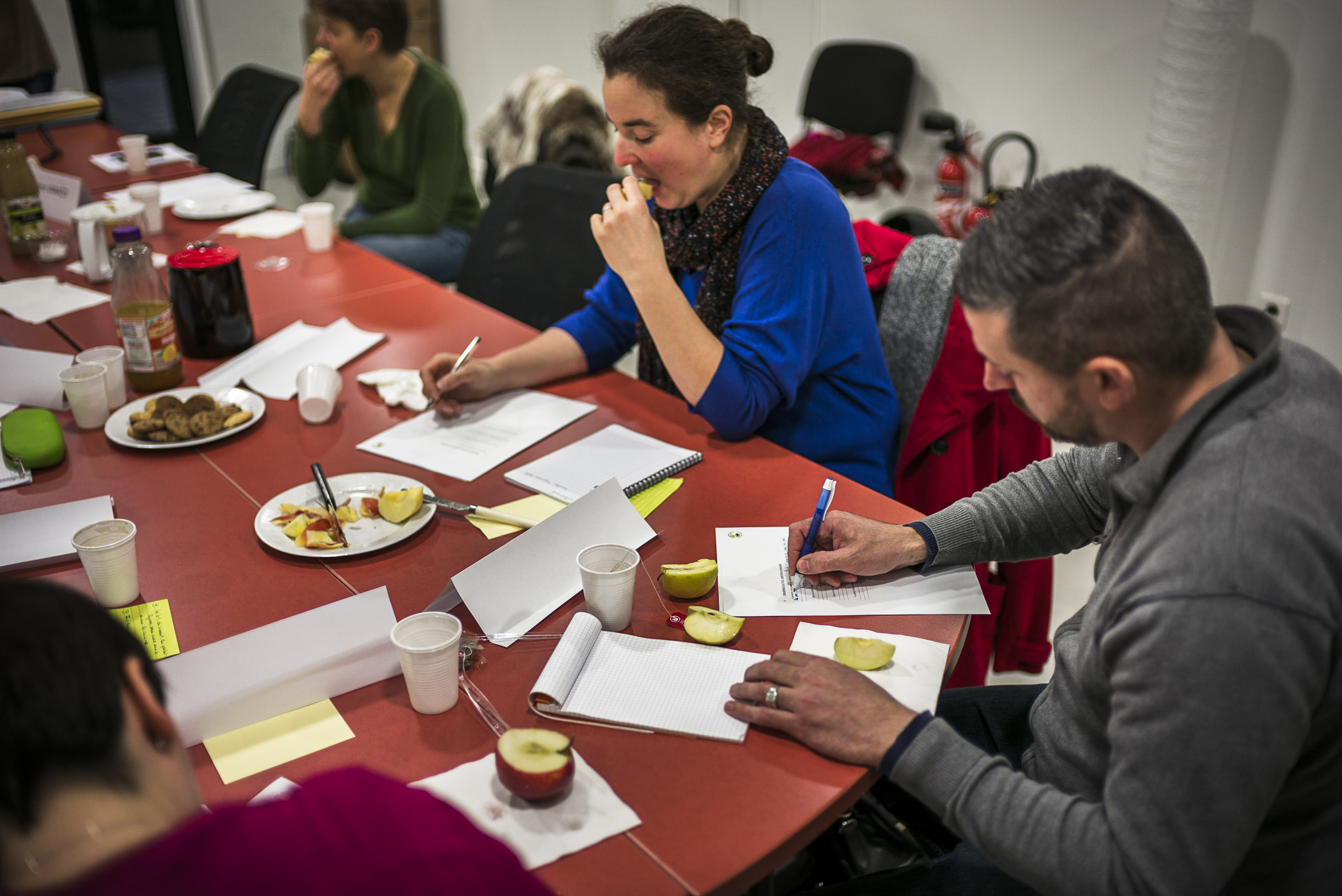
The mission of the Malin Program is to improve eating habits during these 1,000 days of families under the poverty line living in France. The way to operate is through an association of general interest, which has been co-created with private and public partners (Red Cross, 2 pediatric French associations, Action Tank Entreprise, Danone Communities, Blédina, SEB and its brands SEB/Tefal/Moulinex, Lesieur and La Banque Postale Assurance Santé)

Malin Program is built on three pillars:

  1. Education on nutrition (breastfeeding, adapted diet..)
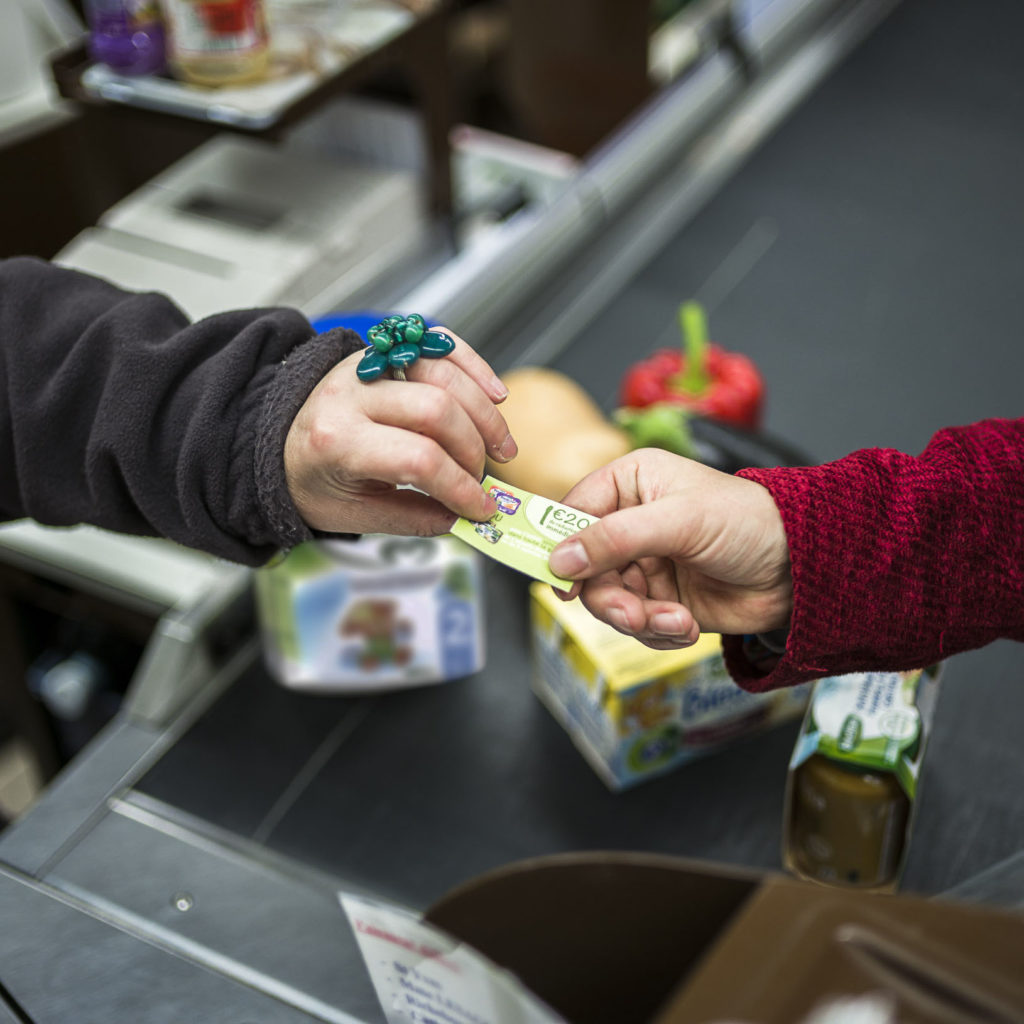
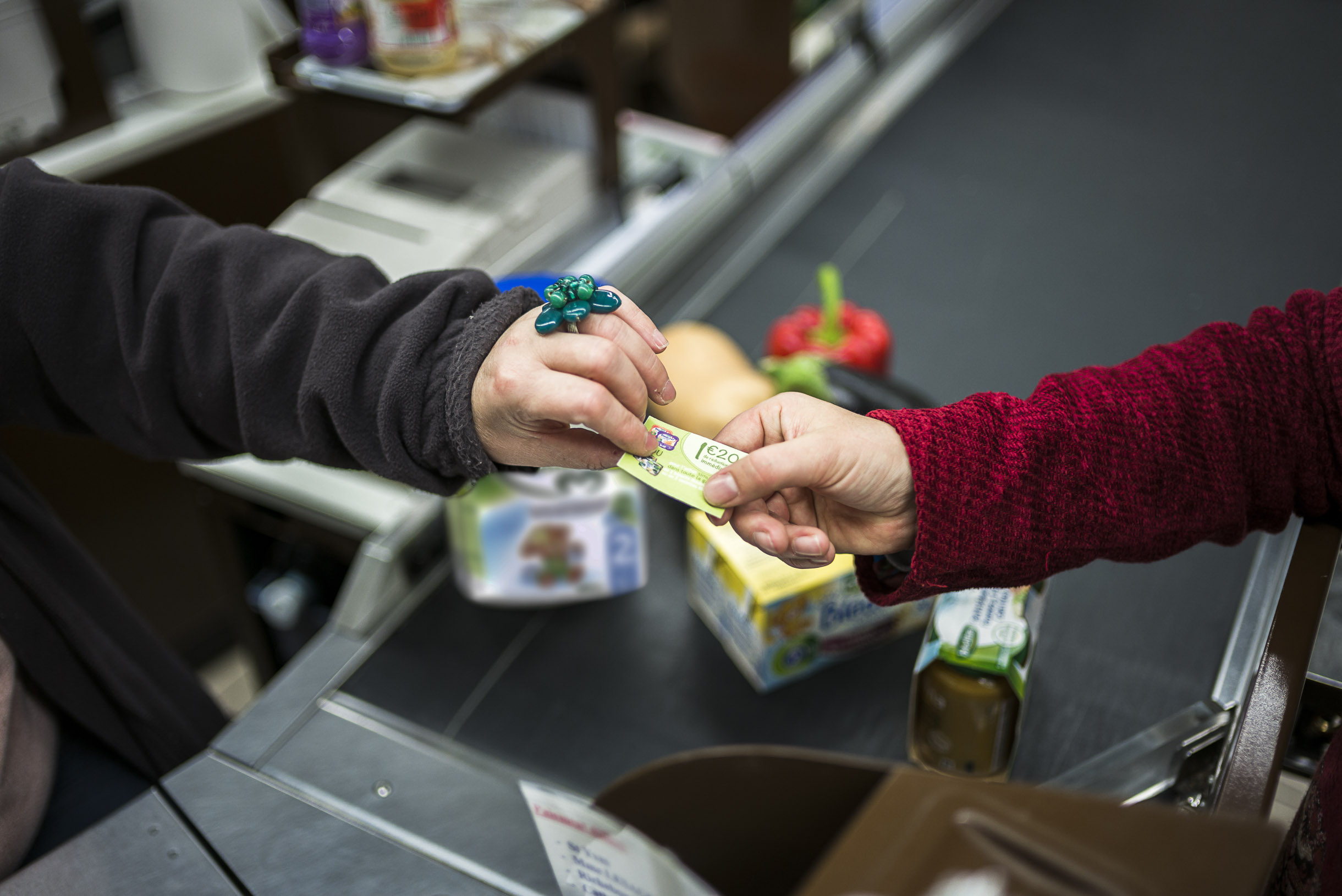
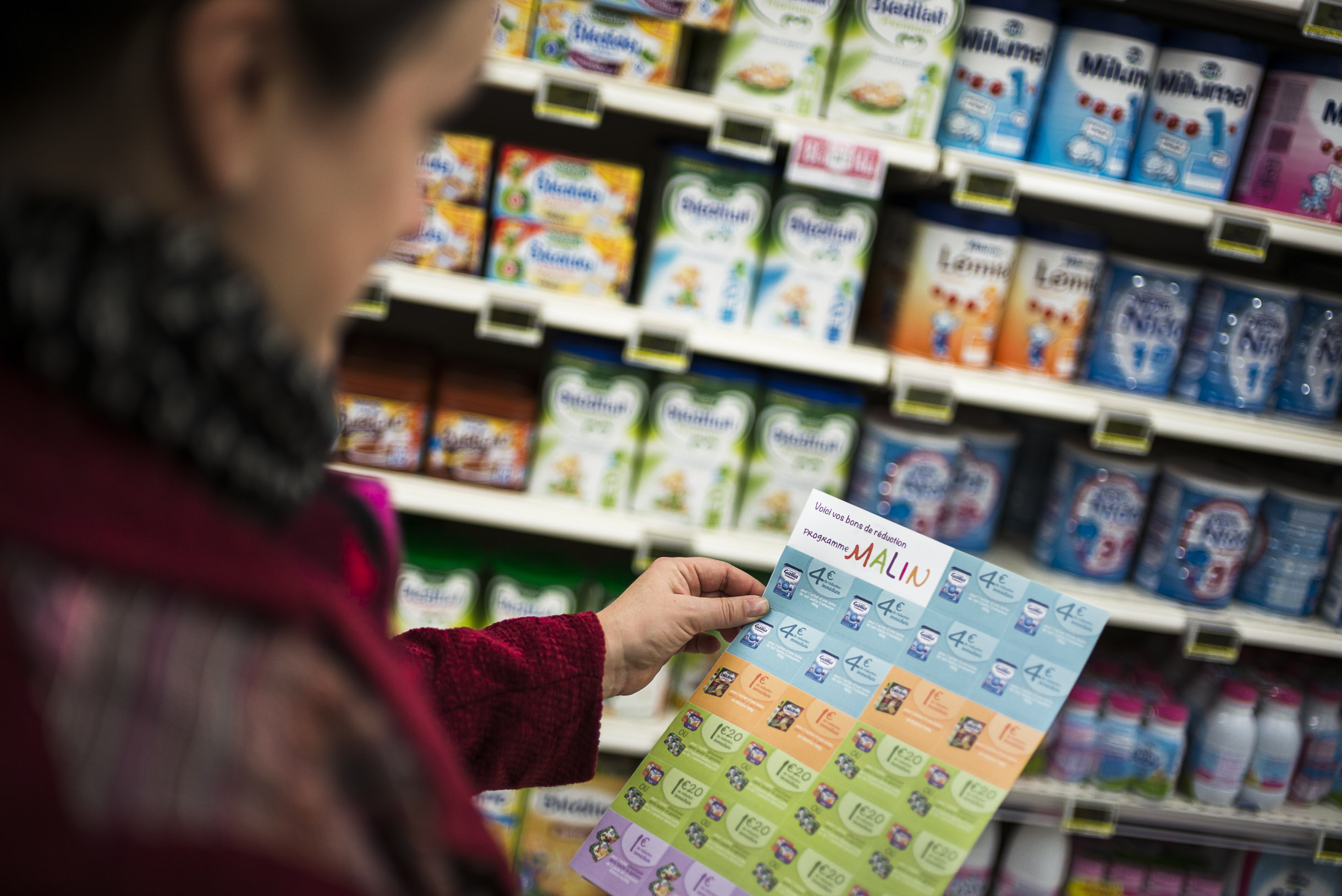
  2. Budget offers to access adapted food : 20% to 80% off vouchers on infant nutrition and vegetal oils, online VIP sales for kitchen devices to do home made food….
  3. Impact measurement (Clinical study)

With 2 principles : Co-creation and non stigmatizing offer

50 000

families impacted (end of December 2021)

93

departments covered


Adèle

mother, France

It is late in the evening when Adèle comes home. Adèle has a part-time job and she is a single mother of Gabriel, 6-month old, and Louis, 2-year old. She does not have much help raising her sons and she is trying her best to sustain the boys and herself. Adèle did not have a lot of time to learn about and prepare healthy nutrition for her children.

It was a great relief when the pediatric nurse told her about the Malin program. The program helped Adèle to understand the nutritional needs and gave her tools to guarantee healthy nutrition for her sons.

Categories
Nutrition

Nutrigo

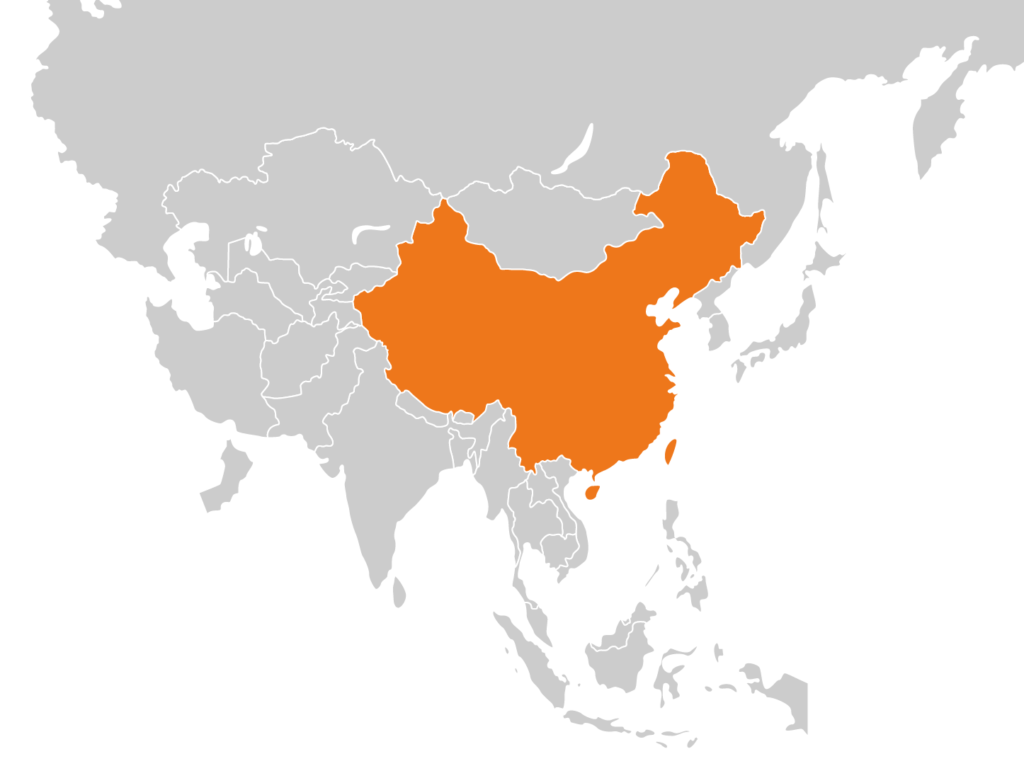
China

  • Inhabitants: 1433,8 million
  • Annual income per capita: 18 140 USD
  • 56 million people in rural areas live in poverty (source)
  • 10 million children are affected by anemia
Play video

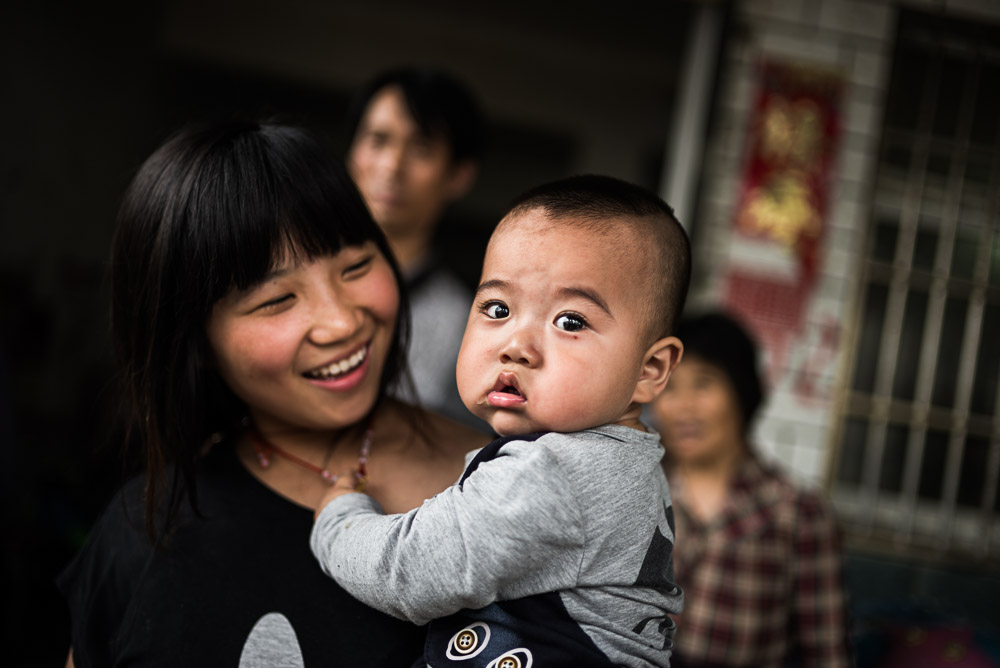
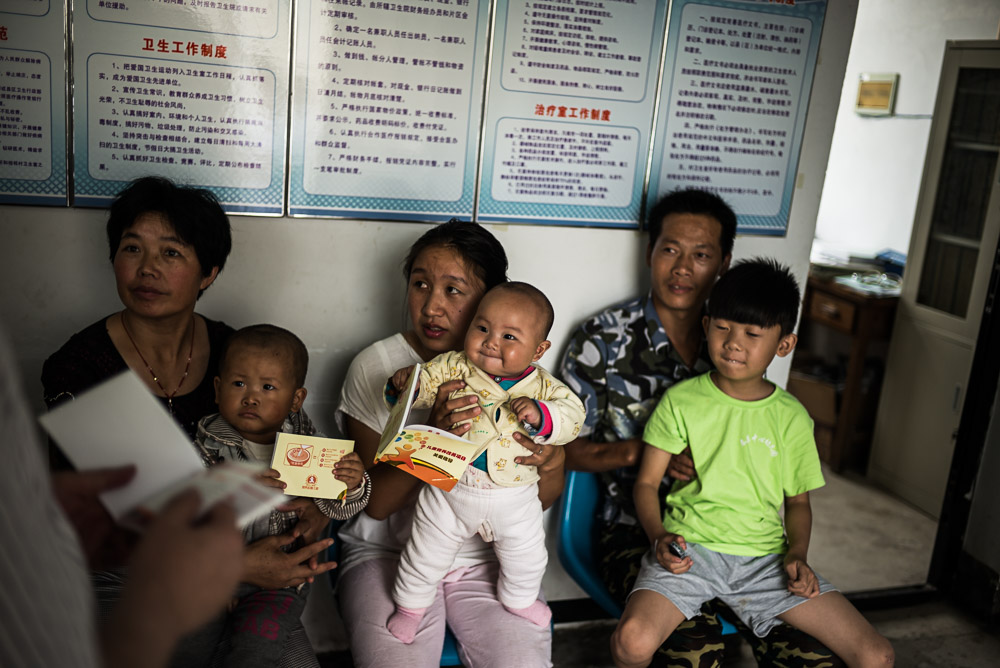
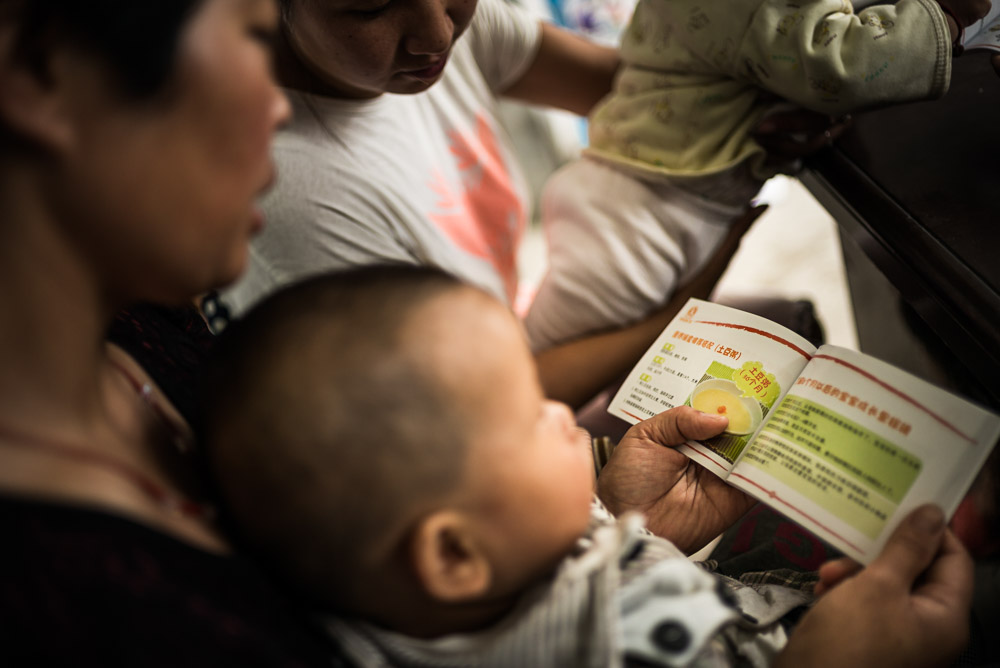
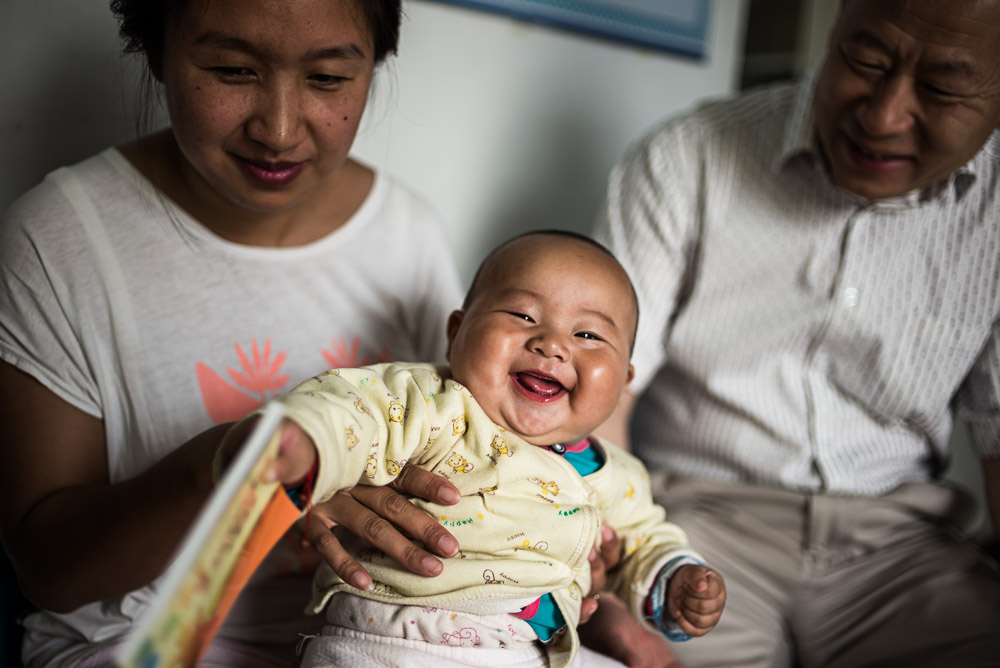
In an ever-expanding China, parents from poor rural communities leave their villages to go to work in the cities. Infants are often entrusted to their grandparents. It is the reason why the breastfeeding rate is low and anemia (mostly iron deficit) affects 10 million children, especially in rural areas among children under 2-year-old.

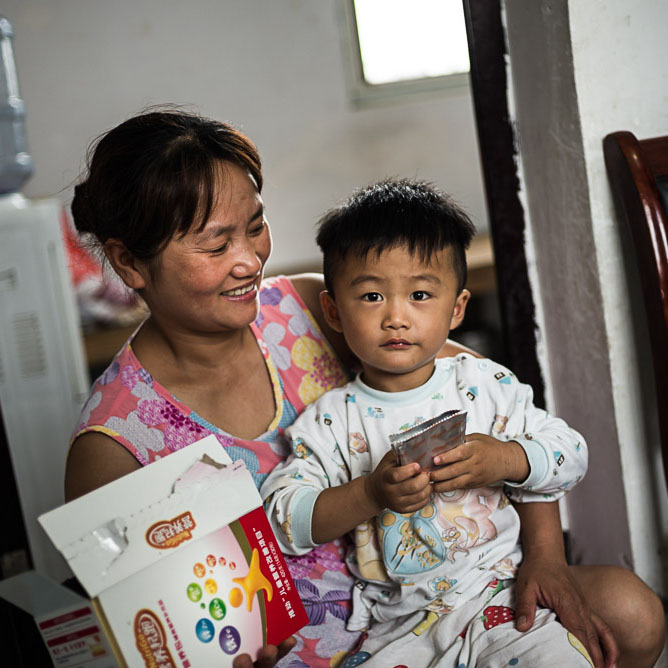
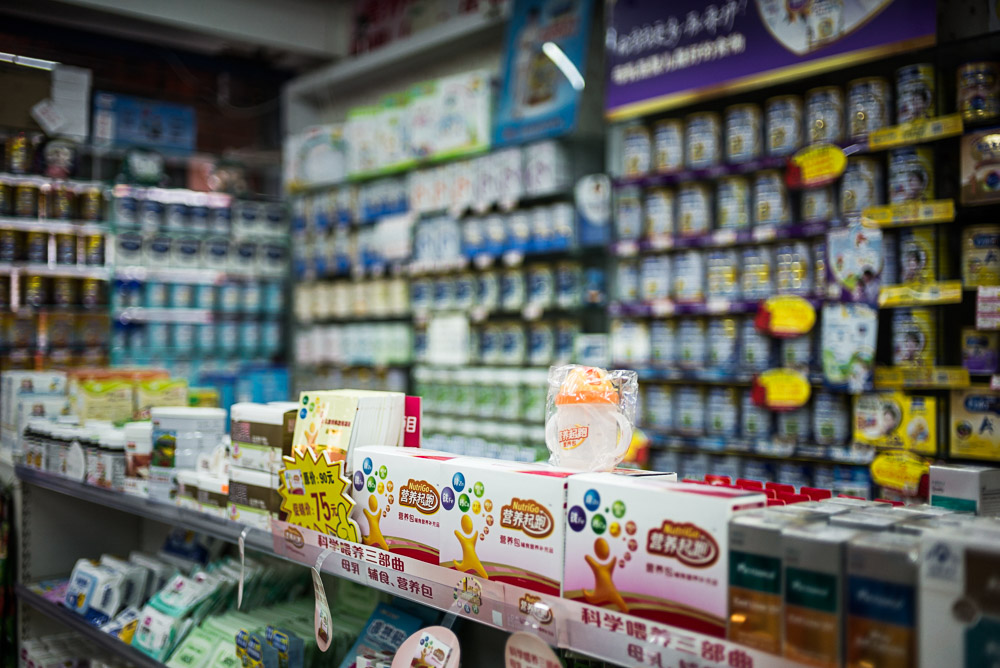
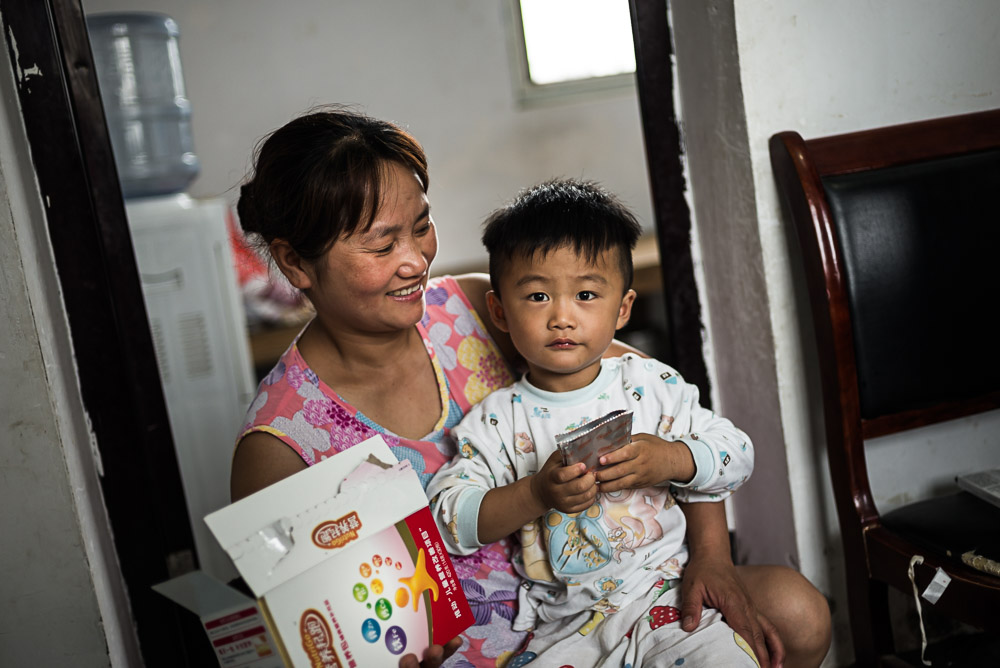
Mrs Chen and Mr Zhu, two Professors, decided to tackle this issue by developing Ying Yang Bao – a nutrition supplement pack that is enriched with essential micronutrients and can be sprinkled on rice, noodles or beverages of kids.

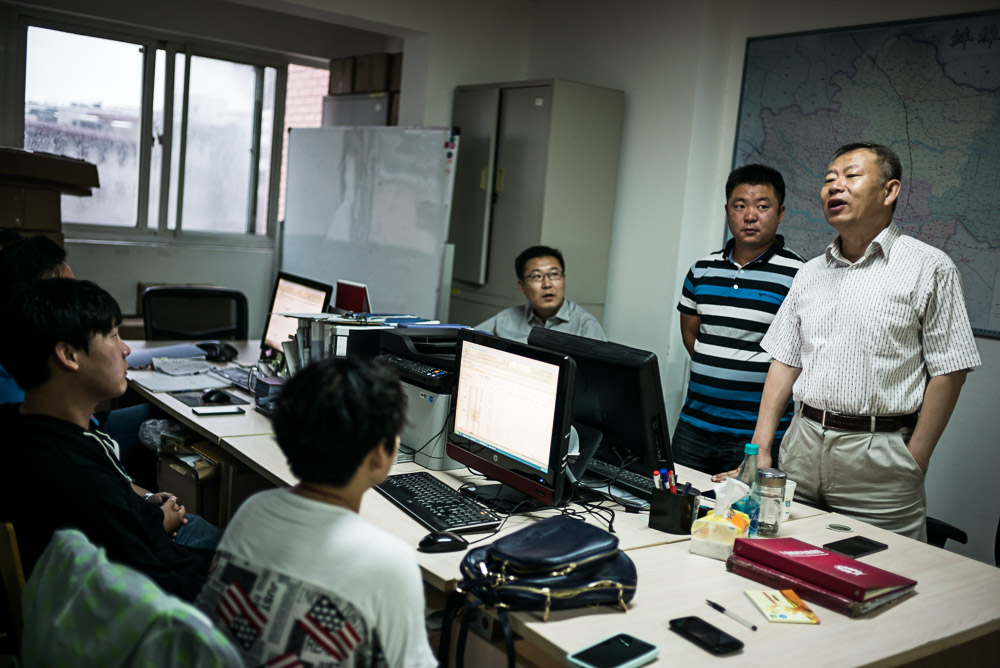
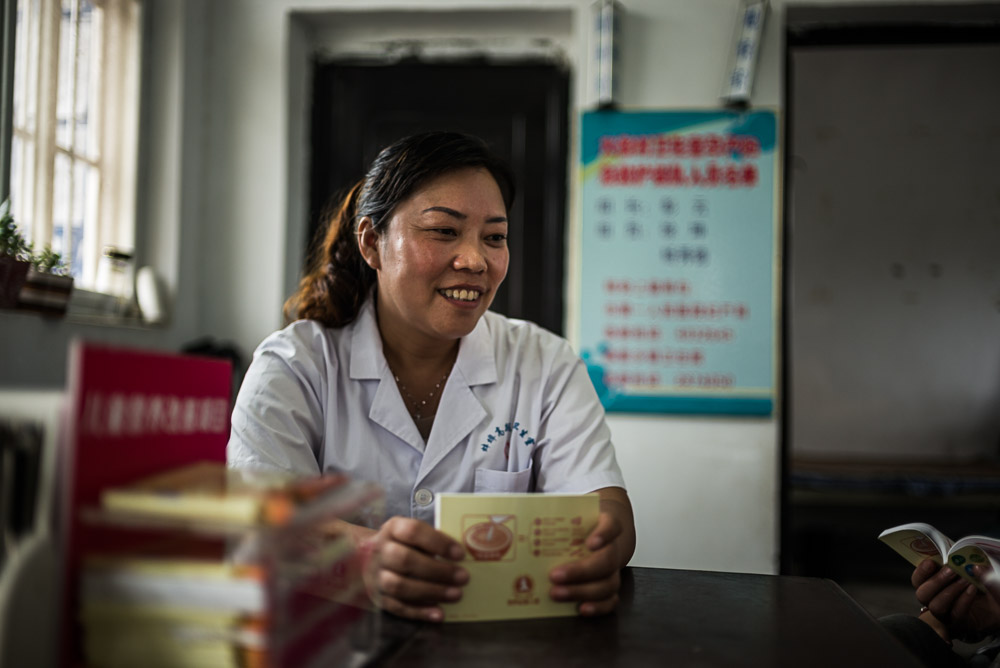
After a successful pilot, YingYang Bao is now sold by the social business Nutrigo in Eastern & Central China. Encouraged by the positive impacts from Ying Yang Bao, the Chinese government started to distribute it in the 300 poorest districts and joined forces with Nutrigo to educate health workers.

25%

A dose of Ying Yang Bao provides at least 25% of a kid’s daily micronutrients needs

85,000

the product is sold in 2 provinces and 85 000 babies benefit from it (2021)

Mrs Xiao

Grandmother, Bengbu, Anhui Province

Mrs Xiao story is a story of many grandmothers in her town. With her husband they are taking care of their grandson while her daughter and her husband are working in a city. There is no work available in her town, so many young people are forced to move and search for earnings in big cities.

One of the main concerns Mrs Xiao has, is how to guarantee good nutrition to her grandchild. She is aware that adequate nutrition plays a crucial role in her grandson development. It was a few months ago when a village health practitioner introduced YingYang Bao to her. She went to talk to her, as her grandchild was often tired and sick.

Now she is regularly adding Ying Yang Bao to the meals she is preparing for her grandson and she is seeing he is much more active and not so sickly.